
Corporate catering
Corporate breakfast catering
Continental spreads, hot breakfasts and coffee delivered before your first agenda item, for early meetings, town halls, investor mornings and training days.
Breakfast is a timing problem first
A breakfast meeting at 8:00 a.m. means food on the table by 7:40, which means a delivery van leaving our kitchen well before 7:00 and, for a downtown tower, a loading dock that may not be staffed yet. Most breakfast catering problems are about access, not food. We confirm three things for every early order: when the building's dock or front door opens to vendors, who will let us in, and where the coffee can be plugged in or set down safely.
If your building does not admit vendors before 7:30, we will say so and suggest either a later start or a room closer to the entrance. That conversation is better on the day you order than at 7:25 on the morning of.
Continental or hot breakfast
A continental breakfast is room-temperature food: baked goods, yogurt with granola, sliced fruit, and a savoury option such as egg and vegetable frittata squares or smoked salmon on rye. It suits meetings where people arrive over 20 minutes and eat standing, and it holds well if the agenda starts late.
A hot breakfast adds scrambled eggs or a baked egg dish, potatoes, a breakfast protein and warm sides, kept in chafing dishes or insulated carriers. It suits seated meetings, cold months and long mornings where lunch is late. It needs a table, and it needs people to actually sit down within about 30 minutes of arrival.
Breakfast catering starts from $16 per person. See the breakfast menu for both formats.
Early delivery checklist
- Time food must be ready (usually 15–20 minutes before the meeting)
- Earliest time vendors can enter the building or use the dock
- Name and mobile number of the person letting us in
- Where coffee urns can sit near an outlet, away from walkways
- Number of tea and decaf drinkers, if you know it
- Any named dietary or allergy meals
Protein matters more than pastries
A tray of croissants and muffins is cheap to produce and looks generous, but a room full of people fuelled only by sugar and coffee fades by 10:30. For meetings that need attention into the late morning, we build breakfast around protein and fibre: eggs, Greek yogurt, overnight oats, nut-free seed granola, cheese, smoked fish, and a smaller share of pastry.
For mixed teams, we default to pork-free breakfast proteins (for example chicken or turkey sausage) and always include a vegan option such as a chickpea scramble or a tofu and vegetable hash, so fewer people need a separate order. Gluten-free guests get their own labelled items, not a fruit plate by default.
How much coffee to order
Coffee runs out before food does. For a morning meeting of about two hours, a practical planning figure is roughly 1.5 cups of coffee or tea per person, with about 20–25% of the room choosing tea or decaf. A standard catering coffee container holds about a dozen 8 oz cups.
| Guests | Coffee (8 oz cups) | Tea and decaf (cups) | Also send |
|---|---|---|---|
| 15 | about 18 | about 5 | Milk, oat milk, sweeteners, water |
| 30 | about 36 | about 10 | Two milk options plus a plant-based milk |
| 60 | about 70 | about 20 | A second coffee station to split the line |
If the morning includes a mid-morning break, add a coffee refresh rather than ordering double at 8:00. Coffee held for more than about an hour loses quality quickly.
Breakfast for town halls and investor mornings
Large breakfasts have a different shape. For a town hall of 150 in a lobby or event space, a single line is too slow, so we set two or three identical stations and put coffee apart from food so the two queues do not merge. Handheld items (breakfast sandwiches, frittata squares, fruit cups, yogurt parfaits) work better than anything that needs a plate and a fork when people are standing.
For an investor or client breakfast, the food is part of the impression. That usually means staffed service: plated or family-style breakfast, coffee poured at the table, and dishes cleared before the presentation starts. See full-service catering for how staffed events run.
Ordering details
Drop-off breakfast orders need 48 hours notice and a minimum of 15 guests. Tell us the time you want food ready, not the meeting start, and name a person who will be in the building when we arrive. Delivery is $45; prices are before 13% HST.
If breakfast is the start of a full day, the meetings and conferences page shows how we plan breaks and lunch around it.
Industry price range
elle cuisine's 2025–26 Toronto corporate cost guide puts breakfast and coffee breaks at about $5–$15 per person. Hot breakfasts and staffed service sit at the top of that range or above.
Questions
Frequently asked
How early can you deliver breakfast?
Yes, we deliver early. The practical limit is usually your building's vendor access time, so tell us when the dock or front door opens.
Do you supply coffee and tea?
Yes. Coffee, decaf and tea come with cups, milk, a plant-based milk, sweeteners and stirrers. Juice and water can be added.
What is a continental breakfast?
A room-temperature breakfast: baked goods, fruit, yogurt and granola and usually a savoury item. It is quick to set up and holds well if a meeting starts late.
Can breakfast be gluten-free or vegan?
Yes. We include labelled gluten-free and vegan items and can make named special meals. Tell us about celiac disease or severe allergies when you order, and we will explain how those meals are prepared.
How much breakfast food per person should I order?
Plan one full breakfast per confirmed guest and roughly 1.5 cups of hot drinks per person for a two-hour morning. We size trays so the last guests still have a choice.
Can you cater a breakfast for 200 people?
Yes. For large breakfasts we set several identical stations and a separate coffee area so lines stay short. Staffed service is recommended at that size.
Keep planning
Related pages
Breakfast catering menu
Morning food that can be eaten at a boardroom table in ten minutes: bakery, hot breakfast, lighter bowls and a few dishes from the Levantine and…
Explore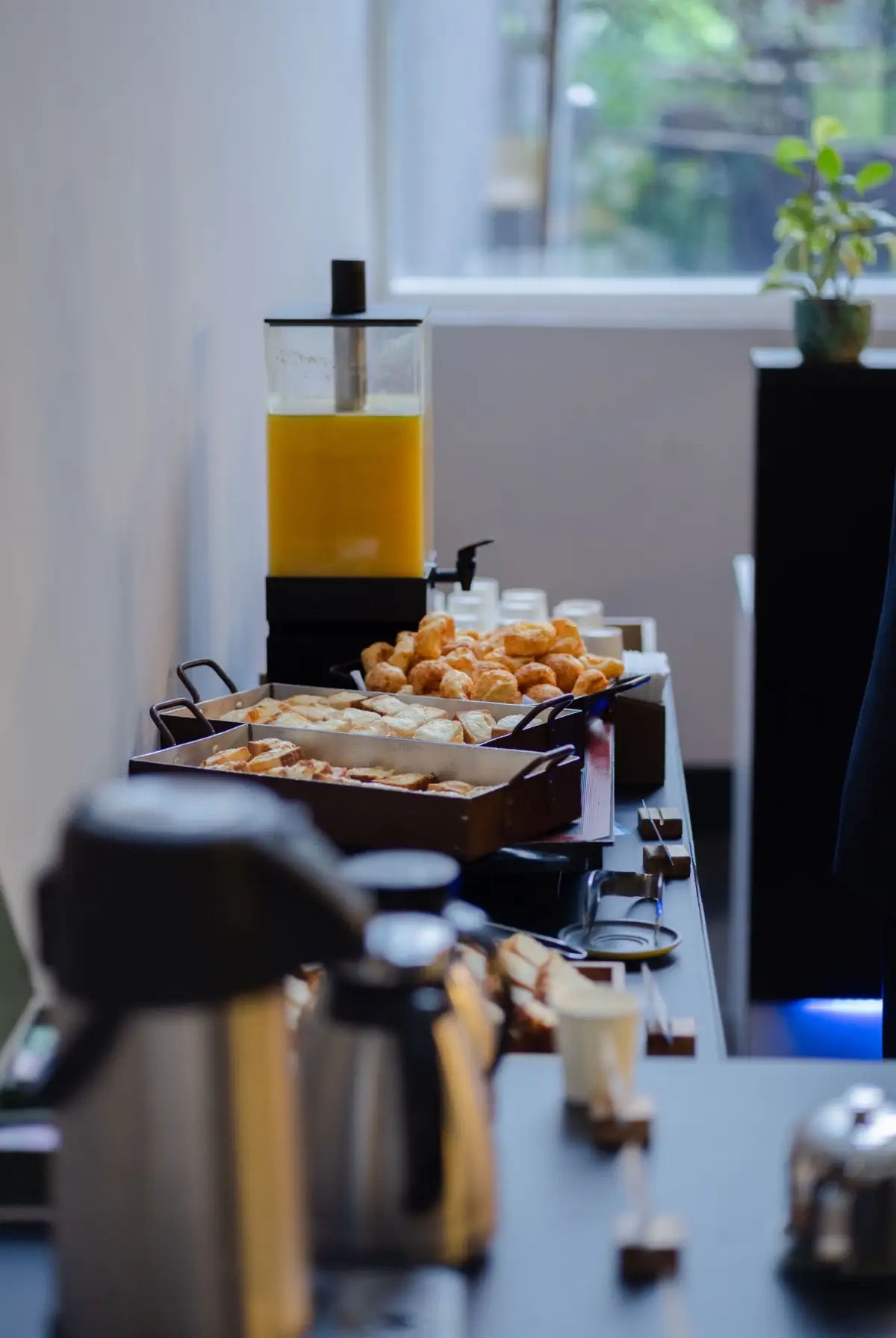
Meeting and conference catering
One food plan for the whole day: breakfast, coffee breaks, lunch and an optional closing reception, timed to your agenda and labelled for every…
Explore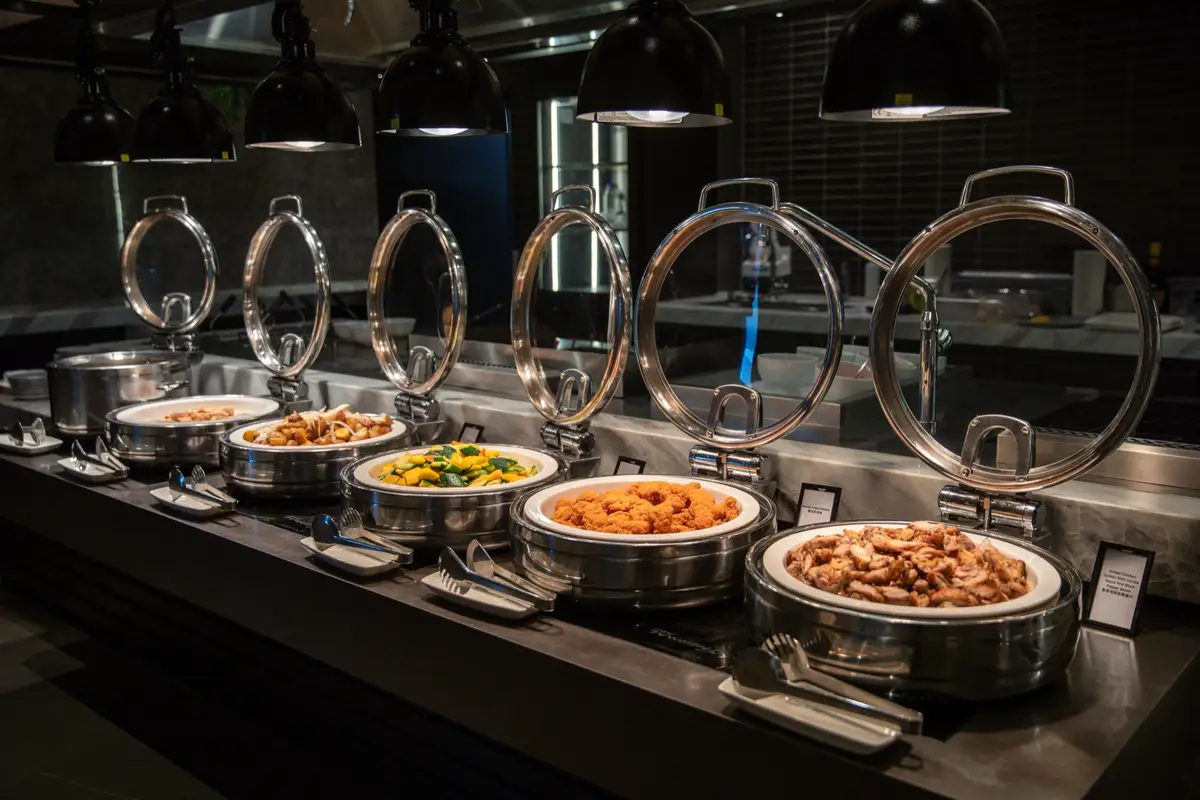
Office lunch catering
Hot buffets and shared platters for team lunches, lunch-and-learns and working sessions, delivered to your floor, set out with labels and ready when…
Explore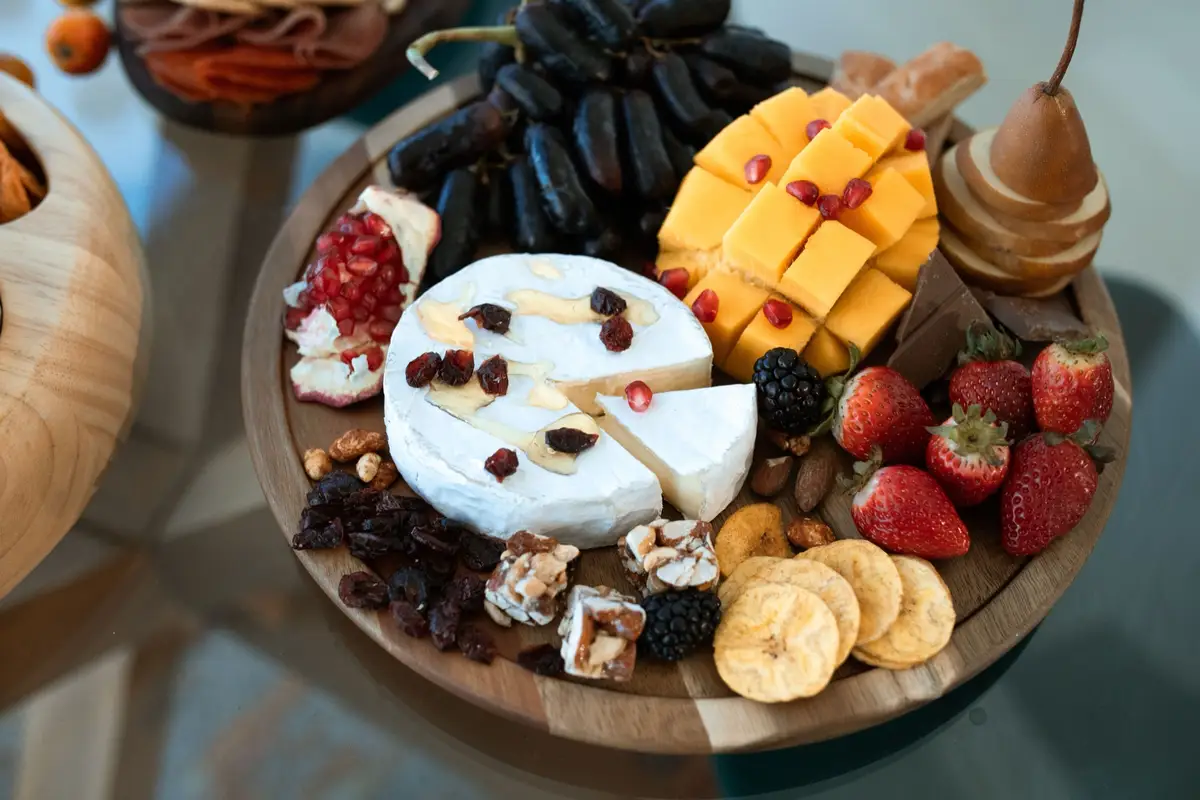
Drop-off catering
Food delivered ready to serve, set out on your table with labels and serving utensils, without the cost of staff staying on site.
Explore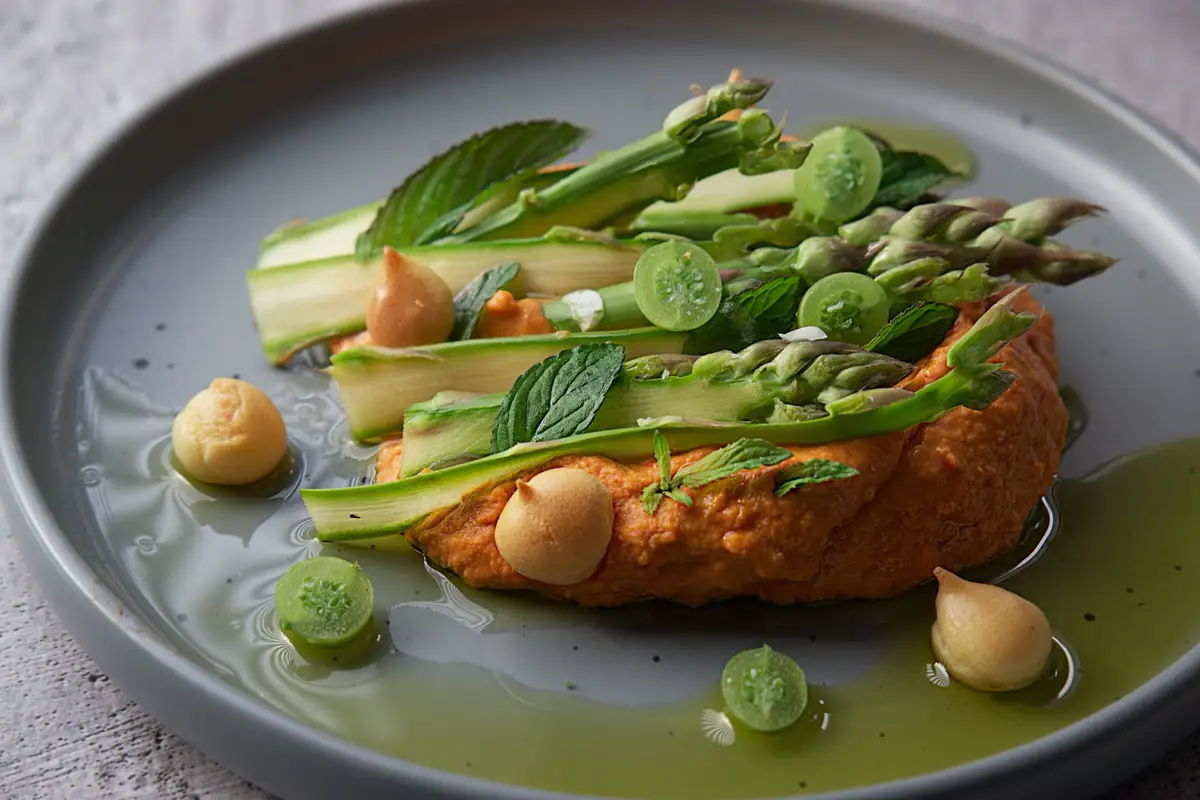
Vegan and plant-based catering
Plant-based food that fills people up at a working lunch and holds its own at a wedding dinner, with no hidden butter, stock or honey.
Explore
Gluten-free catering
Gluten-free dishes for guests who avoid gluten, and separately packed, labelled meals for guests with celiac disease, with a clear explanation of the…
Explore