Dietary menus
Gluten-free catering
Gluten-free dishes for guests who avoid gluten, and separately packed, labelled meals for guests with celiac disease, with a clear explanation of the difference.
Gluten-free dish or celiac-safe meal?
A guest who avoids gluten by choice and a guest with celiac disease need different things. For the first, a dish made without wheat, barley, rye or regular oats is enough. For the second, a few crumbs from a shared cutting board or a spoon moved from the couscous to the rice can cause a reaction.
In Canada, Health Canada's position is that food labelled gluten-free should contain no gluten sources, and that gluten from cross-contamination must stay at or below 20 parts per million, the level considered protective for most people with celiac disease. Packaged food manufacturers test against that line. A catering kitchen cooking bread and pasta the same day has to be honest about what it can control.
So we use two terms. Gluten-free on a buffet card means the recipe contains no gluten ingredients. Celiac meal means the meal was prepared, packed and labelled separately using the steps below. If you have celiac guests, tell us, so we plan their meals as separate celiac meals rather than relying on buffet dishes.
How we prepare a celiac meal in a shared kitchen
- Prepared at the start of the shift, before bread, pastry or flour is used that day, on washed and sanitized surfaces.
- Dedicated boards, pans and utensils that are washed before use, and ingredients checked by label, not memory.
- No shared fryer: anything fried for a celiac meal is cooked in fresh oil, never oil used for breaded items.
- Sealed and labelled with the guest's name as soon as it is plated, and transported in a separate carrier.
- Served by a staff member who knows which meal it is, not placed on the general buffet.
This lowers the risk a great deal, but a shared kitchen cannot promise zero exposure. Guests with severe sensitivity should decide with that information, and we would rather you hear it from us now.
| Usually contains gluten | Gluten-free version |
|---|---|
| Tabbouleh with bulgur | Tabbouleh with quinoa |
| Soy sauce marinade | Tamari labelled gluten-free |
| Crostini and tart shells | Polenta squares, cucumber, endive, rösti |
| Flour-thickened gravy | Reduction or cornstarch-thickened jus |
| Breaded chicken | Grilled or rice-flour dusted, fried in fresh oil |
| Couscous salad | Herbed rice or roasted potato salad |
Where gluten hides in catering food
Wheat bread and pasta are obvious. These are the ingredients that catch kitchens out:
- Regular soy sauce (brewed with wheat) in marinades and dressings; we use tamari labelled gluten-free
- Malt vinegar, beer batter and beer-braised meats
- Flour dusted on meat before searing, and roux in sauces, gravies and soups
- Store-bought stock and bouillon, some spice blends and seasoning salts
- Asafoetida (hing), which is often cut with wheat flour and is common in South Asian cooking
- Bulgur in tabbouleh, freekeh, couscous, farro, spelt and barley
- Oats, unless they are specifically sold as gluten-free
- Seitan, the wheat-based protein used in some vegan dishes
- Panko or breadcrumbs used as a binder in meatballs, kofta and crab cakes
Menus that are gluten-free without trying
The easiest gluten-free menu is one where nothing had to be swapped out. Much of the Levantine and South Asian cooking we do is naturally free of gluten: grilled chicken and lamb with garlic sauce, rice pilafs, dal, chana masala, saag, raita, roasted vegetables with tahini, and salads with a lemon and olive oil dressing. On those menus we make one change, such as quinoa instead of bulgur in the tabbouleh, and serve the flatbread on its own board at the end of the line.
For a canapé reception, bases such as cucumber rounds, endive leaves, polenta squares, rice paper and potato rösti replace toast and pastry, so gluten-free guests can eat most of what is passed rather than waiting for one special tray.
Buffets, grazing tables and boxed lunches
Buffets are where most cross-contact happens, usually from guests, not cooks. Croutons get scattered, a spoon moves between dishes, and bread crumbs fall into the salad. On a mixed buffet we place gluten-free dishes before bread and pastry in the line, give every dish its own utensil, and keep bread on a separate board.
On a grazing table, crackers and bread touch almost everything, so celiac guests get their own plated board instead of eating from the shared spread. For boxed lunches, gluten-free boxes are sealed, labelled and packed apart from sandwich boxes.
What to tell us
When you request a quote, give us the number of guests who avoid gluten and, separately, the number with celiac disease or a wheat allergy. Include names if meals should be labelled. If a guest reacts to very small amounts, say so: it changes how we plan their meal and what we recommend for the rest of the menu.
Health Canada's gluten-free line
Health Canada considers 20 ppm of gluten or less, from cross-contamination only, protective for most people with celiac disease. It is the standard behind the gluten-free label in Canada, and the reason we separate gluten-free dishes from celiac meals.
Questions
Frequently asked
Is your kitchen gluten-free?
No. We cook bread, pastry and pasta in the same kitchen. Celiac meals are prepared first, with cleaned equipment, and packed separately, but we cannot guarantee zero exposure.
Can guests with celiac disease eat safely at a catered event?
Many do, when the caterer knows in advance. Tell us how many celiac guests will attend and we will prepare individually packed, named meals rather than relying on buffet dishes.
Can the whole menu be gluten-free?
Yes. A fully gluten-free menu removes the biggest risk, which is cross-contact on the buffet. It works especially well with Levantine and South Asian menus, where little has to change.
Do you have gluten-free bread and desserts?
Yes, on request. Gluten-free desserts such as flourless chocolate cake, pavlova and panna cotta are often better than a substituted pastry, so we usually suggest those first.
Are gluten-free meals more expensive?
Dishes that are naturally gluten-free cost the same as the rest of the menu. If individually packed celiac meals add cost for separate preparation, it is shown as its own line in your quote.
Keep planning
Related pages
Catering for dietary restrictions
We plan halal, vegan, gluten-free and allergy-aware meals into the menu from the first quote, so the guest with a restriction gets the same food…
Explore
Vegan and plant-based catering
Plant-based food that fills people up at a working lunch and holds its own at a wedding dinner, with no hidden butter, stock or honey.
Explore
Kitchen and food safety
The rules Ontario caterers work under, what they mean for your event, and the practices we follow from our kitchen to your table.
Explore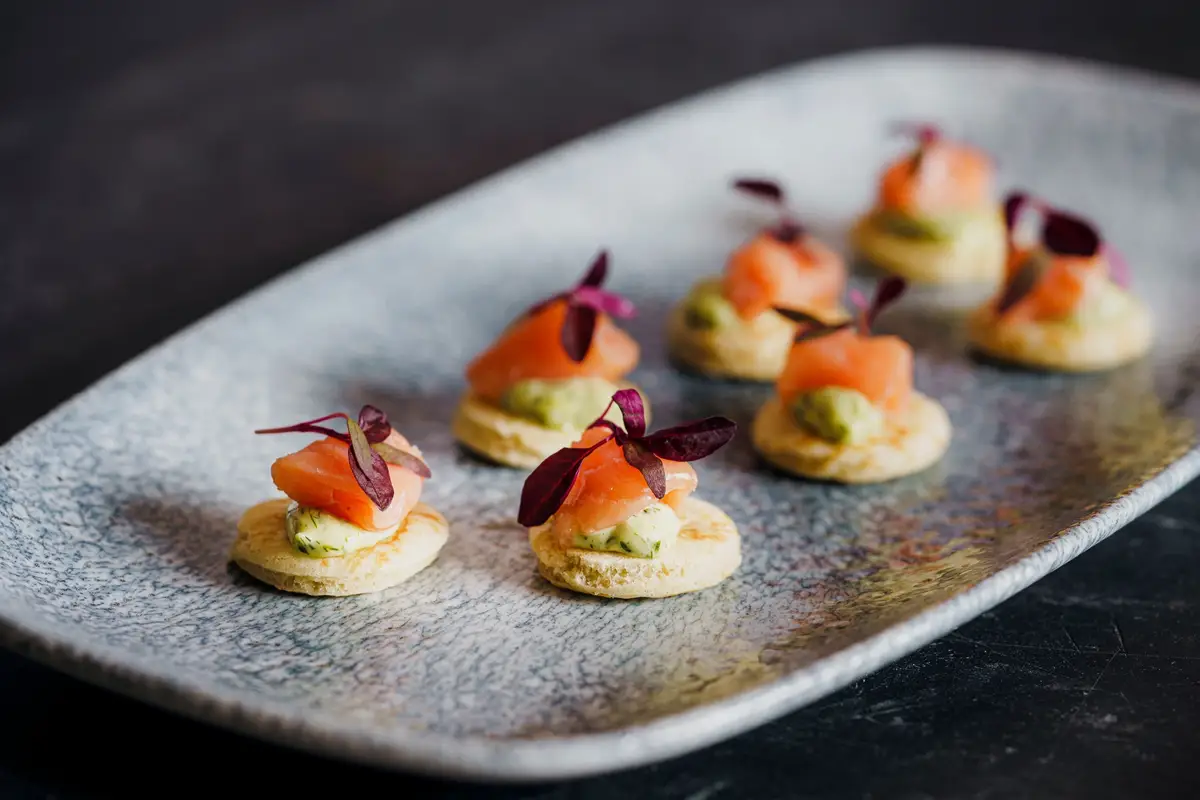
Canapé menu
Two-bite food passed by servers, designed to be eaten standing with a drink in the other hand. Choose six to ten canapés from the lists below and we…
Explore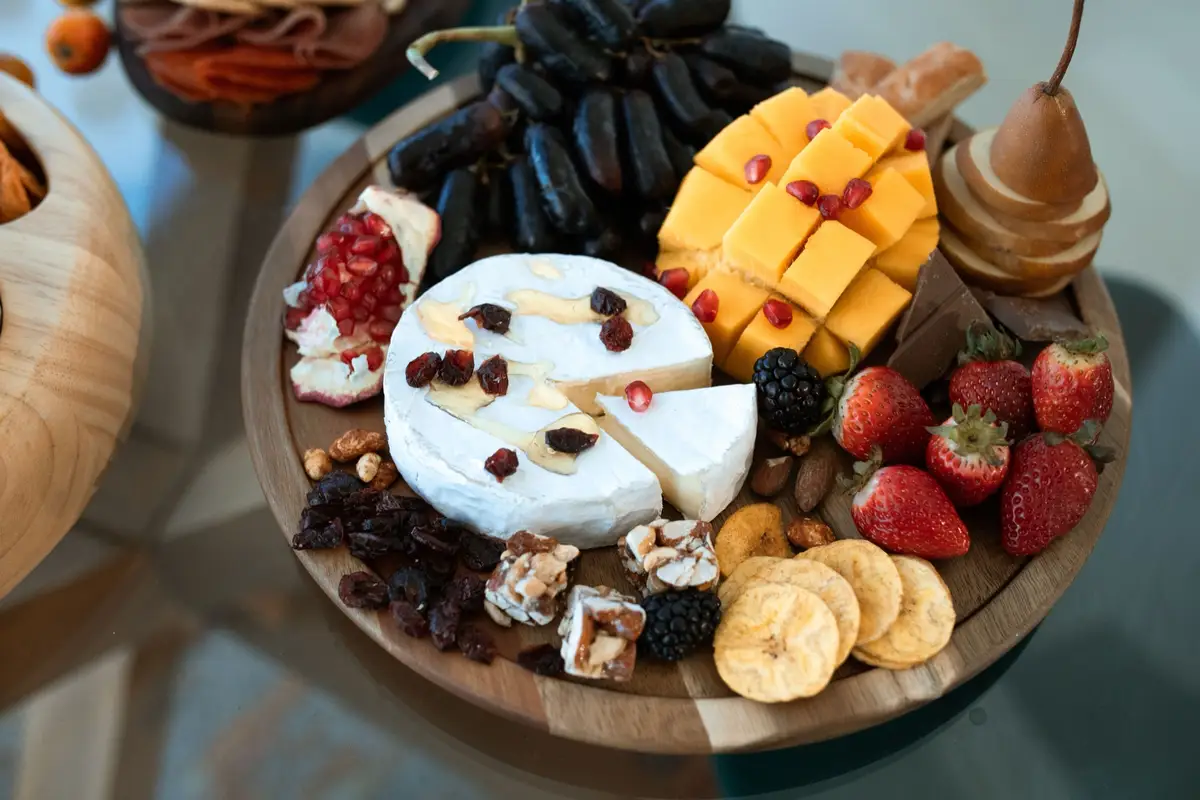
Grazing table menu
A long table of cheeses, halal-sourced meats, mezze, seasonal produce and breads that guests serve themselves from. Good for open houses, showers and…
Explore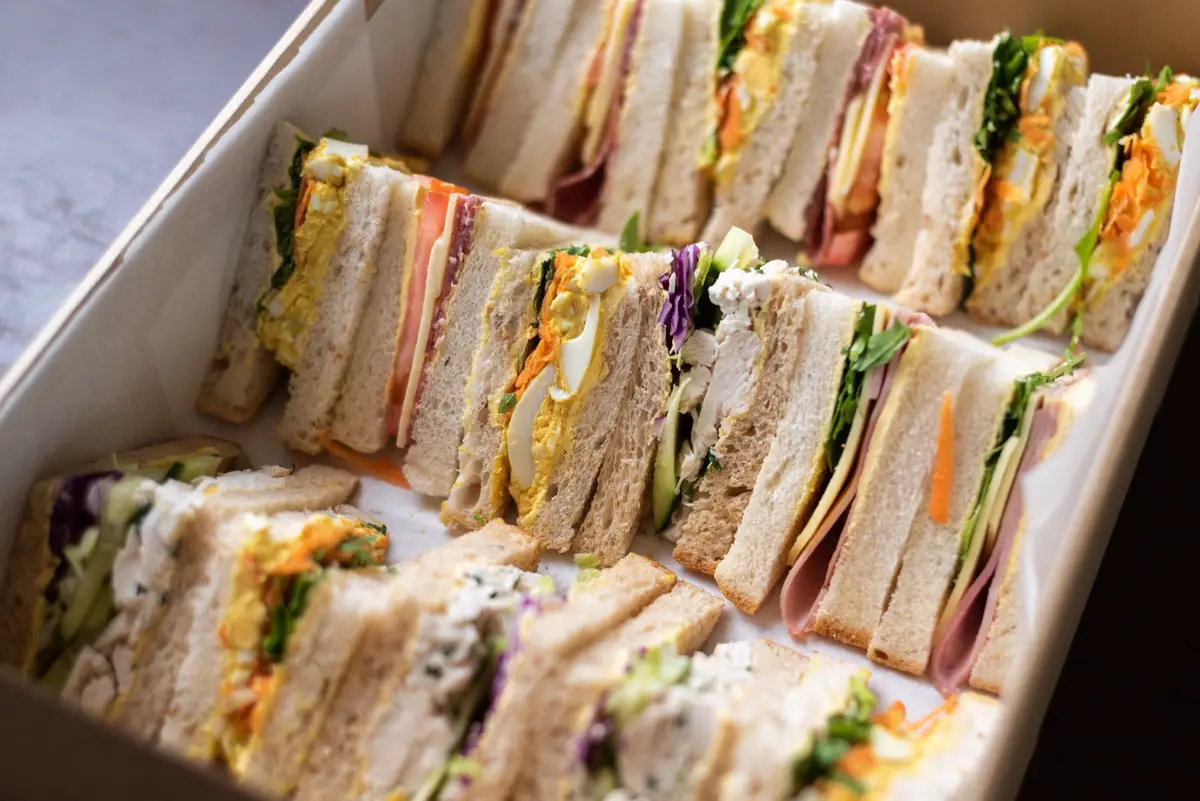
Boxed lunch catering
Individual lunches, each packed and labelled for one person, so special meals reach the right people and nobody waits in a line.
Explore