Planning
Catering glossary
Short, plain definitions of the terms you will see in catering proposals, menus and venue contracts.
Service styles
Drop-off catering
Food delivered ready to serve, set out by the delivery team, with no staff remaining at the event. Common for office lunches and breakfasts. See drop-off catering.
Full-service catering
Catering where staff prepare, serve and clear food on site, usually with a service captain in charge. See full-service catering.
Buffet
Dishes set out on a table where guests serve themselves. Efficient for large groups, and usually needs fewer staff than plated service.
Attended buffet
A buffet where staff portion the food for guests. It keeps the line moving, controls portions and reduces cross-contact for dietary dishes.
Plated service
Each course is plated in the kitchen and served to seated guests at the same time. It needs the most staff, commonly one server per 10–12 guests.
Family-style service
Shared platters placed on each table for guests to pass and serve themselves, like a large dinner at home.
Food stations
Separate tables each built around one dish or theme, such as carving, pasta or mezze, often with a cook finishing food to order.
Cocktail reception
A standing event, usually 1–3 hours, served with passed canapés and sometimes stations rather than a seated meal.
Butler-passed
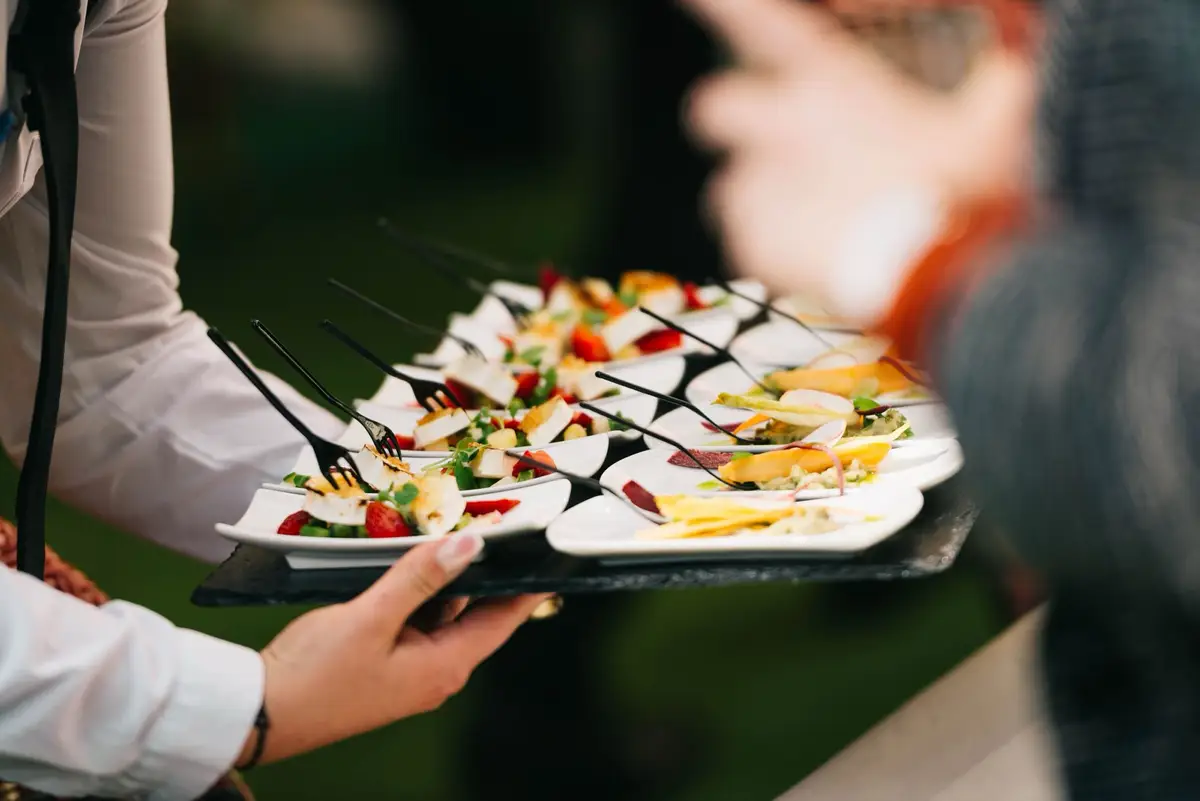
Canapés or drinks carried on trays by servers moving through the room, as opposed to placed on a table.
Grazing table
A large display of cheeses, cured meats, breads, dips, fruit and vegetables that guests help themselves to over a set period.
Food and menu terms
Canapé
A small savoury bite, usually on a base such as toast, pastry or cucumber, eaten in one or two bites without a plate.
Hors d'oeuvre
A general term for small dishes served before or instead of a meal. Canapés are one kind of hors d'oeuvre.
Amuse-bouche
A single bite sent from the kitchen before the first course, not ordered separately.
Mezze
A spread of small shared dishes from the eastern Mediterranean and Middle East, such as hummus, muhammara, tabbouleh and pickles.
Entrée
In Canada and the US, the main course. In French usage it means the starter, which causes confusion on bilingual menus.
Intermezzo
A small palate cleanser, often a sorbet, served between courses at a formal dinner.
Dual entrée
A plated main with two proteins on one plate, such as beef and fish, so guests do not have to choose in advance.
Late-night food
A snack course served later in an evening event, typically two to three hours after dinner.
Vendor meal
A meal provided to working vendors such as the photographer, DJ or planner, usually at a reduced price and served during dinner.
Seasonal menu
A menu built around produce at its best at the time of the event, which in Ontario changes noticeably between spring, summer, autumn and winter.
Pricing and contract terms
Per-person price
The menu cost for one guest, before fees and tax. Our starting prices are listed on the pricing page.
Service charge
A percentage added to the bill for full-service events to cover the cost of running the event. It is not the same as a voluntary tip.
Gratuity
A voluntary tip for staff, separate from any service charge.
HST
Harmonized Sales Tax. In Ontario it is 13% and applies to catered food and beverages.
Minimum guarantee
The lowest guest count or spend you agree to pay for, even if fewer guests attend.
Final headcount
The confirmed number of guests you give the caterer by a set date before the event, used for ordering and the final invoice.
Deposit
A payment that holds your date once the contract is signed. The amount and refund terms are stated in the contract.
Corkage fee
A per-bottle or per-guest fee charged when a host supplies their own wine or alcohol and someone else serves it.
Cake-cutting fee
A per-guest fee charged for cutting and plating a cake the caterer did not make.
Buy-out fee
A fee some venues charge to allow a caterer that is not on their exclusive or preferred list.
Venue and logistics terms
Exclusive caterer
A caterer that is the only one allowed to serve food at a particular venue.
Preferred caterer list
A venue's shortlist of caterers it recommends or requires. Some venues allow others for a fee.
Load-in
The time and route for bringing equipment and food into a venue, such as a loading dock, freight elevator or side door.
Run of show
The minute-by-minute timeline of an event, shared by the caterer, venue, planner and other vendors.
Back of house
The working area out of guests' sight where food is finished, plated and stored during an event.
Field kitchen
A temporary kitchen set up in a tent or back room at a venue without a commercial kitchen.
Chafing dish
A metal serving pan held over a heat source to keep buffet food hot.
COI (certificate of insurance)
A document showing a vendor's liability insurance, often required by venues and office buildings before load-in.
Food safety, dietary and alcohol terms
Danger zone
The temperature range between 4°C and 60°C, where bacteria in food multiply quickly.
Certified food handler
A person who has completed an approved food handler training course. Ontario's Food Premises regulation, O. Reg. 493/17, requires at least one on the premises every hour a kitchen operates.
DineSafe
Toronto Public Health's program for inspecting food premises in Toronto and publishing the results.
Cross-contact
When an allergen or gluten is transferred to food that should not contain it, through shared equipment, surfaces, utensils or hands.
Priority allergens
The foods Health Canada identifies as the most common causes of severe allergic reactions, including peanuts, tree nuts, sesame, milk, eggs, fish, shellfish, soy, wheat and mustard, together with sulphites and gluten sources.
Halal-certified
Food or a kitchen inspected and certified by a halal certifying body. Compare with halal-friendly, which usually means no pork or alcohol but no certification. See halal catering.
Kosher-style
Traditional Jewish dishes served without pork, shellfish or mixing meat and dairy, but not prepared under kosher supervision.
Special Occasion Permit (SOP)
An AGCO permit allowing alcohol to be served or sold at an event such as a wedding reception, applied for by the host.
Smart Serve
Ontario's responsible alcohol service training program, required for staff of licensed establishments who serve alcohol.
Keep planning
Related pages
Catering questions, answered
Prices, booking, dietary meals, staff, delivery, venues, alcohol and food safety, in plain answers grouped by topic.
Explore
How it works
From the first inquiry to the last tray collected: what happens at each step, what we need from you, and how far ahead to book.
Explore
Catering prices
Starting prices per person for every format, plus every fee that can appear on a quote: delivery, staff hours, service charge, rentals and HST. No…
Explore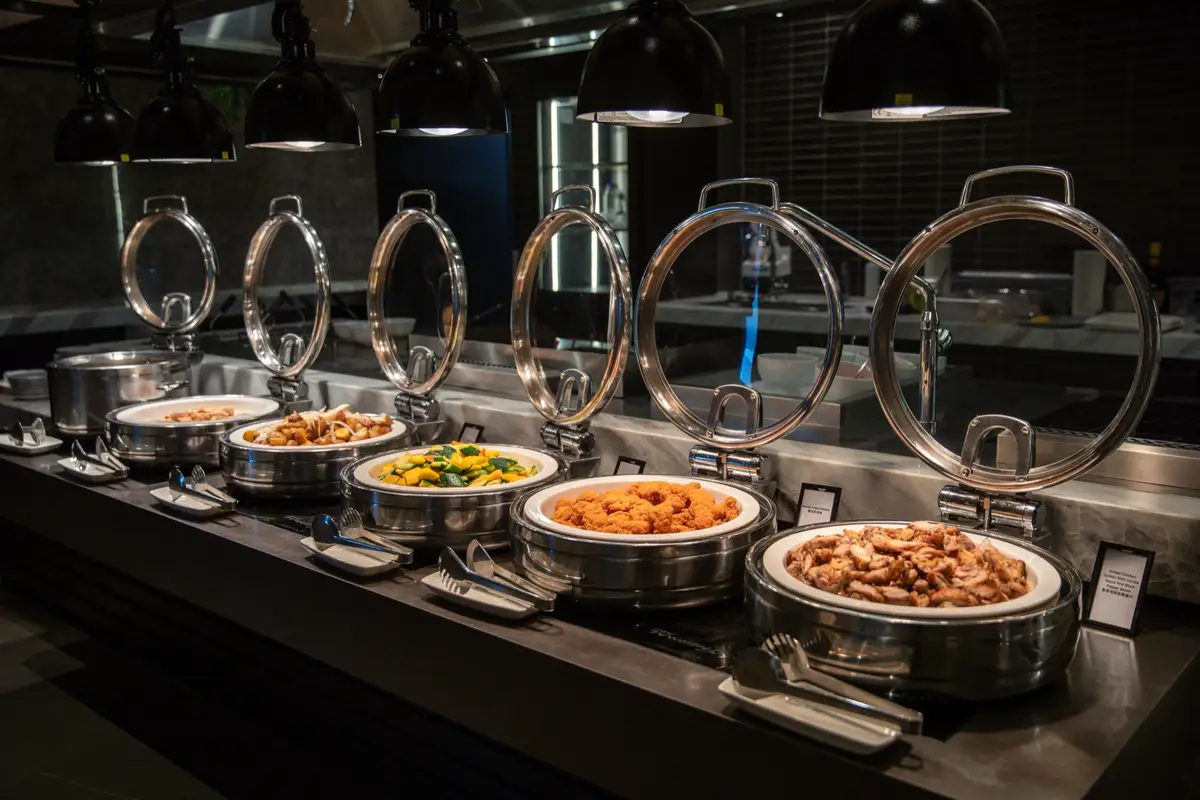
Buffet vs plated: which service suits your event?
A plated dinner costs more mainly because of staff and preparation, not ingredients. A buffet gives guests choice and quantity but asks for more…
Explore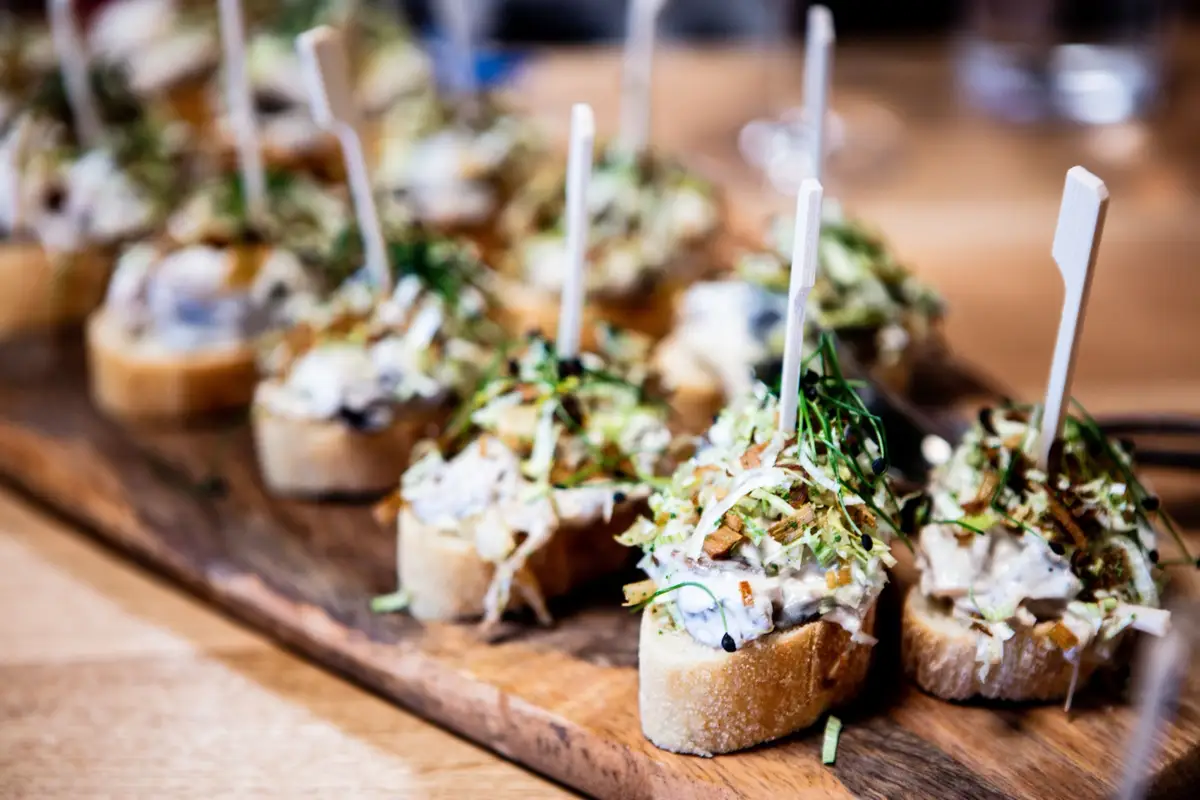
Catering menus
Seven menu formats, each built for a different time of day, guest count and room. Every dish carries dietary codes, every page shows a starting price…
Explore
Kitchen and food safety
The rules Ontario caterers work under, what they mean for your event, and the practices we follow from our kitchen to your table.
Explore