Dietary menus
Vegan and plant-based catering
Plant-based food that fills people up at a working lunch and holds its own at a wedding dinner, with no hidden butter, stock or honey.
Vegan, plant-based and vegetarian: what we mean
These words get used loosely, so here is how we use them on menus and labels:
- Vegan: no meat, fish, dairy, eggs, honey or other animal-derived ingredients, including in stocks, sauces, pastry and garnishes.
- Plant-based: a menu built mostly or entirely from plants. When a guest needs strictly vegan food, we label it vegan, not plant-based, so there is no doubt.
- Vegetarian: no meat or fish, but dairy and eggs may be used. A vegetarian dish is not automatically vegan.
Where animal ingredients hide
Most vegan catering mistakes are not the main dish. They are the small things a kitchen adds out of habit. We check for each of these when a dish is labelled vegan:
- Butter or ghee finishing rice, vegetables and flatbreads
- Chicken or beef stock in soups, grains and braises
- Anchovy in Caesar dressing and Worcestershire sauce, fish sauce in Southeast Asian dressings
- Egg wash on pastry, egg in fresh pasta, mayonnaise in slaws and sandwiches
- Honey in vinaigrettes and glazes
- Gelatin in panna cotta, mousses and gummy garnishes
- Yogurt or cream in curries, dips and marinades
| Format | Works well | Why |
|---|---|---|
| Boxed lunch | Mujaddara, cucumber and herb salad, tahini | Tastes good at room temperature, no sogginess |
| Hot buffet | Chana masala, jeera rice, roasted cauliflower | Holds well in chafing dishes |
| Canapés | Panisse with preserved lemon, smoked carrot on rye | Firm, one-bite, no dripping |
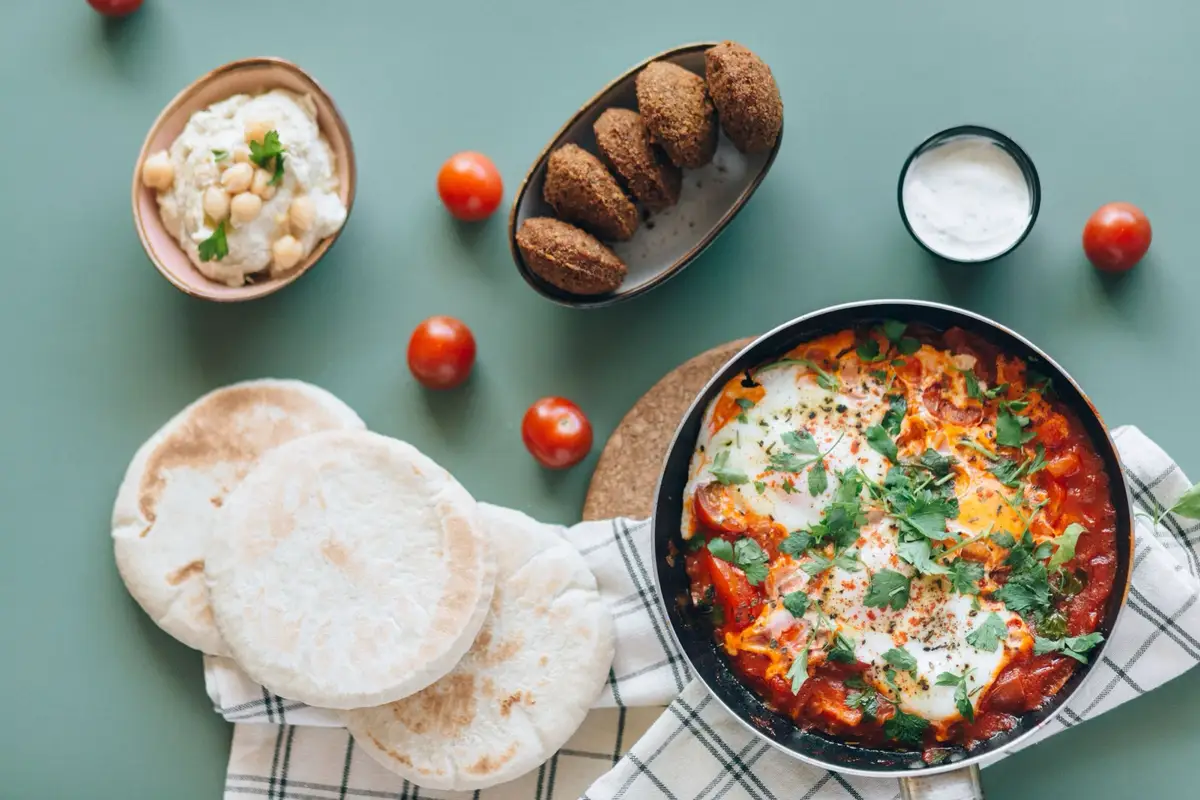
| Stations | Falafel and mezze, build-your-own grain bowls | Guests choose portions and toppings |
| Plated dinner | Mushroom and barley risotto, charred cabbage with white beans | A proper centre of the plate |
Plant-based lunches that keep an office going
The common complaint about vegan office lunches is being hungry by 3 p.m. The fix is protein and fat, not bigger salads. A good plant-based lunch plate has a proper protein (lentils, chickpeas, white beans, tofu or tempeh), a whole grain or potato, something roasted, and a sauce with body such as tahini, romesco or a coconut curry base.
Examples that travel well in boxed lunches and on a hot lunch buffet: chana masala with jeera rice, mujaddara with crispy onions and cucumber salad, harissa-roasted cauliflower with chickpeas and freekeh, and miso-glazed tofu with sesame greens. We avoid leaning on nuts for protein in shared office meals, because tree nut and peanut allergies are common.
How much vegan food to order
If 5 of 50 guests are vegan and the vegan dish is good, more than 5 people will take it. Two approaches work:
- Order the vegan dish for more than the vegan count, usually a portion for about a quarter to a third of all guests, so it lasts through the line.
- Reserve named portions for the guests who need them: labelled boxes, or plates held back and served first.
For many offices the easiest answer is to make one of the two hot mains vegan for everyone. It also helps guests who eat halal, avoid dairy or simply prefer lighter food.
Fully vegan weddings and receptions
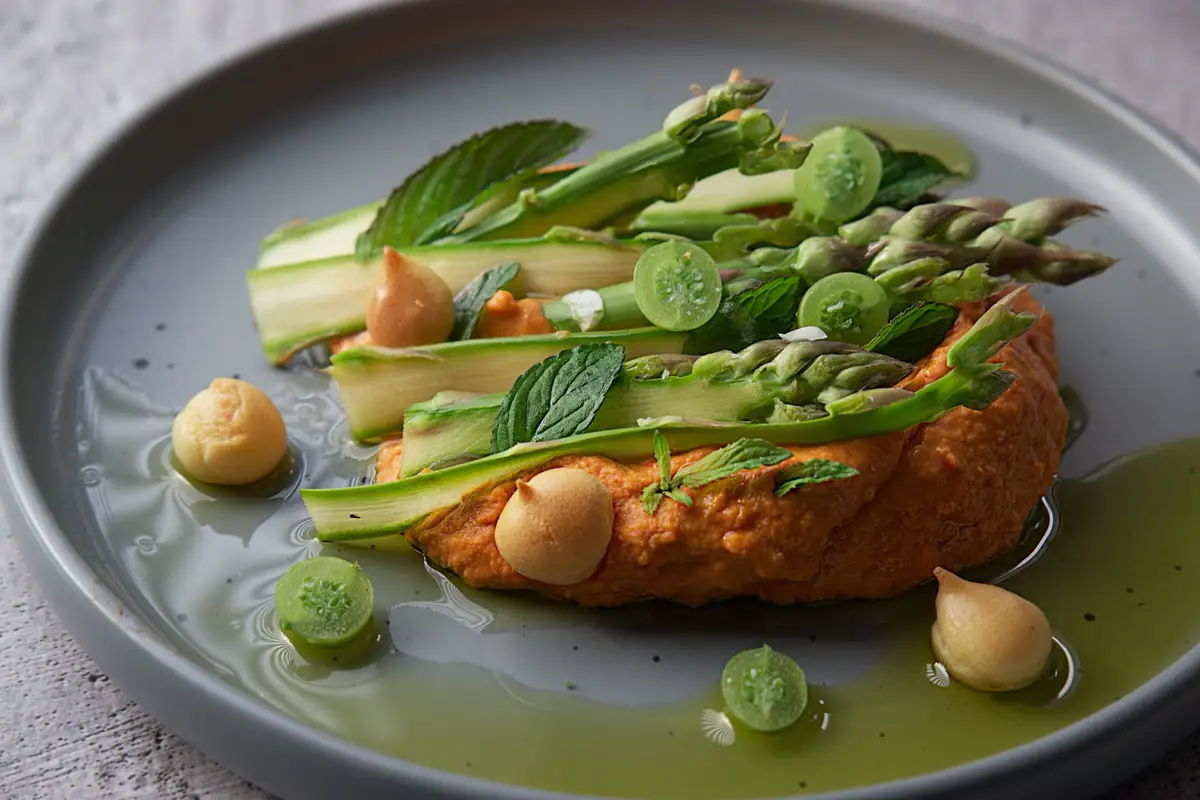
A fully vegan wedding does not need to announce itself. Guests remember whether dinner was good and whether there was enough of it. We design vegan wedding menus the way we design any other: a first course with acidity, a main with a satisfying centre, and dessert that is not an afterthought.
For a cocktail reception, passed items such as smoked carrot on rye with dill cashew cream, crispy chickpea panisse with preserved lemon, and mushroom and walnut pâté on toast hold up well over two hours. For a plated dinner, a charred cabbage wedge with white bean purée and salsa verde or a wild mushroom and barley risotto work as mains. Desserts built on dark chocolate, olive oil cake or poached fruit do not need dairy to be rich.
If some dishes use cashews or walnuts, we label them clearly and plan a nut-free option for guests with allergies.
Cooking with Ontario seasons
Vegan menus depend more on produce than meat menus do, so we plan around what is good locally. In late spring we cook with asparagus and ramps, and in early summer with peas and strawberries. By August and September it is corn, field tomatoes, peppers and peaches. Autumn brings squash, apples, pears and mushrooms, and in winter we lean on root vegetables, cabbage, dried beans and preserved flavours. A seasonal menu costs less and tastes better than forcing summer dishes in January.
Vegan guests at a mixed event
At most events vegan guests are a minority, so how their food is served matters as much as the recipe. On a buffet we put vegan dishes near the start of the line with their own utensils, so a spoon from the butter chicken does not end up in the dal. At a plated dinner the vegan meals are marked on the seating chart and plated from the same kitchen line, at the same time, so nobody waits while their table eats.
Labelling rule
We only label a dish vegan when every component has been checked, including stocks, dressings, pastry and garnishes. Dishes that are vegetarian but contain dairy or egg are labelled vegetarian.
Questions
Frequently asked
Can you cater a completely vegan event?
Yes. Every format we offer, from boxed lunches to plated wedding dinners, can be fully vegan. We will suggest a menu based on the season and your service style.
Is your vegan food prepared separately from meat?
Vegan dishes are prepared with clean equipment and stored and packed apart from meat and dairy dishes, but our kitchen is shared. If a guest needs strict separation for medical reasons, tell us and we will explain exactly what we can do.
Are your vegan dishes also gluten-free?
Many are, but not by default. Seitan, couscous, bulgur, barley and many breads contain gluten. Each dish carries its own labels, and we can build a menu that is both vegan and gluten-free.
Will non-vegan guests be satisfied with a vegan menu?
Usually, yes, when the food has enough protein, fat and seasoning. We plan portions a little more generously for plant-based mains and include hearty sides so nobody leaves hungry.
Do vegan menus cost less?
Sometimes slightly, because plant proteins cost less than meat. Labour is similar, so the difference is usually modest. Your quote shows the per-person price for the exact menu.
Keep planning
Related pages
Catering for dietary restrictions
We plan halal, vegan, gluten-free and allergy-aware meals into the menu from the first quote, so the guest with a restriction gets the same food…
Explore
Gluten-free catering
Gluten-free dishes for guests who avoid gluten, and separately packed, labelled meals for guests with celiac disease, with a clear explanation of the…
Explore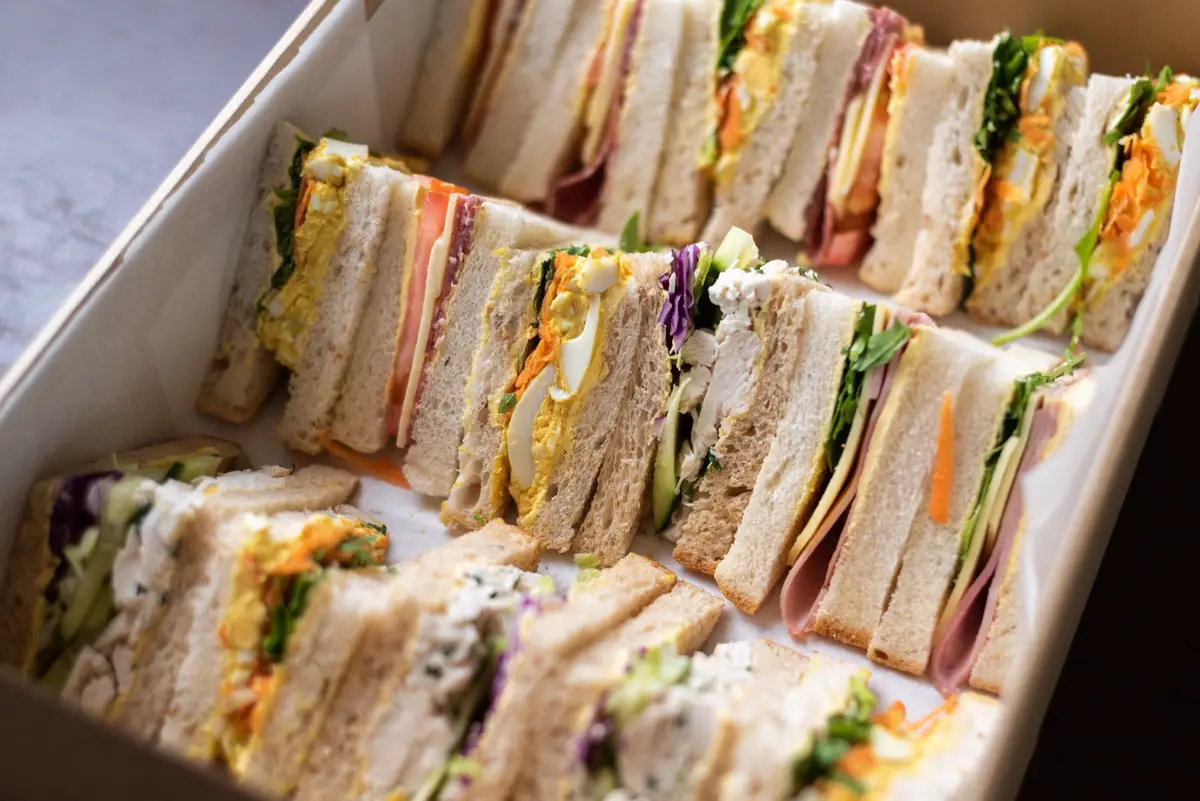
Boxed lunch catering
Individual lunches, each packed and labelled for one person, so special meals reach the right people and nobody waits in a line.
Explore
Cocktail-style wedding receptions
A cocktail reception replaces the seated dinner with passed canapés, small bowls and a station or two, so guests move, talk and eat for the whole…
Explore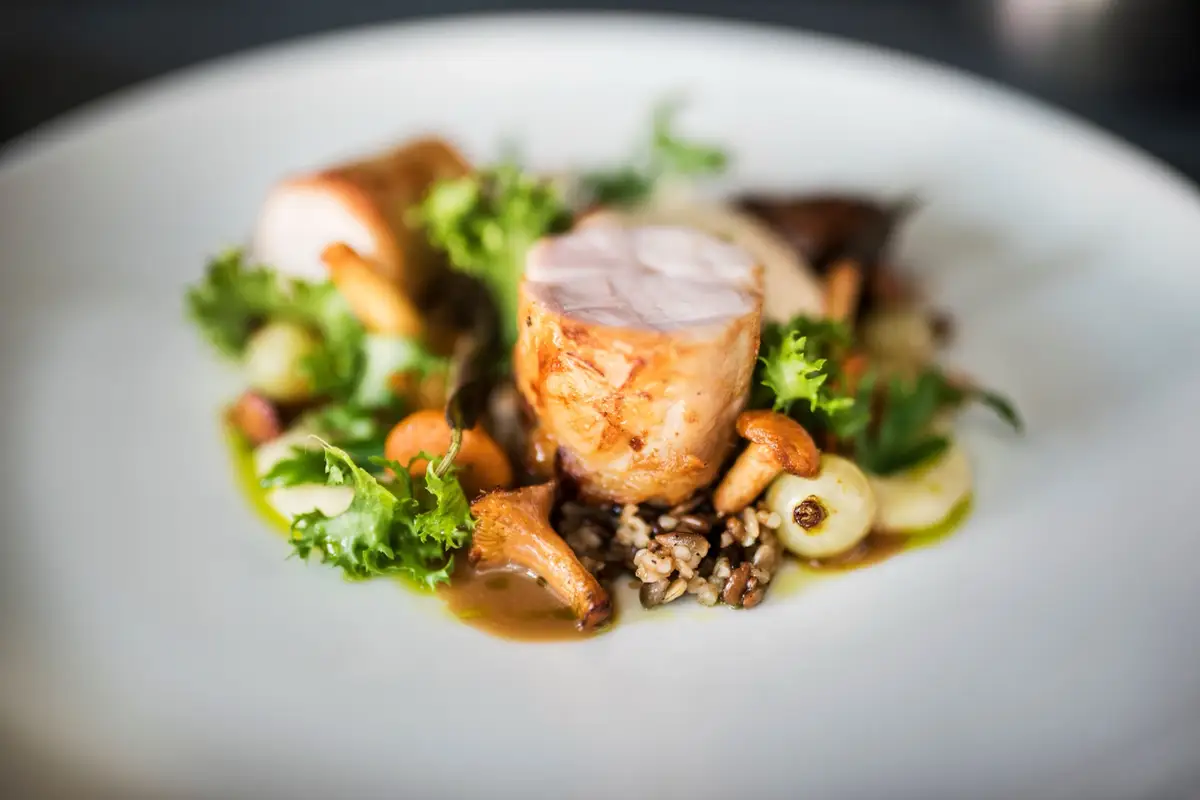
Plated dinner menu
A seated, served dinner of three or four courses. Choose one starter, one dessert and up to three mains (including a vegetarian or vegan main), and…
Explore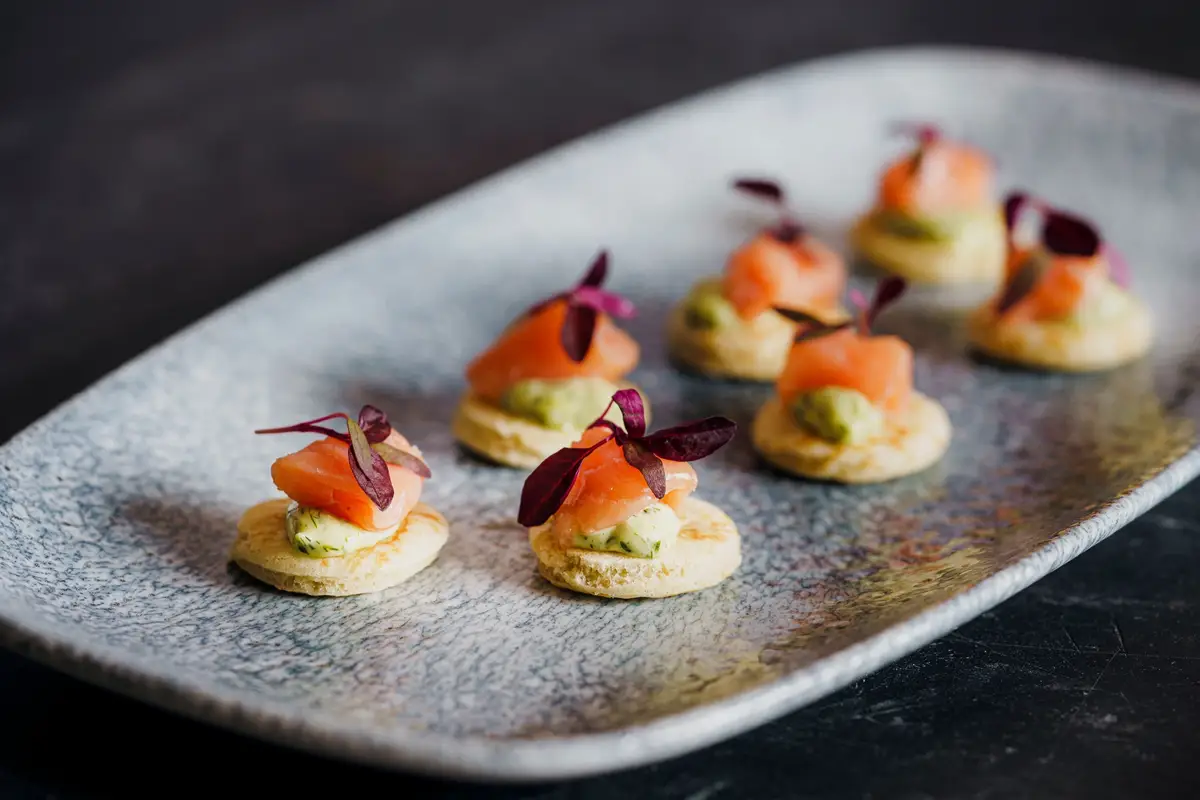
Canapé menu
Two-bite food passed by servers, designed to be eaten standing with a drink in the other hand. Choose six to ten canapés from the lists below and we…
Explore