Compare
Buffet vs plated: which service suits your event?
A plated dinner costs more mainly because of staff and preparation, not ingredients. A buffet gives guests choice and quantity but asks for more floor space and more of the evening. Here is how they compare in practice.
The short answer
Choose plated when the dinner is part of a program (speeches, first dance, awards) and timing matters, when the room is formal, or when you need tight control over dietary meals. Choose a buffet when guests value choice and generous portions, when the budget per guest is tighter, or when the venue has room for service lines and the evening is relaxed.
Both can be excellent. The wrong choice is usually the one that doesn't match the room or the schedule: a buffet for 250 guests with one line, or a five-course plated menu in a backyard with no kitchen tent.
What each costs, and why
EventSource's guide to wedding catering costs in Toronto and the GTA puts buffets at roughly $50 to $100 per guest and plated dinners at roughly $80 to $150 or more. Our own prices start from $68 per person for a wedding buffet and from $92 per person for a plated dinner, before HST and service charge.
The gap comes from three places:
- Staff. Plated service commonly needs one server for every 10 to 12 guests, plus kitchen staff to plate each course. A buffet needs fewer servers (often one for every 20 to 25 guests) to replenish, guide lines and clear.
- Plating labour and equipment. Plating 150 identical mains in a few minutes needs a trained line, space and more plates and cutlery per guest across courses.
- Rentals. Plated dinners typically use more china and glassware per guest; buffets need serving tables, chafing or electric holding and extra serveware.
Buffets do use more food per guest, because portions are not controlled and every dish must look full to the last person in line. That narrows the cost gap, but plated service usually remains more expensive per guest.
| Factor | Buffet | Plated |
|---|---|---|
| Typical Toronto cost (EventSource) | About $50–$100 per guest | About $80–$150+ per guest |
| Our starting price | from $68 per person | from $92 per person |
| Servers | About 1 per 20–25 guests | About 1 per 10–12 guests |
| Meal choice | On the night | Collected with RSVPs |
| Serving 150 guests | Varies; last table can wait 30+ minutes | 10–15 minutes per course |
| Dietary control | Good with labels and separation | Highest; meals plated individually |
| Floor space | Needs room for service lines | Minimal in the room |
| Food volume | Higher; dishes stay full to the end | Portion-controlled |
| Feel | Generous, relaxed | Formal, paced |
Timing and flow
Plated service is predictable. Once the kitchen is ready, a trained team can serve a course to 150 guests in 10 to 15 minutes, and a three-course dinner usually runs around 75 to 90 minutes. The planner, DJ and photographer can build the evening around it.
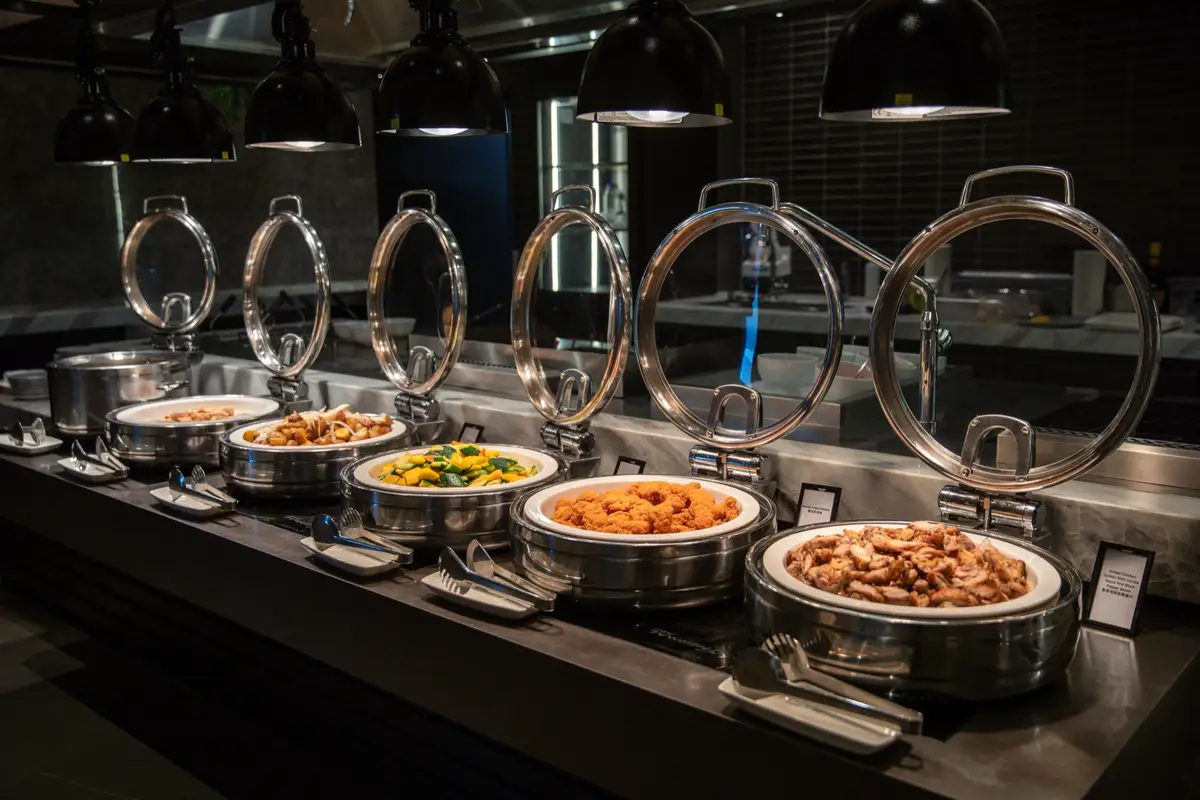
Buffets are less predictable. Tables are released in order, guests take their time choosing, and the last table can eat 30 or more minutes after the first. A double-sided line helps, and a working figure of one double-sided line for every 100 to 125 guests keeps waits reasonable. Speeches during a buffet dinner are harder, because part of the room is always in line.
A staffing example for 150 guests
To make the difference concrete, here is how a 150-guest wedding dinner might be staffed under each format, using common industry ratios. Plated, three courses: about 13 to 15 servers, a kitchen team of 5 to 6 to plate each course, a captain and bar staff. Buffet with two double-sided lines: about 6 to 8 servers to guide tables, replenish and clear, 3 to 4 kitchen staff, a captain and bar staff. Multiply the difference by a six-to-eight-hour shift, including setup and clearing, and the cost gap is clear. Our staffing guide explains each role.
Dietary needs and allergies
Plated service gives the most control. Each guest's meal is recorded in advance, marked on the seating chart or place card, and plated separately in the kitchen. Guests with allergies never approach a shared serving spoon.
Buffets can handle dietary needs well with labels on every dish, separate utensils and a dedicated section for specific diets, but they rely on guests reading labels and on other guests not swapping spoons. For severe allergies, a plated meal served from the kitchen is safer even at a buffet event. Our dietary catering page explains how we label and separate.
Space and venue
A buffet for 150 needs room for two or three serving lines with clear queue space, which can mean losing a few guest tables. Plated service needs almost no floor space in the room but more back-of-house space for plating. In a loft or tent with no kitchen, that back-of-house area has to be built (see our loft venue guide).
Guest experience
Plated dinners feel formal and keep guests at their tables, which suits conversation and a planned program. Buffets feel generous and relaxed, let guests choose what and how much they eat, and get people out of their seats. Some couples and hosts find buffets less formal than they want; others find plated service too stiff for their crowd. There is no right answer, only the answer that suits your guests.
Choose plated if / choose buffet if
Choose plated if:
- Your evening has a tight program of speeches, dances or awards.
- You want a formal, restaurant-style dinner.
- Several guests have serious allergies or specific dietary meals.
- Floor space in the room is limited but there is back-of-house space.
- You can collect meal choices with RSVPs.
Choose a buffet if:
- Your budget per guest is the main constraint.
- Guests expect generous portions and a choice of dishes.
- The event is relaxed and timing is flexible.
- The room has space for service lines.
- You would rather not ask guests to choose a meal in advance.
Not sure? Consider a hybrid: a plated first course followed by a buffet or family-style main. Our plated dinner menu and buffet menu show what each looks like.
Questions
Frequently asked
Is a buffet cheaper than a plated dinner?
Usually, yes. Plated service needs more staff and plating labour. EventSource's Toronto guide puts buffets at about $50 to $100 per guest and plated dinners at about $80 to $150 or more.
How many servers do I need for a plated dinner?
A common ratio is one server for every 10 to 12 guests, plus kitchen staff. Wine service at the table or more courses can raise it.
How long does a buffet take for 150 guests?
With two double-sided lines and tables released in order, most rooms are served in 25 to 40 minutes. A single line can take much longer.
Do guests have to pick their meal for a plated dinner?
Usually, yes, with the RSVP. Alternatives are a single main for everyone with dietary exceptions, or a duo plate with two proteins.
Is there less food waste with plated service?
Generally yes, because portions are controlled. Buffets must keep every dish looking full until the last guest is served.
Can I do a mix of buffet and plated?
Yes. A plated first course and dessert with buffet mains is a common hybrid that keeps some formality without the full plated staffing cost.
Keep planning
Related pages
Catering options, compared honestly
Most catering decisions come down to a handful of trade-offs between cost, staff, space, time and how guests eat. These comparisons put the…
Explore
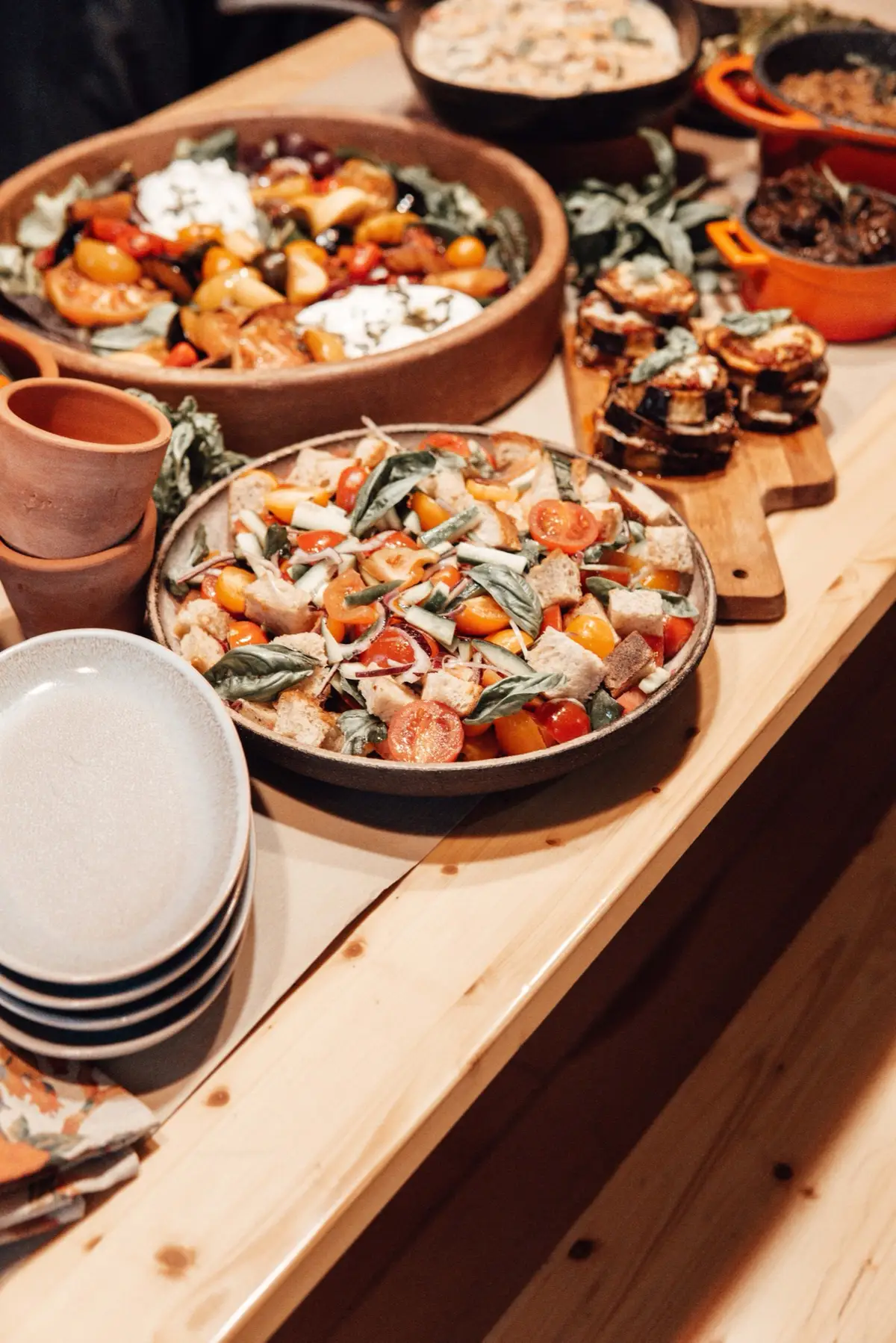
Food stations vs family-style service
Both formats make a dinner feel generous without the formality of a plated menu. Stations get guests up and moving; family-style keeps them seated…
Explore
Wedding catering in Toronto and the GTA
Full-service wedding catering from our kitchen: canapé receptions, long-table dinners for small weddings, and tented backyard celebrations. You get a…
Explore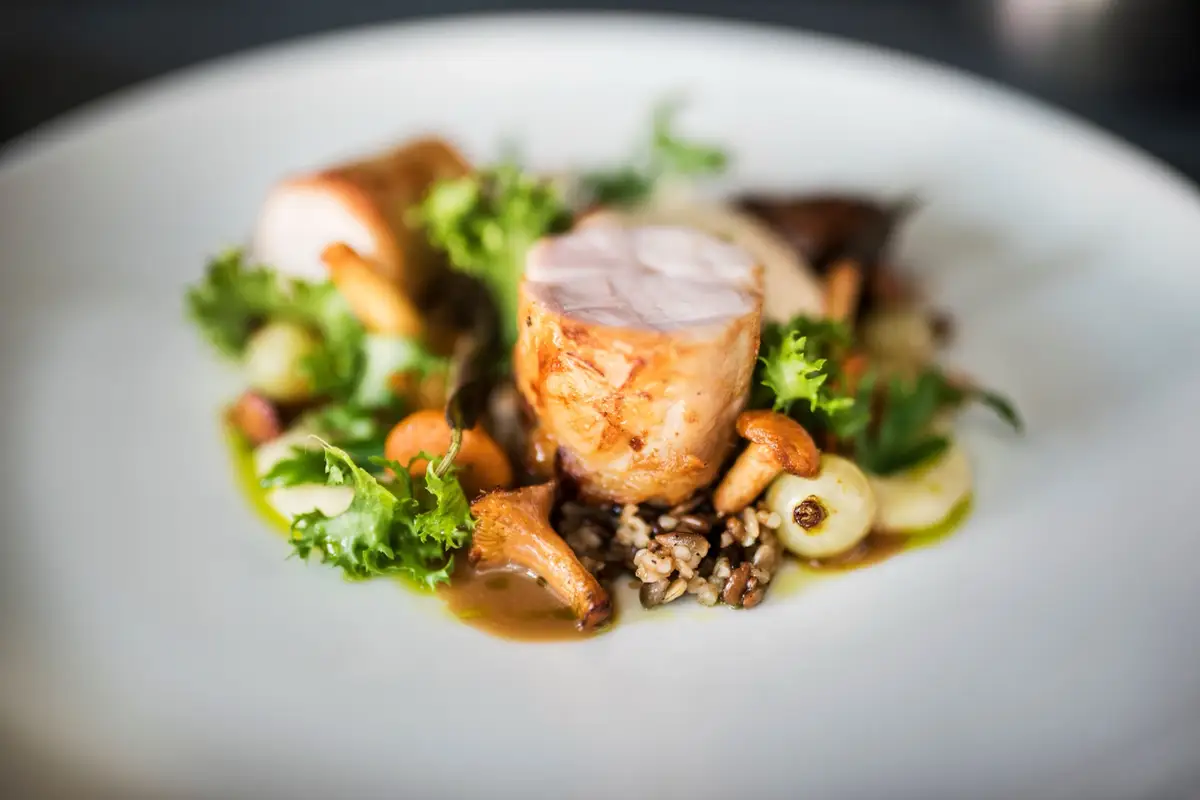
Plated dinner menu
A seated, served dinner of three or four courses. Choose one starter, one dessert and up to three mains (including a vegetarian or vegan main), and…
ExploreHot lunch buffet menu
A shared hot meal for teams of 15 to a few hundred: two or three mains, a vegetarian main, sides, a salad and dessert, kept hot in chafing dishes on…
ExploreWedding catering cost in Toronto: what $60, $100 and $150 per guest buys
EventSource puts most Toronto and GTA weddings at $50–$100 per guest for catering, with a full range of $30–$150. What matters more is what sits…
Read the guide