Compare
Boxed lunches vs platters for the office
Boxed lunches give every person a labelled meal in seconds. Platters feed a team for less and feel like a shared lunch. The mix of dietary needs in the room usually settles it.
What we mean by each
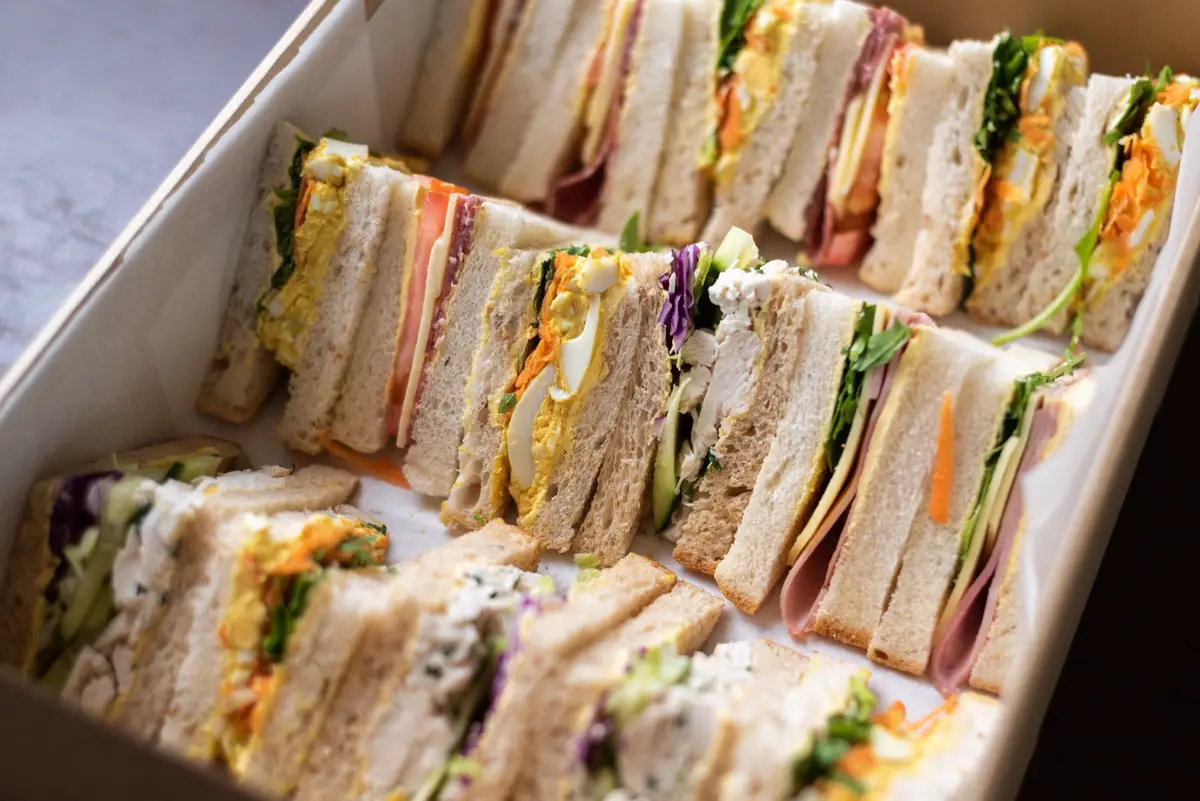
A boxed lunch is an individual meal in its own container: typically a sandwich, wrap or grain bowl, a side salad, a snack or dessert, and cutlery and a napkin, labelled with the contents and, if you send names, the person it is for. See our boxed lunch menu.
Platters are shared trays and bowls set out on a table: sandwich or wrap platters, large salads, grain dishes, fruit and dessert trays, or a hot lunch buffet in chafing dishes or insulated containers. People serve themselves onto plates. See our hot lunch buffet.
Cost per person
Our boxed lunches start from $24 per person, and our hot lunch buffet starts from $32 per person, before HST and delivery. Comparing like with like (the same sandwich and salad), shared platters are usually a little cheaper per person than boxes, because individual packaging, labelling and assembly add labour and material.
Platters are also more forgiving on quantity. A platter order for 30 can comfortably feed 28 or 32, while boxed lunches are counted exactly, so late additions need a new box. On the other hand, platters are sized with a margin so the last person in line still has a choice, and some of that margin can end up as leftovers.
| Factor | Boxed lunches | Platters |
|---|---|---|
| Our starting price | from $24 per person | Hot buffet from $32 per person |
| Relative cost, same food | Slightly higher (packaging, assembly) | Usually lower |
| Dietary labelling | Per person, with names | Per tray |
| Allergen control | Strong; sealed individual meals | Depends on separate utensils and care |
| Serving speed | A couple of minutes for 20 people | About 4–6 people per minute through a line |
| Headcount flexibility | Exact count | Some margin |
| Hot food | Limited | Good with insulated containers |
| Packaging | More per person | Less |
| Best for | Working lunches, board meetings, training, offsites | Team lunches, celebrations, welcome lunches |
Dietary needs and allergens
This is where boxes win. When a team of 20 includes two halal, three vegetarian, one vegan, one gluten-free and one person with a nut allergy, individual boxes mean each person gets a meal made and labelled for them, sealed until they open it. No one has to trust that the next person used the right tongs.
Platters can handle dietary variety with separate trays, labels on every item and their own serving utensils, and dietary platters placed first in line. They work well when needs are simple, such as a vegetarian option and a gluten-free option. They are riskier for serious allergies, because shared serving spoons and guests reaching across trays create cross-contact. For mixed or serious requirements, a common solution is platters for the group plus individually boxed meals for people with specific needs. Our dietary catering page explains how we label.
Speed and meeting format
Boxes are fastest to hand out. Twenty people can pick up labelled boxes in a couple of minutes and return to their seats, which suits working lunches, training sessions with a short break, and board meetings where no one wants a queue at the credenza. Boxes can also be eaten at desks, on a bus to an offsite, or outdoors.
Platters take longer: a self-serve line moves at roughly four to six people a minute when the table is set up well, and slower when there are many dishes. They suit lunches where the break is the point, like a team celebration, a welcome lunch for new hires or an all-hands where people should sit together.
A worked example: 30-person training day
A company runs a full-day training for 30 people in a Mississauga office, with a 45-minute lunch break. Four people eat halal, three are vegetarian, one is vegan and one has a tree nut allergy. Platters alone would mean five or six separate trays, careful labelling and a line that takes most of the break. A practical plan: shared hot or cold platters for the 21 people without restrictions, plus nine individually labelled boxes with names, delivered 15 minutes before the break. Everyone eats within the hour, and no one with a restriction has to queue at a shared tray.
Presentation and waste
Platters look like a meal and make a room feel hospitable. Boxes look practical. For client-facing lunches, well-presented platters on proper serveware often make a better impression, unless the meeting is in a boardroom where individual meals are simply more polished.
Boxes create more packaging per person, even with compostable or recyclable containers. Platters create less packaging but more leftover food if quantities are generous. Check your building's organics and recycling streams; either format can be planned to fit them.
Hot or cold
Most boxed lunches are cold or room temperature, because hot food in individual containers loses quality quickly. If the team wants a hot meal, a buffet in insulated containers or chafing dishes is usually better. Food safety guidance is to eat perishable food within about two hours of it leaving temperature control, so time the delivery to the break, not to the start of the day.
Choose boxed lunches if / choose platters if
Choose boxed lunches if:
- The group has several dietary requirements or serious allergies.
- The break is short or people are eating at their seats.
- You are feeding a board meeting, training room or offsite on the move.
- You need an exact count and individual labels with names.
Choose platters if:
- You want the best value per person.
- Lunch is a social moment for the team.
- Dietary needs are simple and can be handled with separate trays.
- Headcount may shift by a few people on the day.
- You want a hot meal.
For many offices the answer is both: platters for the group and labelled boxes for the few people who need them. For regular orders, see office lunch catering.
Questions
Frequently asked
Are boxed lunches more expensive than platters?
For the same food, usually slightly, because of individual packaging, labelling and assembly. The difference is often worth it when a group has several dietary needs.
Can boxed lunches be labelled with names?
Yes. Send a list of names and dietary requirements with the order and each box is labelled individually.
How many people does a sandwich platter feed?
Platters are sized per person on the order. Tell us the headcount and whether it is a light or full lunch, and we size the order with a small margin.
Can we mix boxed lunches and platters in one order?
Yes. Platters for the group plus boxed meals for people with specific dietary needs is one of the most common office orders.
Are boxed lunches available hot?
Most boxed lunches are cold or room temperature because they travel and hold better. For a hot meal, a buffet in insulated containers is the better format.
Keep planning
Related pages
Catering options, compared honestly
Most catering decisions come down to a handful of trade-offs between cost, staff, space, time and how guests eat. These comparisons put the…
ExploreBoxed lunch catering
Individual lunches, each packed and labelled for one person, so special meals reach the right people and nobody waits in a line.
Explore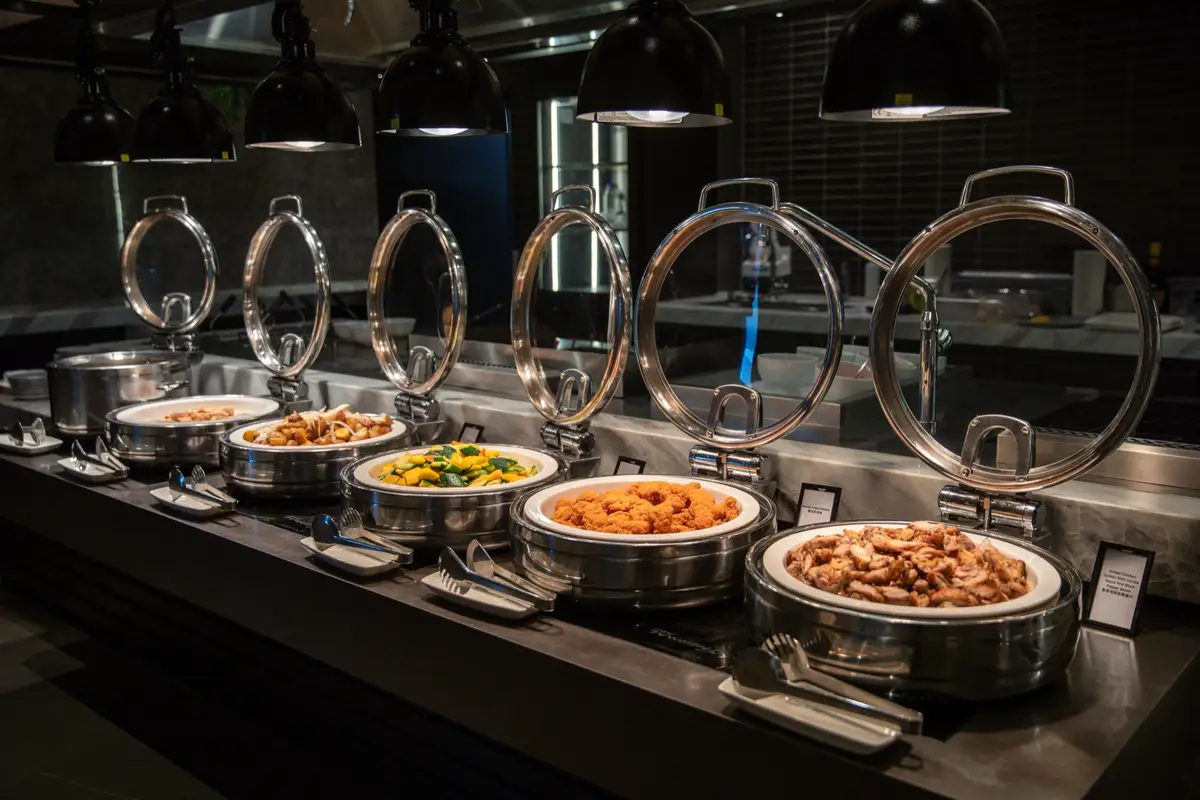
Office lunch catering
Hot buffets and shared platters for team lunches, lunch-and-learns and working sessions, delivered to your floor, set out with labels and ready when…
ExploreBoxed lunch menu
One sealed, labelled box per person: a main, a side and something sweet. Built for working lunches, site visits and teams where half the room has a…
ExploreHot lunch buffet menu
A shared hot meal for teams of 15 to a few hundred: two or three mains, a vegetarian main, sides, a salad and dessert, kept hot in chafing dishes on…
Explore
Catering offices and boardrooms
Office catering is judged in the ten minutes before a meeting starts. Getting food through security, up the right elevator and onto the table on time…
Explore