Venue guide
Catering offices and boardrooms
Office catering is judged in the ten minutes before a meeting starts. Getting food through security, up the right elevator and onto the table on time is most of the job.
Getting into the building
Toronto office buildings, especially towers in the Financial District and along Yonge, Bloor and the 401 corridor, control deliveries closely. Before a first order we ask for:
- The delivery entrance. Many towers send food deliveries to a loading dock rather than the lobby, and some limit dock access to set hours.
- Security sign-in. The name of the host, the floor and a contact number that someone will answer. Some buildings need vendor names a day ahead.
- Elevator access. Whether deliveries must use a freight elevator and whether a building staff member has to operate it.
- Parking or stopping. Where a delivery vehicle can stop for 15 minutes without being ticketed or blocking a fire route.
- Insurance. Some property managers require a certificate of insurance before a vendor can use the dock.
Once we have these details, a repeat order or a recurring lunch program does not need them again.
Timing
For a lunch meeting, food should be set up and ready 10 to 15 minutes before people arrive, which usually means arriving at the dock 30 to 45 minutes before start time in a busy tower. For breakfast meetings at 8 a.m., building access hours matter: some docks and freight elevators don't open until 7 a.m.
Plan for a small gap between delivery and eating, not a long one. Food out of temperature control should be eaten within about two hours, so a lunch delivered at 11 a.m. for a meeting that breaks at 1:30 p.m. needs hot holding or a later delivery. Our standard lead time for drop-off orders is 48 hours.
| Meeting | Usual format | Why |
|---|---|---|
| Board meeting, 8–14 people | Boxed lunches or plated platters on a credenza | No line, minimal interruption, names and dietary tags on each meal |
| Team lunch, 20–60 people | Hot lunch buffet or platters | Better value per head, food served together |
| All-day training | Breakfast, breaks and lunch as separate drops or a staffed station | Food refreshed at each break |
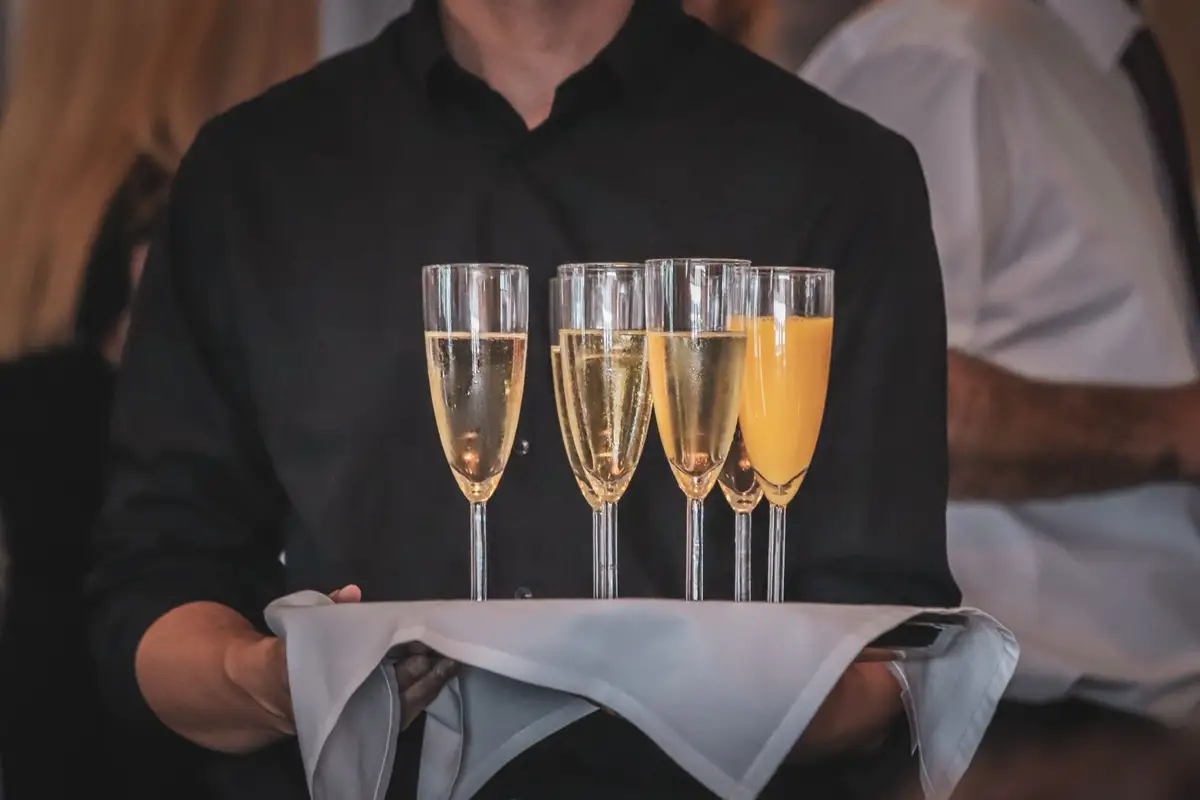
| Client reception after hours | Passed canapés, staffed | Guests mingle; no plates on desks |
Setting up in a meeting room
Boardrooms are designed for laptops, not buffets. We set food on a side credenza or a separate table rather than the meeting table, keep hot equipment clear of AV cables and screens, and use table protectors where surfaces are wood or glass. If the only surface is the meeting table itself, individually packed meals are usually the better format.
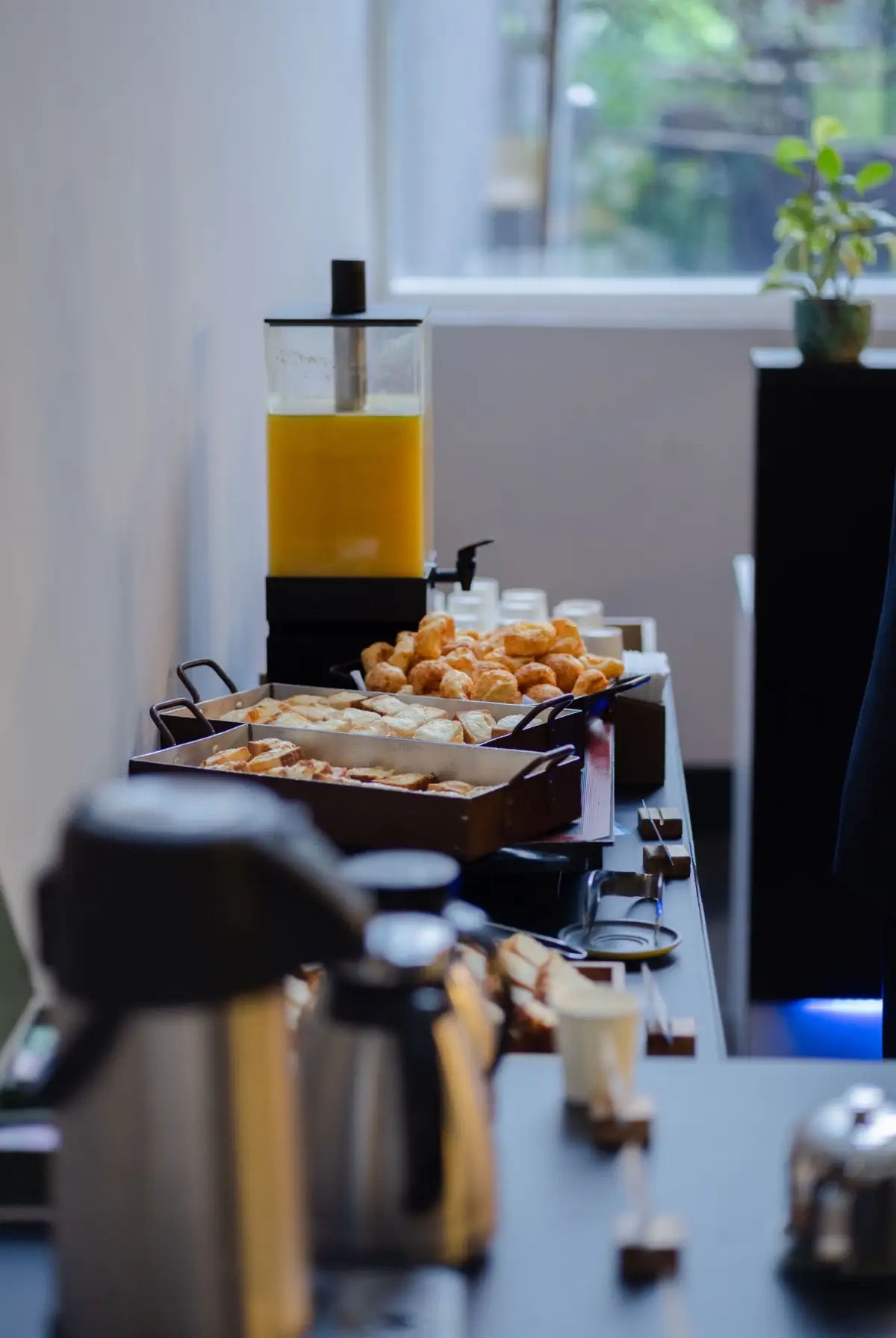
For breakout sessions and all-day meetings, a separate food station in a corridor or pantry lets people eat without interrupting the room. See meeting and conference catering for full-day plans.
Dietary labelling that works at work
Offices bring together halal, vegetarian, vegan, gluten-free and allergy requirements in one room. The fix is labelling, not guessing. Individually boxed meals can carry the guest's name and the dietary tag, which is why many teams choose boxed lunches for meetings with several restrictions. On buffets and platters, every item carries a label, dishes for specific diets are placed first in the line with their own serving utensils, and allergen information is on the order confirmation.
Collect requirements with the meeting invite, not the morning of. A short form with name and dietary need gives us what we need to label correctly. Our dietary catering page explains how each requirement is handled.
After-hours receptions on the office floor
Client receptions, launches and holiday parties held in office space turn a workplace into an event venue for a night. Additional questions apply: does the building allow alcohol, and under what conditions; are chafing fuels permitted; what is the occupancy limit for the floor; and when must cleaners and security have the space back. Freight elevators may need to be booked separately for the evening. See corporate events and receptions.
Waste and pickup
Most buildings have their own recycling and organics sorting rules. We use packaging that fits typical GTA recycling and organics streams where possible, and we tell the host what goes where. If our equipment (chafing dishes, platters, beverage dispensers) is left on site, we agree a pickup time that suits the building, often later the same day or the next morning.
Questions
Frequently asked
How early does catering arrive for an office lunch?
We aim to have food set 10 to 15 minutes before the meeting starts. In towers with a dock and security sign-in, the driver typically arrives 30 to 45 minutes earlier.
Do you deliver to office towers downtown with loading docks?
Yes. Send the dock address, any booking requirement and the name of the on-site contact with the order. We keep those details on file for later orders.
Can each lunch box be labelled with a name and dietary need?
Yes. Send a list of names and requirements with the order and each boxed meal is labelled individually.
Do you pick up equipment afterwards?
For orders with reusable equipment, we agree a pickup time with you that works with the building's access rules. Disposable-only orders need no pickup.
Can you set up in the boardroom?
Yes. For drop-off orders the driver places food where you direct; for staffed service we set up, refresh and clear. Tell us if the room has a credenza or side table.
Keep planning
Related pages
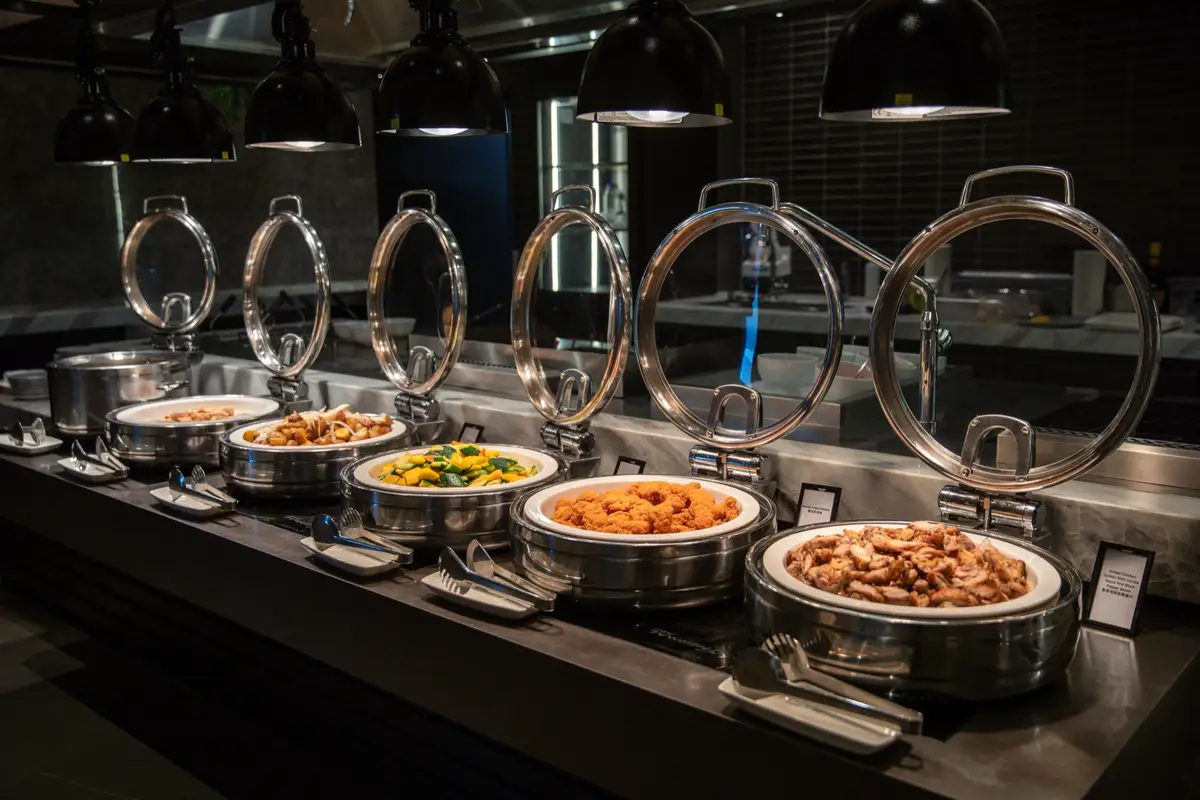
Office lunch catering
Hot buffets and shared platters for team lunches, lunch-and-learns and working sessions, delivered to your floor, set out with labels and ready when…
Explore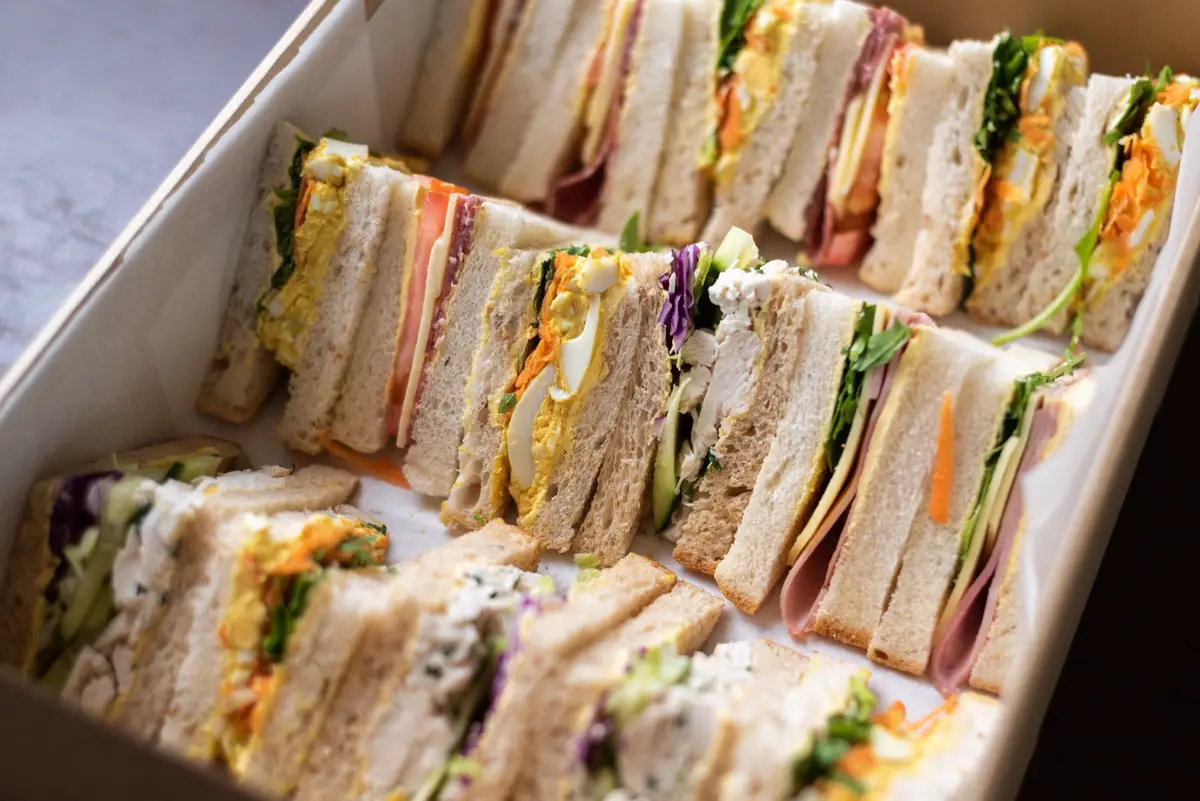
Boxed lunch catering
Individual lunches, each packed and labelled for one person, so special meals reach the right people and nobody waits in a line.
ExploreMeeting and conference catering
One food plan for the whole day: breakfast, coffee breaks, lunch and an optional closing reception, timed to your agenda and labelled for every…
ExploreBoxed lunch menu
One sealed, labelled box per person: a main, a side and something sweet. Built for working lunches, site visits and teams where half the room has a…
Explore
Catering in downtown Toronto and the Financial District
Boardroom lunches in Bay Street towers, receptions on office floors, and loft events in King West and Liberty Village. Downtown catering is mostly a…
ExploreBoxed lunches vs platters for the office
Boxed lunches give every person a labelled meal in seconds. Platters feed a team for less and feel like a shared lunch. The mix of dietary needs in…
Explore