
Corporate catering
Recurring office meal programs
Weekly or daily team lunches on a rotating menu, with a standing dietary roster, a clear headcount cut-off and one consolidated invoice.
What a meal program is
A recurring program replaces a run of one-off orders with a standing arrangement: the same days each week, a menu that rotates so nobody eats the same thing twice in a month, and a process for headcounts and dietary needs that the office manager does not have to rebuild every Tuesday.
Toronto offices use programs for different reasons. Some want a reason for people to come in on anchor days. Some run a weekly all-hands lunch. Some feed a team that works through lunch every day, such as a trading floor, a hospital admin group or a production studio. The mechanics are similar; the menu and budget are not.
Setting up the program
Before the first delivery we agree on the pieces that make a program run without daily back-and-forth:
- Days and delivery time. For hybrid offices this is usually the two or three days the team is in, often Tuesday to Thursday.
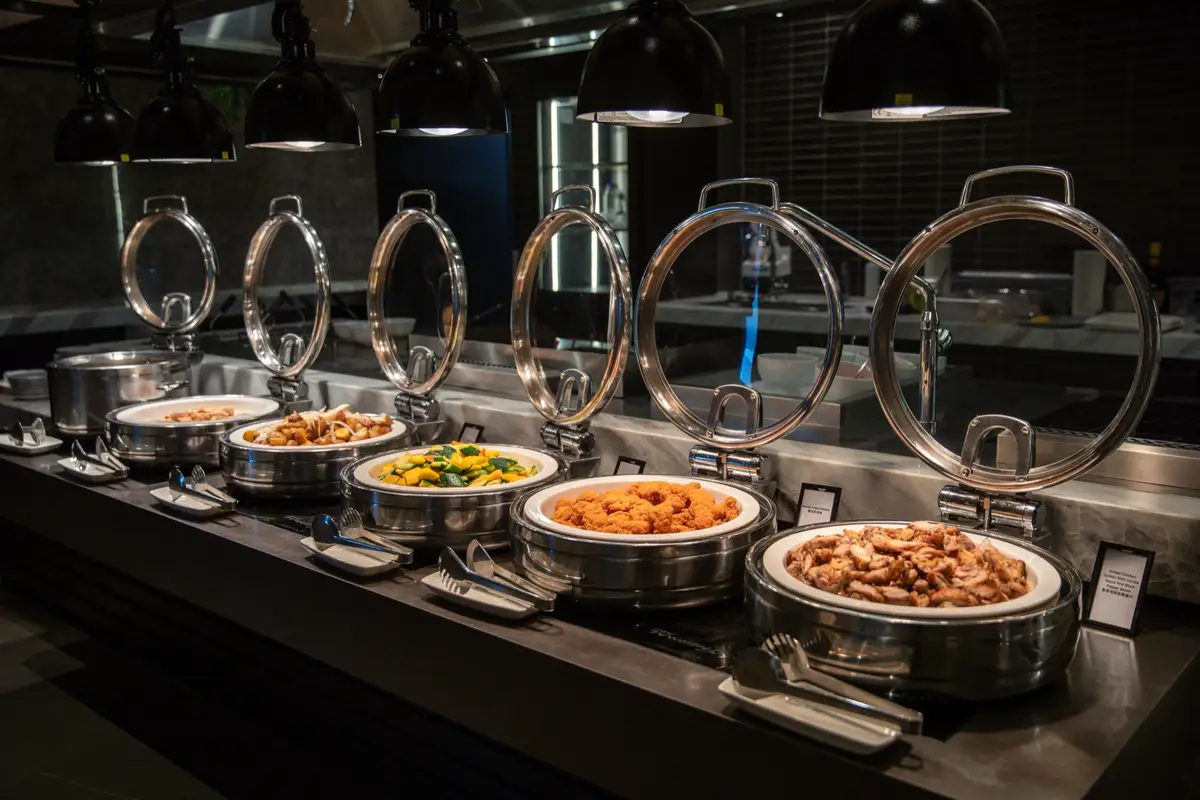
- Budget per head. A fixed per-person amount keeps menus consistent. Programs often land between a boxed lunch (from $24) and a hot buffet (from $32).
- Base headcount and cut-off. A standing number that we deliver unless you change it by an agreed time before each delivery.
- Dietary roster. A list of people with standing requirements, updated when the team changes.
- Format. Shared buffet, individual boxes or a mix (for example, a buffet on all-hands day and boxes on focus days).
- Tell us the patternDays, delivery time, team size, budget per head and the format you prefer.
- Agree the rulesBase headcount, the change cut-off, the dietary roster and invoicing requirements.
- Review the first rotationWe send a four-week menu for comments before the first delivery.
- Run and adjustAfter the first month, we review what was eaten, what came back and whether the days or format should change.
A menu rotation that does not get boring
Menu fatigue is the most common reason programs fail. Eating the same chicken and rice every week is worse than no lunch at all. We plan rotations in four-week cycles across the cuisines our kitchen cooks: Mediterranean, Levantine, South Asian and modern Canadian seasonal. A week might look like a Levantine spread on Tuesday, a seasonal grain bowl bar on Wednesday and a South Asian curry lunch on Thursday.
Each cycle changes with the season. Summer menus lean on salads, grilled vegetables and Ontario produce; winter menus bring braises, soups and warm grains. Every day includes a vegetarian main, and we track which dishes get eaten and which come back so the rotation improves over time.
Handling headcount swings
Office attendance is not steady. Mondays and Fridays are quieter, and a rainy day or a TTC disruption can take out 20% of the room. Rather than guessing, set a cut-off (for example, the afternoon before) and have team leads confirm numbers in one place: a shared sheet, a calendar RSVP or a quick poll in your team chat. You send us one number.
A realistic expectation: order for about 90% of people who say they will be in. Leftovers from a planned-down order are rare; waste from ordering for the whole team list is common.
Keeping the dietary roster current
A standing roster only works if someone owns it. When a new hire joins or someone's needs change (a new allergy diagnosis, a pregnancy, observing Ramadan), the office manager updates one list and sends it to us before the next cut-off. Named special meals then arrive every delivery day without a separate request.
During Ramadan, some observant colleagues will not eat at lunchtime. Rather than ordering for them and wasting food, reduce the headcount for those weeks, or ask us about individually packed meals they can take home for iftar.
Invoicing and reporting
Finance teams usually want one invoice per week or month rather than a receipt per lunch. We consolidate program deliveries onto a single invoice with each date, headcount and per-person price itemised, plus delivery and 13% HST as separate lines. If your company needs a PO number or a cost centre on every invoice, we set that up at the start.
For programs that are partly an employee benefit, keep your own records of what is provided and to whom; how meals are treated for tax purposes is a question for your accountant, not your caterer.
Is a program right for your office?
A program makes sense once you are ordering the same kind of lunch more than about twice a month. Below that, one-off office lunch orders are simpler. Our guide to running an office lunch program covers budgeting and rollout in more detail, and the caterer vs restaurant marketplace comparison sets out when a multi-restaurant platform suits a team better than a single kitchen.
Order for 90%, not 100%
Hybrid attendance swings from day to day. Ordering for about 90% of confirmed attendees, with a clear cut-off for changes, cuts waste without leaving anyone out.
Questions
Frequently asked
How often can a recurring program deliver?
Anywhere from once a week to every working day. Most hybrid offices choose their two or three anchor days.
Can we change the headcount each week?
Yes. We deliver the base number unless you change it before the agreed cut-off for each delivery.
Will the menu repeat?
We plan four-week rotations that change with the season, so dishes do not repeat within a cycle.
How is a program invoiced?
Deliveries are consolidated onto one weekly or monthly invoice, itemised by date and headcount, with delivery and 13% HST shown separately.
Can we pause the program in summer or over the holidays?
Yes. Tell us the dates in advance and deliveries are paused; many offices scale down in July and August.
What does a program cost per person?
It depends on format and frequency. Boxed lunches start from $24 and hot buffets from $32 per person, before HST and delivery.
Keep planning
Related pages
Office lunch catering
Hot buffets and shared platters for team lunches, lunch-and-learns and working sessions, delivered to your floor, set out with labels and ready when…
ExploreBoxed lunch catering
Individual lunches, each packed and labelled for one person, so special meals reach the right people and nobody waits in a line.
Explore
How to run a recurring office lunch program
A weekly or monthly team lunch works best when it is set up once as a program: a fixed day, a rotating menu, a per-head budget, a headcount rule for…
Read the guide
A caterer or a restaurant marketplace?
Marketplaces connect you to many restaurants through one ordering platform. A catering company cooks everything in its own kitchen and can staff…
ExploreHot lunch buffet menu
A shared hot meal for teams of 15 to a few hundred: two or three mains, a vegetarian main, sides, a salad and dessert, kept hot in chafing dishes on…
Explore
Halal catering in Toronto and the GTA
Halal menus for office lunches, iftars, walimas and family celebrations, with the sourcing and handling for your order confirmed in writing before…
Explore