Corporate programs
How to run a recurring office lunch program
A weekly or monthly team lunch works best when it is set up once as a program: a fixed day, a rotating menu, a per-head budget, a headcount rule for hybrid attendance and one monthly invoice. This guide covers each piece, with a worked monthly budget for a 50-person Toronto team.

When a program beats ordering lunch each time
Ordering catering one event at a time is fine for a quarterly all-hands. Once lunch happens every week or two, the hidden costs of ad-hoc ordering add up: someone re-collects dietary needs, compares menus, chases quotes, submits a new expense each time, and pays rush fees when the order goes in late.
| Ad-hoc orders | Recurring program | |
|---|---|---|
| Best for | Occasional meetings and one-off events | Weekly or biweekly team lunches, anchor office days |
| Admin time | Each order starts from scratch | Set up once, then confirm headcount |
| Dietary needs | Collected per event | Kept in a register, updated quarterly |
| Menu | Chosen each time | Rotation planned a month or season ahead |
| Pricing | Per order, sometimes with rush fees | Agreed rate for the program term |
| Invoicing | One invoice per order | Consolidated monthly invoice |
As a rule of thumb, a program starts paying off at about two lunches a month for 15 or more people at the same address.
Pick the day around attendance, not convenience
Most Toronto offices now run hybrid schedules, and lunch has become one of the tools used to bring people in. The day you choose decides how many people eat.
- Tuesday to Thursday are the busiest in-office days for most hybrid teams, so lunch there feeds the most people per dollar.
- Monday and Friday lunches can lift attendance on quiet days, but expect lower and less predictable numbers for the first months.
- Avoid clashing with recurring all-day meetings or floor-wide events that already include food.
- Set a fixed time, such as 12:00 delivery for a 12:15 start. Programs that drift between 11:30 and 1:00 see more waste and more complaints.
Downtown towers add a practical constraint: loading docks and freight elevators are busiest between 11:00 and 1:00. Book a standing dock slot through building management so the delivery is not queued behind a courier.
- Collect dietary needs onceUse a short form and keep it as a register, updated each quarter.
- Choose the day and timePick your busiest in-office day and fix a delivery time.
- Agree the budget and termsAll-in rate per head, invoicing, cutoffs, cancellation rules and a review date.
- Plan a four-week rotationOne vegan and gluten-free main every week; favourites repeat.
- Run an opt-in headcountClose the poll at the caterer's cutoff and order to about 90% of opt-ins.
- Review after four weeksCompare meals ordered, meals eaten and leftovers, and swap the least popular menu.
Set a budget per head, and decide what it includes
Toronto office lunches typically run $20–$50 per person before tax, according to elle cuisine's corporate catering cost guide. Programs sit toward the lower-middle of that range because formats are simpler and volumes are predictable. Our own starting prices are from $24 per person for boxed lunches and from $32 for a hot lunch buffet, and for a program it is reasonable to ask for an agreed rate that holds for the term.
Decide up front whether the budget per head includes delivery and HST. Finance teams usually prefer an all-in number. Here is an illustrative monthly budget for a weekly lunch:
| Line | Calculation | Amount |
|---|---|---|
| Meals | 45 meals × 4 weeks × $26 | $4,680.00 |
| Delivery | 4 drops × $45 | $180.00 |
| Subtotal | $4,860.00 | |
| HST 13% | $631.80 | |
| Monthly total | $30.51 per meal | $5,491.80 |
The figures are round numbers inside published ranges, not a quote. Note the order is for 45 meals, not 50: the next section explains why.
One more budgeting question belongs with your accountant rather than your caterer. The Canada Revenue Agency's general position is that free or subsidized meals provided to employees are a taxable benefit, with administrative exceptions such as subsidized meals where employees pay a reasonable charge and occasional overtime meals. Check how a regular free lunch program is treated for your payroll before launch.
Headcount: the rule that stops waste in a hybrid office
The biggest cost leak in office lunch programs is ordering for everyone on the team list. In hybrid offices a meaningful share of people who plan to come in do not, and every uneaten meal is paid for.
- Use an opt-in, not an opt-out. A simple poll in your team chat or calendar invite, closing at the caterer's cutoff (48 hours before delivery with us).
- Order to about 90% of confirmed opt-ins for the first month, then adjust from what you actually see. Keep dietary meals at 100%; those are the ones you cannot substitute.
- Track three numbers weekly: meals ordered, people who ate, and portions left. After four weeks you will know your real attendance rate by day.
- Have a late-arrival plan. If someone forgot to opt in, the extra 5–10% of shared dishes on a buffet usually covers them. With boxed lunches, there is no spare, which is one reason buffets suit programs well.
Our boxed lunches vs platters comparison goes deeper on which format tolerates headcount changes better.
Build a rotation people do not get tired of
Menu fatigue kills programs faster than budget. A four-week cycle with one seasonal change per quarter works well for weekly lunches:
| Week | Format | Example menu |
|---|---|---|
| 1 | Mediterranean hot buffet | Chicken souvlaki, falafel, lemon potatoes, Greek salad, tzatziki, pita |
| 2 | South Asian hot buffet | Butter chicken, chana masala, jeera rice, kachumber salad, naan |
| 3 | Build-your-own bowls | Grain base, roasted vegetables, two proteins including a vegan one, three dressings |
| 4 | Modern Canadian seasonal | Roast chicken or maple-glazed salmon, seasonal vegetables, grain salad, dessert bars |
Keep the favourites and rotate the rest. After the first cycle, ask for a one-question rating and swap out the lowest-rated week. Keep one vegan and gluten-free main in every week so dietary guests are never eating side dishes. Our guide to office lunches with dietary restrictions shows how to build that base menu, and the hot lunch buffet menu has more options.
Invoicing and admin to agree before the first lunch
Finance teams will thank you for settling these at setup:
- One monthly invoice with each lunch itemized by date, headcount and HST, or one invoice per lunch if your approval process needs it.
- Purchase order number or cost centre on every invoice, and a split by department if the lunch is shared.
- Payment terms and method, agreed in writing.
- A named contact on each side for headcounts, changes and issues, plus a backup for vacations.
- Change and cancellation rules for holidays, office closures and snow days.
- A price review date, typically every six or twelve months.
Also confirm what the delivery includes: setup on your kitchen counter or a meeting table, labels, serving utensils and removal of chafers. Many programs ask the caterer to collect chafers the same afternoon so the office kitchen is clear by 3 p.m.
Signs the program needs adjusting
Programs drift. Review these every quarter and change one thing at a time:
- Leftovers above 10–15% most weeks: the headcount rule is too generous, or one dish is unpopular.
- Food gone by 12:20: order is too tight, or people from other floors are joining. Decide whether that is welcome and budget for it.
- Attendance falling on lunch day: the menu has become predictable. Refresh two weeks of the rotation.
- Dietary guests eating sides: the vegan or gluten-free main is too small or has been dropped. Restore it.
- Admin creeping back: if someone is still emailing the caterer every Monday, the standing order and cutoff are not working. Simplify them.
Food safety and leftovers in the office
Office lunches create a leftovers problem that events do not. Hot and cold food should not stay out of temperature control for more than two hours, and a buffet left on a counter from noon until 4 p.m. is no longer safe to take home. Set a clear rule: food is cleared at 2:00, and anything that has been out is discarded or composted, not put in the shared fridge.
If waste is a concern, the fix is at the ordering end, not the fridge: tighten the headcount rule above, and order more of what disappears first. Ask your caterer about compostable or recyclable packaging, and check what your building's waste program accepts.
When you are ready to set up a program, see recurring corporate programs for how we run them, or send your team size, office address and preferred day through the enquiry form. The full price list is on our pricing page.
Questions
Quick answers
How much should a company budget per person for a weekly lunch in Toronto?
Industry guides put Toronto corporate lunches at $20–$50 per person before tax. Weekly programs usually sit in the lower-middle of that range; add delivery and 13% HST for an all-in figure.
How do we handle headcount in a hybrid office?
Use an opt-in poll that closes at the caterer's cutoff, order to about 90% of opt-ins at first, keep dietary meals at 100%, and adjust after tracking actual attendance for a month.
Is a free office lunch a taxable benefit in Canada?
The CRA generally treats free or subsidized meals to employees as a taxable benefit, with some administrative exceptions. Check with your accountant or payroll provider before starting a regular program.
How often should the menu change?
A four-week rotation with a seasonal update each quarter works well for weekly lunches. Replace the least popular week after each cycle.
Are boxed lunches or buffets better for a recurring program?
Buffets handle headcount changes and late arrivals better and usually cost less per head. Boxed lunches suit teams with many individual dietary needs or people eating at desks.
Can we pause the program for holidays?
Most programs build in holiday closures and a notice period for skipped weeks. Agree the rule in writing at setup.
Keep planning
Related pages

Recurring office meal programs
Weekly or daily team lunches on a rotating menu, with a standing dietary roster, a clear headcount cut-off and one consolidated invoice.
Explore
Catering prices
Starting prices per person for every format, plus every fee that can appear on a quote: delivery, staff hours, service charge, rentals and HST. No…
Explore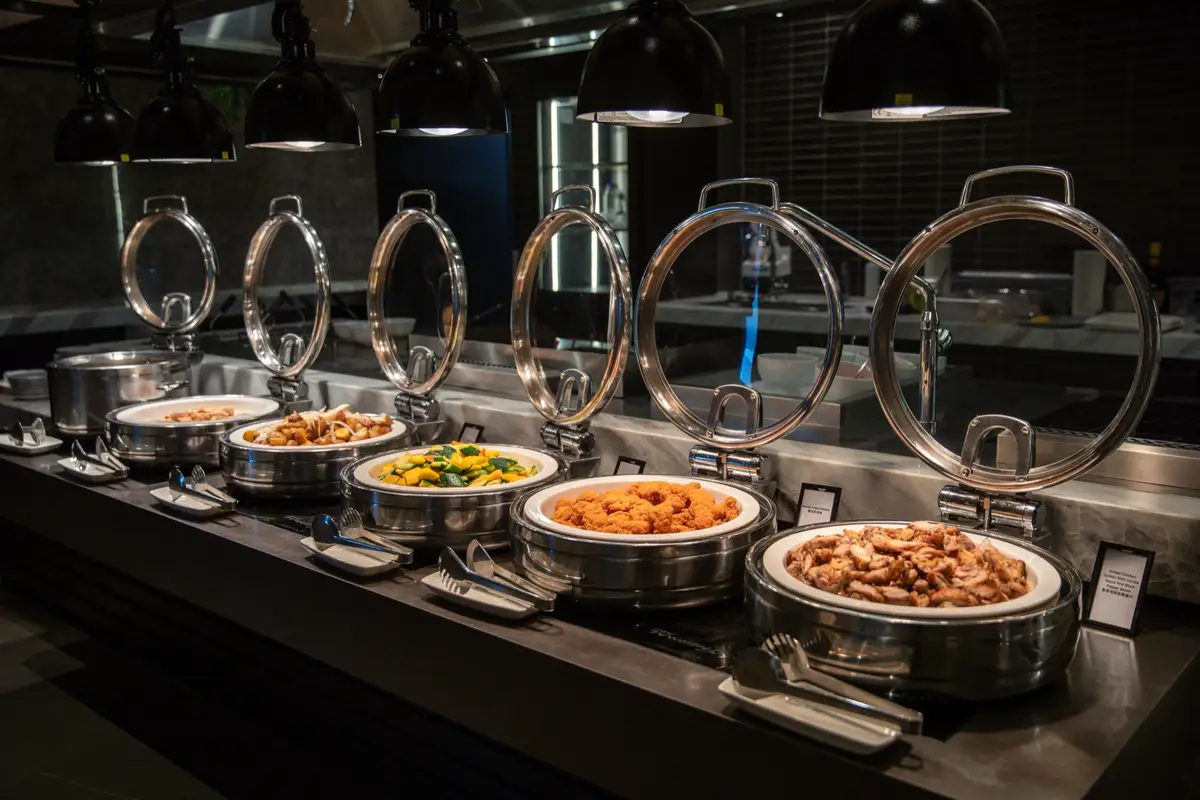
Office lunch catering
Hot buffets and shared platters for team lunches, lunch-and-learns and working sessions, delivered to your floor, set out with labels and ready when…
ExploreHot lunch buffet menu
A shared hot meal for teams of 15 to a few hundred: two or three mains, a vegetarian main, sides, a salad and dessert, kept hot in chafing dishes on…
ExploreBoxed lunch menu
One sealed, labelled box per person: a main, a side and something sweet. Built for working lunches, site visits and teams where half the room has a…
Explore
Corporate catering in Toronto and the GTA
Food for the working day and the evenings around it: breakfast meetings, team lunches, all-day conferences, weekly meal programs and client…
Explore