Menus and planning
Grazing table guide: sizing, cost and the food safety clock
Plan about 150–200 g of food per guest when a grazing table sits alongside other food, and 350–450 g when it is the main food. A standard 8-foot table serves roughly 60–80 guests as an appetizer, and perishable food on it should be managed to a two-hour window.
What a grazing table is (and isn't)
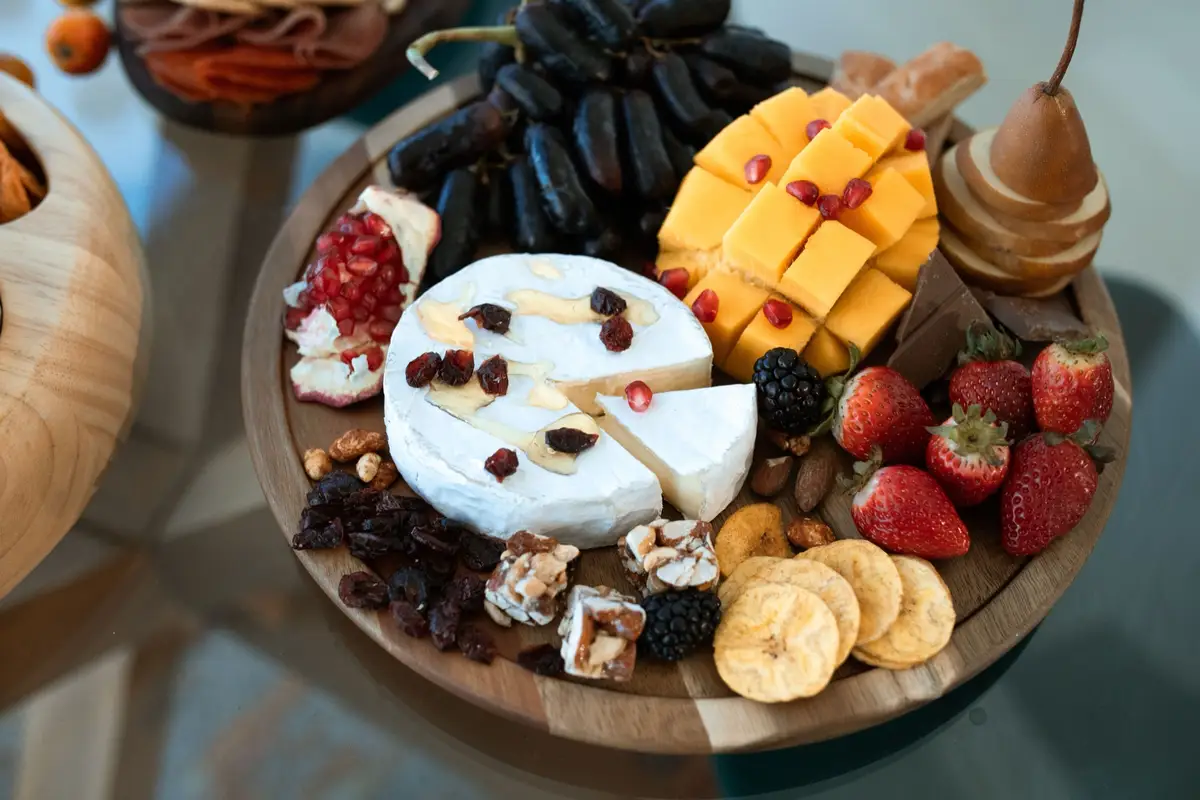
A grazing table is a self-serve spread built directly on a table or on boards and platters: cheeses, cured or smoked meats, dips, breads and crackers, fresh and dried fruit, raw and roasted vegetables, olives, nuts and a few sweet things. Guests help themselves over an extended period instead of eating at a fixed time.
It sits between two other formats. A charcuterie board is the same idea at a smaller scale, usually for a dozen people. A food station is staffed and usually hot, with a chef carving, searing or plating. A grazing table has no one cooking at it, which is why it works well for open houses, showers, networking events, cocktail hours and gallery openings, where people arrive and leave at different times.
That same quality, food sitting out while people drift past, is also why it needs more food safety planning than it first appears. We cover that in detail below.
How big should a grazing table be?
Size a grazing table by weight of food per guest first, then by table length. Weight is what you actually pay for; length is how it looks.
| Role of the grazing table | Food per guest | For 50 guests | For 120 guests |
|---|---|---|---|
| Light appetizer before a dinner | About 150 g | About 7.5 kg | About 18 kg |
| Main appetizer with some canapés, 2–3 hour event | About 200 g | About 10 kg | About 24 kg |
| The main food for a 2–3 hour event | 350–450 g | 17.5–22.5 kg | 42–54 kg |
When the grazing table is the whole meal, the mix changes as well as the weight. Add more bread, grains and dips, and at least one substantial item such as chicken skewers, falafel or a grain salad. A table of cheese and grapes alone is filling for about forty minutes and then leaves guests hungry.
Table length. A standard 2.4 m (8 ft) banquet table holds a grazing spread for roughly 60–80 guests as an appetizer. Beyond that, guests queue at the ends. For 150 guests, use two separate tables in different parts of the room, or one long table that people can reach from both sides. Putting plates and breads at both ends, and duplicating the most popular dips, keeps people moving.
For quantities across other formats, see our food per person guide.
What a grazing table costs
Our grazing tables start from $28 per person before HST. What moves the price up from there:
- Its role in the event. A grazing table that replaces dinner uses more than twice the food of one that precedes dinner, and costs accordingly.
- Protein choices. Aged cheeses, smoked salmon, bresaola and halal-sourced cured meats cost more than hummus, crudités and bread. A plant-forward table costs less and suits more guests.
- Styling and props. Risers, boards, florals and custom signage add setup time and rental cost.
- Staffing and replenishment. A table that is refreshed from chilled stock by a server through the evening costs more than a drop-off display, and it is also the safer option for long events.
- Venue access. A large table takes 45–90 minutes to build. Stairs, freight elevators and early setup times add labour.
Compared with passed canapés (from $38 per person), a grazing table usually costs less per guest for the same event length, because it needs fewer servers. The trade-off is that canapés are made to be eaten fresh and control portions, while a grazing table depends on good replenishment. Our pricing page shows how delivery, staff and service charges are added.
The food safety clock: 2 hours, and what the 4-hour rule really means
Most cheese, cooked meat, dips, cut fruit, dairy and anything with cooked rice or grains is what food safety regulators call hazardous (or potentially hazardous) food. Bacteria grow fastest in the temperature danger zone, which Health Canada defines as 4°C to 60°C. A grazing table at room temperature sits right in the middle of it.
The Canadian guidance is two hours. Health Canada's food safety advice is to refrigerate perishable food within two hours, and not to leave it at room temperature for longer. In Ontario, the Food Premises regulation (O. Reg. 493/17) expects hazardous food to be held at 4°C or colder, or 60°C or hotter. It does not set out a general allowance for leaving food at room temperature, which is why careful caterers treat two hours as the outer limit.
The "2-hour/4-hour rule" comes from Australia and New Zealand. You will see it in many online guides. Food Standards Australia New Zealand describes it for ready-to-eat potentially hazardous food held between 5°C and 60°C:
| Total time out of temperature control | What the rule says |
|---|---|
| Under 2 hours | Use it, or return it to the fridge |
| Between 2 and 4 hours | Use it right away; do not put it back in the fridge |
| 4 hours or more | Throw it out |
Two points are often missed. First, the time is cumulative: it includes time on the delivery van, time during setup and time sitting on the table, not only the time since guests arrived. Second, it is a rule for how a trained food business manages time as a control, not a promise that food is fine at hour three and three-quarters. It is not the Canadian standard, and we do not plan grazing tables around a four-hour window.
On hot days, shorten everything. U.S. food safety agencies such as the USDA advise one hour when the air temperature is above 32°C (90°F), and an outdoor table in July sun can exceed that on the table surface even when the forecast does not.
How a well-run grazing table stays inside the window
- Build in rounds. Set out a first round sized for about an hour, and keep the rest chilled. Replenish with fresh stock, removing the old platter rather than topping it up. Topping up mixes old food with new and resets nobody's clock.
- Chill from underneath. Chilled marble, trays set over ice and cold platters swapped out mid-event slow warming for dips, seafood and soft cheese.
- Put the riskiest food out last. Hard cheeses, cured meats, breads, crackers, nuts, olives and whole fruit tolerate room temperature better than smoked fish, soft cheeses, dairy dips and cut melon. The riskiest items go out in smaller amounts and more often.
- Keep it out of the sun and away from heat. No windows with afternoon sun, no spots beside radiators, heaters, stage lights or the kitchen door.
- Label the clock for drop-off tables. When no staff stay, the delivery note should state the time the food was set out and the time it should be cleared.
This is also why a grazing table suits a two to three hour cocktail hour better than an all-afternoon open house. For a longer event, plan two separate rounds or switch to a format with hot and cold holding, such as food stations.
Building a table for mixed dietary needs
A traditional grazing table is heavy on pork charcuterie and wheat, which excludes a lot of guests at a Toronto event. A few layout choices make it work for more people:
- Give gluten-free crackers their own board and knife, placed away from the bread basket, and label them. Crumbs travel.
- Use halal-sourced or poultry-based cured meats, or keep pork on a separate, clearly labelled board.
- Make the dips, roasted vegetables and grains a substantial plant-based section rather than a garnish. Mezze such as hummus, muhammara, baba ghanoush and tabbouleh do this naturally; see our Mediterranean menus.
- Label nuts clearly, or leave them off entirely if any guest has a nut allergy. A self-serve table is not a safe place for a guest with a severe allergy, so offer that guest a separately plated selection.
Our grazing table menu lists the sections and what is included, and cocktail party catering shows how grazing combines with canapés for a full evening.
The two numbers to remember
Size by weight: about 150–200 g per guest as an appetizer, 350–450 g as the main food. Manage by time: perishable food out for two hours at most, counted from when it left the fridge.
Questions
Quick answers
How much grazing table food do I need per person?
About 150–200 g per guest when the grazing table is an appetizer, and 350–450 g per guest when it is the main food for a two to three hour event.
How many people does an 8-foot grazing table feed?
Roughly 60–80 guests when it is served as an appetizer. For larger groups, use two tables or a table guests can reach from both sides.
How long can a grazing table sit out?
Health Canada advises that perishable food should not stay at room temperature for more than two hours. Count from when the food left refrigeration, including travel and setup time, and use one hour on hot days.
What is the 2-hour/4-hour rule?
It is a Food Standards Australia New Zealand guideline: food out of temperature control under 2 hours can be used or refrigerated, 2 to 4 hours must be used right away, and 4 hours or more must be discarded. It is not the Canadian guidance.
Is a grazing table cheaper than canapés?
Usually, per guest, because it needs fewer servers. Canapés give more control over portions and freshness, while a grazing table depends on careful replenishment.
How long does it take to set up a grazing table?
Typically 45–90 minutes depending on size and styling, so the caterer needs access to the room well before guests arrive.
Keep planning
Related pages
Grazing table menu
A long table of cheeses, halal-sourced meats, mezze, seasonal produce and breads that guests serve themselves from. Good for open houses, showers and…
Explore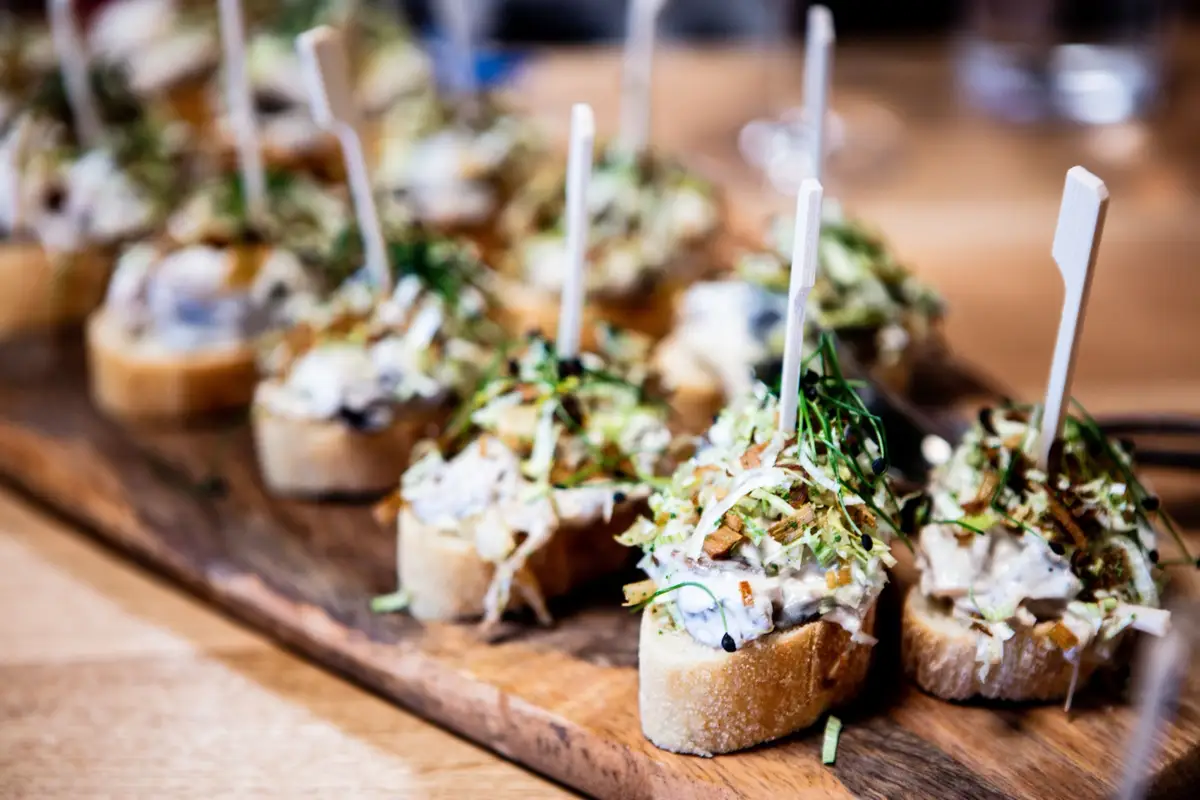
Cocktail party catering
Canapés and small plates for parties of 20 to 100 at home, in a condo party room or a rented space. Below: how much food and drink to plan, what…
ExploreHow much food per person: catering quantity tables
For a two-hour cocktail reception with no dinner afterwards, plan 8–12 canapés per guest. For a seated dinner, plan about 150–180 g of cooked protein…
Read the guide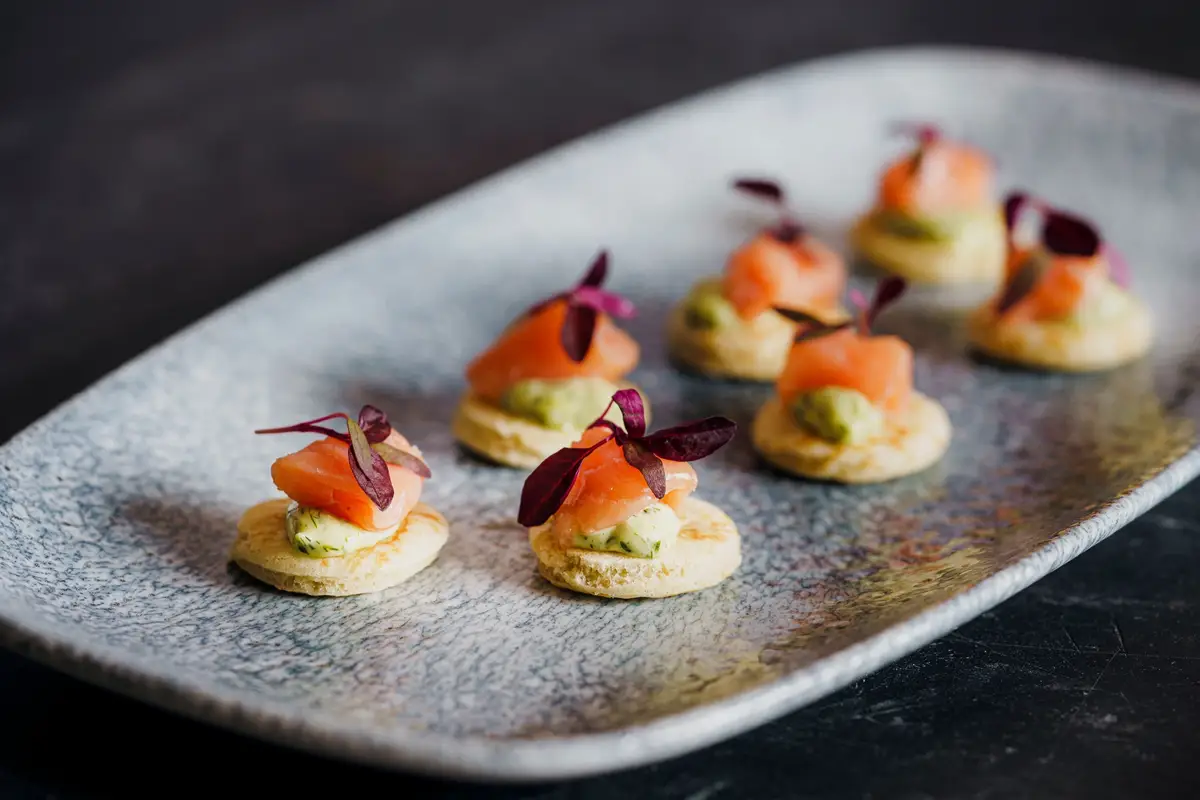
Canapé menu
Two-bite food passed by servers, designed to be eaten standing with a drink in the other hand. Choose six to ten canapés from the lists below and we…
Explore
Kitchen and food safety
The rules Ontario caterers work under, what they mean for your event, and the practices we follow from our kitchen to your table.
Explore
Catering prices
Starting prices per person for every format, plus every fee that can appear on a quote: delivery, staff hours, service charge, rentals and HST. No…
Explore