Alcohol and permits
Special Occasion Permits for Ontario weddings, step by step
If alcohol will be served at a wedding venue that has no liquor licence, one of the couple (or another adult responsible for the event) usually needs a Special Occasion Permit from the AGCO. For an indoor private reception the permit costs $50 per day without sales and should be applied for at least 10 days ahead.
Do you need a permit at all?
The Alcohol and Gaming Commission of Ontario (AGCO) requires a Special Occasion Permit (SOP) any time liquor is sold or served somewhere other than a licensed establishment or a private place. That one sentence from the AGCO's Special Occasion Permit Guide answers most couples' questions:
| Where the wedding is | What usually applies |
|---|---|
| Banquet hall, hotel, restaurant or winery with its own liquor licence | The venue sells and serves under its licence. No SOP; you usually cannot bring your own alcohol. |
| Venue with no liquor licence (loft, gallery, community hall, rented barn) | You need an SOP, or a caterer that holds a liquor licence with a caterer's endorsement. |
| Your own home, serving free drinks to invited guests | The AGCO treats a residence as a private place, so serving (not selling) there does not use an SOP. Liquor cannot be sold at a residence under any permit. |
| A tent on a relative's farm or someone else's property | Grey area. Ask the AGCO in writing before you plan the bar, and see the outdoor section below. |
| A park or City-owned building | An SOP plus written permission from the City or property owner. |
If you are unsure, the AGCO's iAGCO portal and customer service line are the authority, not your caterer or a wedding forum. Get the answer in writing and keep it with your permit.
Sale or no-sale: which permit fits a wedding
A wedding reception is a private event in AGCO terms: guests are invited, the event is not advertised, and people attending are known to the hosts. Private event permits come in two versions.
- No-sale permit, $50 per day. Drinks are free to guests. You cannot charge admission, sell drink tickets or run a cash bar. This is what an open bar at a wedding uses.
- Sale permit, $150 per day. Guests pay for drinks, directly (cash bar) or indirectly (a ticket price that includes drinks). The AGCO limits what you collect to covering the cost of the alcohol.
Both fees are non-refundable. A toonie bar, where guests pay a small amount per drink, counts as sale. A wedding that offers nothing but a champagne toast still needs a permit at an unlicensed venue, because liquor is being served.
- Confirm the venue has no liquor licenceAsk in writing. If it is licensed, the venue runs the bar and you do not need a permit.
- Decide sale or no-saleOpen bar means no-sale ($50 per day). Cash or toonie bar means sale ($150 per day).
- Choose the permit holder and a second responsible personBoth must be 19 or older, and one must be at the event at all times.
- Send municipal notices if the event is outdoorsClerk, police, fire and health, at least 30 days ahead; contact the building department for a tent.
- Apply on iAGCOAt least 10 days ahead for an indoor private reception, 30 days for outdoor events. Have the address, times and floor sketch ready.
- Buy the alcohol in OntarioLCBO, The Beer Store or an authorized retailer. Keep receipts with the permit.
- Brief the bar teamShare the permit, service hours, the no-service rules and who the responsible persons are.
Deadlines and the key rules at a glance
| Rule | What the AGCO says |
|---|---|
| Who can apply | An individual 19 or older who is responsible for the event |
| Where to apply | Online through iAGCO |
| Indoor private event | Apply at least 10 days before; most permits are issued in about a day |
| Outdoor events and other event types | Apply at least 30 days before, with municipal notification letters |
| Fees | $50 per day no-sale, $150 per day sale |
| Service hours | 9:00 a.m. to 2:00 a.m. (3:00 a.m. on New Year's Eve) |
| Where alcohol comes from | Bought in Ontario from the LCBO, The Beer Store or another authorized retailer |
| Leftovers | Unconsumed liquor must be removed from the premises at the end of the event |
| Supervision | The permit holder or a named responsible person must be present for the whole event |
| Residences | Liquor cannot be sold at a residence |
Ten days is the legal minimum, not a plan. Apply once the venue contract is signed and the date is fixed; you will need the venue address and the exact service times, and a wedding has enough late-stage tasks without a permit problem in the last week.
Buying the alcohol
Everything served under an SOP must be purchased in Ontario from a government store or a retailer authorized under the Liquor Licence and Control Act. Wine bought at an Ontario winery's own store is fine; a case carried home from Quebec or New York is not. The AGCO allows narrow exceptions, such as homemade wine or beer at some private events, so check the guide if a family winemaker wants to contribute.
Quantities for a five-hour reception with dinner, as a starting point for 100 adult guests who drink moderately:
| Item | Planning figure | For 100 guests |
|---|---|---|
| Total drinks | About 2 in the first hour, then 1 per hour | About 600 drinks |
| Wine (about 5 glasses per 750 ml bottle) | About half of drinks at a dinner wedding | About 60 bottles |
| Beer | About a third of drinks | About 8–9 cases of 24 |
| Spirits (about 25 standard pours per 1.14 L bottle) | The remainder, if you offer a bar | 4–5 large bottles plus mixers |
| Ice | About 1 lb per guest, more in summer or in a tent | 100 lb or more |
Your crowd matters more than any formula: adjust for non-drinkers, a long cocktail hour or a very late night. Ask the retailer about its policy on returning unopened product before you buy extra.
Outdoor and tented weddings
Outdoor events carry extra steps. The AGCO asks for written notice to the municipal clerk, police, fire and health departments at least 30 days before an event of fewer than 5,000 people, and those notification letters form part of the application. Some municipalities want more lead time, so check with the local clerk's office.
A tent, marquee or pavilion also means contacting the local building department, since many tent sizes need a permit and inspection. The application needs a sketch showing the physical boundaries of the licensed area: where drinks are served and consumed, entrances, and how the area is separated from anything public.
If the tent is on a private residential property, confirm with the AGCO whether the event counts as a private place or needs a permit. Our backyard wedding checklist covers the power, water and rental side, and backyard and tented events covers how we cater them.
What your caterer can and cannot do
There are two legal ways alcohol reaches your guests at an unlicensed venue, and it is worth asking any caterer which one they work under.
1. The caterer holds a liquor sales licence with a caterer's endorsement. The caterer buys, sells and serves the alcohol at your event under its own licence, and takes unsold stock back into its inventory. The event has to be sponsored by someone other than the caterer, the endorsement cannot be used at a residence, and the caterer must notify the authorities when the venue is not under its exclusive control. You do not apply for an SOP in this model.
2. You hold the SOP and the caterer provides bar staff. You buy the alcohol, you are the permit holder, and the caterer supplies bartenders, bar setup, ice, mixers and glassware as a service. The caterer cannot sell you the alcohol and cannot hold the permit for you.
The AGCO does not require Smart Serve certification for people serving at an SOP event, though its guide suggests permit holders and staff consider the training. We think any professional bartender at a wedding should have it. Ask which model applies before you book, and if you want the caterer to staff the bar, ask about bar service in the same conversation.
On the night: the permit holder's responsibilities
The permit holder is legally responsible for the event, which is an odd job to give a bride, groom or parent on a wedding day. Name a second responsible person on the application, ideally a sober family member or the planner, so at least one of you is present at all times as the AGCO requires.
- Keep a copy of the permit at the bar.
- No service to anyone under 19, and no service to anyone showing signs of intoxication. Brief the bartenders on this together before doors open.
- Make food available through the night. The SOP has no food requirement, but the permit holder must not permit intoxication, and a late-night snack helps more than anything else.
- Last call before the end of the permitted hours, and a clear time when the bar closes.
- Plan rides home: a shuttle, a posted taxi number or a hotel block.
- Remove all leftover alcohol from the venue when the event ends.
Most of the problems we hear about come from three mistakes: applying too late for an outdoor event, assuming the venue's permit covers you when the venue has none, and buying alcohol outside Ontario. All three are avoidable with a month's notice. For everything else about planning the day, start at our wedding catering page.
Questions
Quick answers
How much is a Special Occasion Permit in Ontario?
For a private event such as a wedding, the AGCO charges $50 per day for a no-sale permit and $150 per day for a sale permit. The fee is non-refundable.
How far in advance do I need to apply for an SOP?
At least 10 days before an indoor private event. Outdoor events and other event types need at least 30 days, plus municipal notification letters.
Do I need a Special Occasion Permit for a wedding at home?
The AGCO treats a residence as a private place, so serving free drinks to invited guests at home does not use an SOP, and liquor cannot be sold at a residence. For tents on other people's property, confirm with the AGCO.
Do bartenders need Smart Serve at a wedding with an SOP?
The AGCO's SOP guide does not make it mandatory for SOP events, but recommends considering the training. Staff of licensed businesses must be certified.
Can my caterer get the permit for me?
No. The permit is issued to the individual responsible for the event. A caterer with a liquor licence and caterer's endorsement can instead sell alcohol under its own licence at venues other than residences.
Can we bring wine from the U.S. or another province?
Not under an SOP. Alcohol served must be bought in Ontario from the LCBO, The Beer Store or another authorized retailer, with limited exceptions such as homemade wine at some private events.
What time does the bar have to close?
Service under an SOP is allowed from 9:00 a.m. to 2:00 a.m., or 3:00 a.m. on New Year's Eve. Many venues set an earlier end time in their contract.
Keep planning
Related pages
Wedding catering in Toronto and the GTA
Full-service wedding catering from our kitchen: canapé receptions, long-table dinners for small weddings, and tented backyard celebrations. You get a…
Explore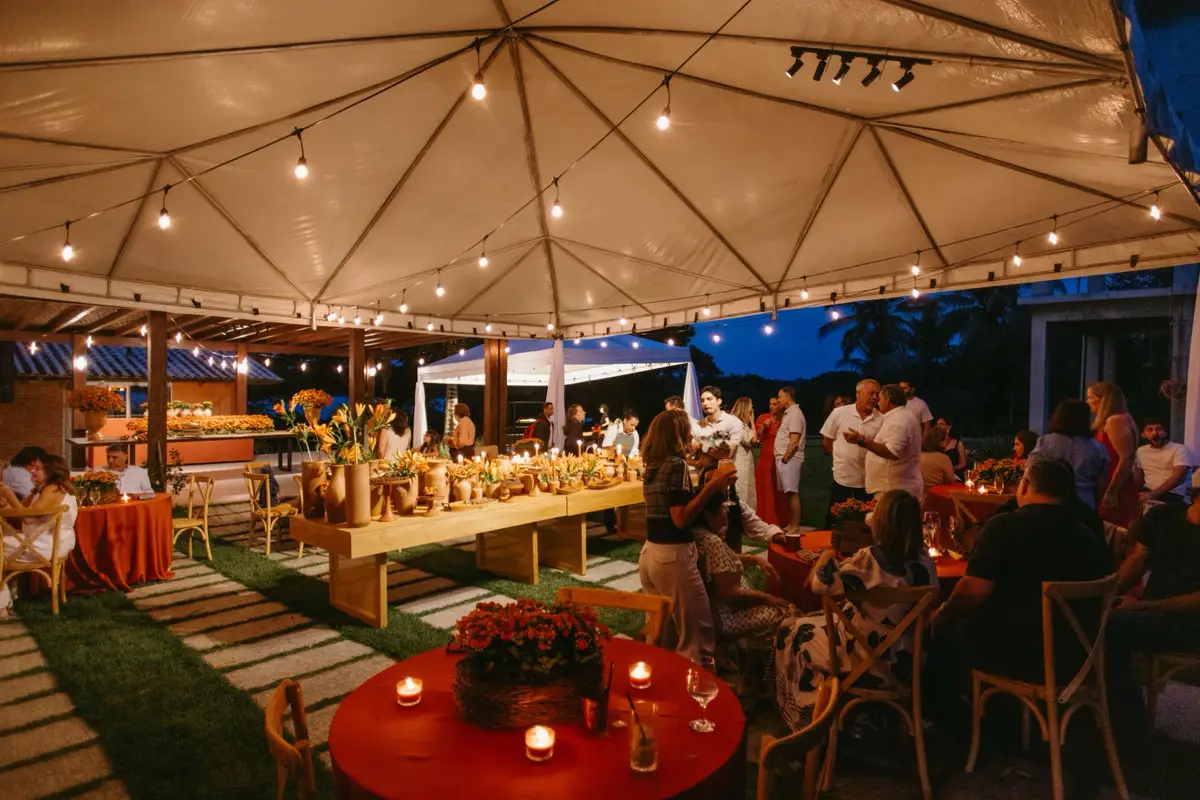
Catering backyard and tented events
A backyard has no kitchen, no dish pit, no washrooms for 120 people and no roof. Every one of those has a practical fix, and they all need to be…
ExploreBackyard and tent wedding catering
A backyard wedding means building a restaurant for one night on a lawn: kitchen, power, water, washrooms and a plan for rain. We cater tented…
Explore
Catering at Toronto and GTA venues
Most venue problems are logistics problems: no kitchen, a 30-minute load-in window, one freight elevator, a fee nobody mentioned. These guides…
Explore
Event staffing
Servers, chefs, bartenders and an event lead for your catered event, planned by service style and guest count so the room is covered without paying…
Explore