Backyard weddings
Backyard wedding catering: the complete GTA checklist
A backyard wedding needs everything a venue normally provides: a kitchen, power, water, washrooms, furniture and a weather plan. A house kitchen is not built for 100 guests, so the caterer works from a tent behind the scenes. This checklist covers what to arrange, in what order, and the Toronto rules that apply.
Start with the site walk, not the menu
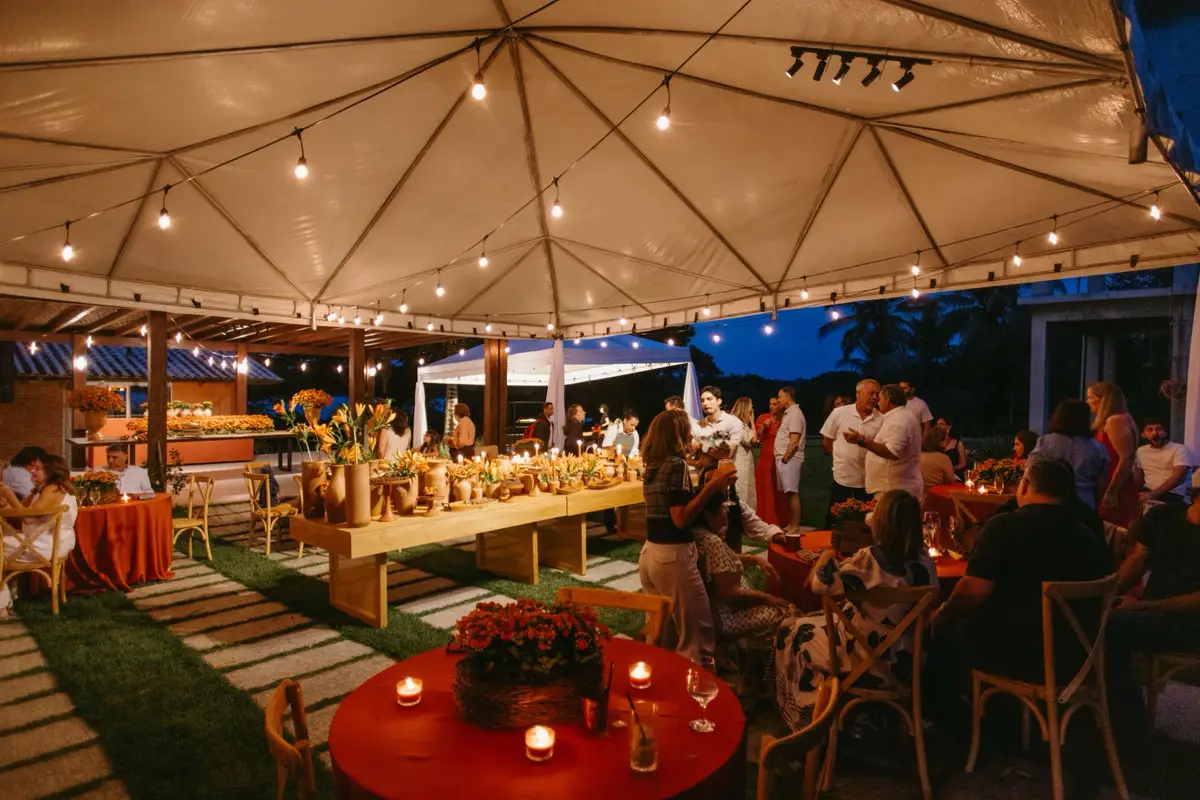
Before anyone designs a menu, the caterer and the tent company should walk the property with you. A backyard that looks generous in June can shrink quickly once a 40×60 ft tent, a kitchen tent, a generator, washrooms and a path for servers are drawn on it. Measure the space and bring a sketch showing the house, fences, trees, slopes, the driveway, gates, and where the septic bed or buried services are.
The questions the site walk answers:
- Where can the kitchen tent go that is close to the guest tent, on level ground, and out of guests' sightlines?
- How does a caterer's van reach it? Gate widths under 1.2 m mean everything is carried by hand.
- Where will the generator sit, far enough from the tent and neighbours for noise and exhaust?
- Is there an outdoor tap, and how far is it from the kitchen tent?
- Where do guests park, and are there street parking restrictions on the day?
We cover this process in more detail on our backyard and tent weddings page.
Tents and permits
In Toronto a building permit is required for a tent covering more than 60 square metres (about 646 sq ft), or one attached to a building or within 3 metres of another structure, according to the City's tents and temporary structures guide. Other GTA municipalities, such as Brampton, publish their own tent permit packages, so check with your local building department.
Almost every wedding tent is over that size. As a guide, plan about 12–15 sq ft per guest for seated dinners at round tables, 8–10 sq ft per guest for a cocktail format, plus space for a dance floor, a bar and any buffet or stations:
| Guests | Seated dinner with dance floor | Cocktail-style |
|---|---|---|
| 50 | 30×40 ft (1,200 sq ft) | 20×30 ft (600 sq ft) |
| 100 | 40×60 ft (2,400 sq ft) | 30×40 ft (1,200 sq ft) |
| 150 | 40×80 ft (3,200 sq ft) | 40×50 ft (2,000 sq ft) |
Reputable tent companies handle permit drawings and know the timelines; ask them who applies and when. Also ask for their wind policy, because a tent company will evacuate a tent in high winds and you need to know where guests would go.
Backyard wedding catering checklist
- Site walk with caterer and tent company, with a sketched site plan
- Tent sized for guests, dance floor, bar and stations; building permit confirmed
- Kitchen tent with flooring, tables, lighting and a level path to the guest tent
- Generator sized from caterer, DJ and washroom equipment lists
- Portable handwash station with warm water for the kitchen
- Refrigerated trailer or cold storage plan for the day
- Washroom trailer or units, at least one per 50 guests
- Water source and food-grade hoses confirmed
- Rentals: tables, chairs, linens, china, glassware, cutlery, serving ware
- Rain, heat and wind plan agreed with the tent company
- Neighbours notified; parking or shuttle arranged
- Alcohol rules confirmed with the AGCO for your property
- Garbage, recycling and food waste removal booked
The kitchen tent
The caterer's kitchen is a separate 10×20 ft or 20×20 ft tent, placed within a short walk of the guest tent and connected by a flat, lit path. It needs:
- A floor, or at least plywood or interlocking panels if the ground is soft. Wet grass under kitchen staff is a safety problem by 9 p.m.
- Folding prep tables, typically six to ten 6-ft tables for 100 guests.
- Cooking equipment: rented convection ovens or hot boxes for plated dinners, induction or propane burners for sauces, and a grill if the menu calls for it. Propane appliances must stay outside the tent envelope where fire code and tent-company rules require.
- Cold storage: a rented refrigerated trailer for larger weddings, or enough coolers and ice to keep food at 4 °C or below all day.
- Handwashing: a portable handwash station with warm water, soap and paper towels. Food premises rules in Ontario require proper handwashing facilities where food is handled, and a garden hose does not count.
- A dishwashing plan: either rented china returned dirty to the rental company, or three bus tubs for wash, rinse and sanitize.
- Lighting for the kitchen and the path, since service runs past sunset.
Keep the kitchen out of the house. Using a home kitchen for a 100-guest wedding overloads its power and fridge, blocks the family's own access on the day, and makes food safety harder to manage.
Power: the line item people underestimate
A typical outdoor household outlet is a single 15-amp circuit, which supports roughly 1,800 watts. That is one coffee urn, or one hot box, or one set of string lights. A wedding needs far more:
| Equipment | Approximate draw |
|---|---|
| Commercial coffee urn | 1,500 W |
| Electric hot box or holding cabinet | 1,500–2,000 W each |
| Induction burner | 1,800 W each |
| Portable convection oven | Often needs a 208/240 V circuit |
| Refrigerated trailer | Dedicated 30 A supply |
| Tent lighting, DJ and sound | 2,000–4,000 W |
| Luxury washroom trailer | Dedicated 15–30 A supply |
In practice, most backyard weddings need a rented generator, sized by the rental company once the caterer, DJ and washroom supplier send their equipment lists. Ask for a quiet "event" generator, fuel for the whole day plus a margin, and separate cables for the kitchen and the DJ so a sound system surge never trips the ovens. Place it downwind and away from the neighbours' windows.
Washrooms, water and waste
A house washroom and septic or sewer line are not designed for 100 guests over six hours with drinks. Rental companies commonly suggest at least one toilet per 50 guests for an event of about four hours, and more when alcohol is served or the event runs longer. A washroom trailer with running water and lighting is far more pleasant than portable units and needs power and, often, a water hookup.
The caterer needs water too: for the handwash station, coffee, cleaning and ice. Confirm the tap location and bring food-grade hoses, or plan on delivered water.
Waste is the forgotten job. A 100-guest wedding produces far more garbage, recycling and food scraps than a residential cart can take, so arrange for the caterer or a hauler to remove it. Residential collection limits how much extra garbage you can set out, so do not count on the curb.
Weather plan
- Rain: tent sidewalls on standby, flooring or matting on paths, covered route from kitchen to tent, and umbrellas for arrival.
- Heat: in a July or August tent, afternoon temperatures climb fast. Plan fans, more ice, shaded water stations, and a menu that holds well: grilled proteins and grain salads rather than cream sauces or butter-heavy canapés. Food should not sit out for more than two hours, and in heat less is better.
- Cold: late September and October evenings in the GTA can fall below 10 °C. Rent tent heaters (with the tent company's clearance rules), and choose hot passed canapés and a warm late-night snack.
- Wind and lightning: know the tent company's evacuation threshold and where guests would shelter indoors.
- Bugs: covered food displays and an earlier outdoor cocktail hour in June mosquito season.
Neighbours, parking and alcohol
Tell neighbours about the date, timing and parking plan a few weeks ahead; an invitation to drop by for dessert solves more problems than any sign. Check your municipality's noise bylaw for amplified sound, and plan for music to go down or move indoors at the time it sets. In Toronto, many residential streets have permit-only or time-limited parking, so arrange a shuttle, a nearby lot or temporary parking permits where available.
On alcohol: the AGCO does not allow liquor to be sold at a residence, so a cash bar is out. Serving free drinks at your own home is treated differently from serving at a rented venue; our Special Occasion Permit guide explains the rules, including when a tent on someone else's property may need a permit, and the extra municipal notices outdoor permitted events require.
Staffing and menu formats that work outdoors
Backyard weddings need more staff than the same menu at a venue, because everything is carried further and set up from nothing. Plan at least one extra person for setup and teardown and a runner between the kitchen tent and guest tent. Our guide to catering staff per guest has the base ratios, and event staffing covers the roles.
Family-style dinners and stations suit tents well: they need fewer plated-dish movements and hold better in variable temperatures. A fully plated dinner is possible with a well-equipped kitchen tent, but it is the most demanding format outdoors. For the full picture of how we cater these, see backyard and tented events.
Timeline
A backyard wedding day, from the kitchen tent
 9:00
9:00Questions
Quick answers
Do I need a permit for a wedding tent in Toronto?
The City of Toronto requires a building permit for tents over 60 square metres (about 646 sq ft), or tents attached to or within 3 metres of another structure. Most wedding tents qualify, and tent companies usually handle the application.
Can the caterer use my home kitchen?
For a small gathering, sometimes. For a wedding of 50 or more, a separate kitchen tent is safer and more efficient, and it keeps your house usable on the day.
How many washrooms do I need for a backyard wedding?
Rental companies commonly suggest at least one per 50 guests for about four hours, and more when alcohol is served or the event runs longer.
Do I need a generator for a backyard wedding?
Usually. A household outdoor outlet supports about 1,800 watts, which is less than one oven. Caterers, DJs and washroom trailers need separate supply.
Can I have a cash bar at a backyard wedding?
No. The AGCO does not allow liquor to be sold at a residence. Drinks at a home wedding must be free to guests.
What menu works best for a tent wedding?
Family-style dinners, stations and grilled dishes hold up well outdoors. Plated service is possible but needs a fully equipped kitchen tent and more staff.
Keep planning
Related pages
Backyard and tent wedding catering
A backyard wedding means building a restaurant for one night on a lawn: kitchen, power, water, washrooms and a plan for rain. We cater tented…
ExploreCatering backyard and tented events
A backyard has no kitchen, no dish pit, no washrooms for 120 people and no roof. Every one of those has a practical fix, and they all need to be…
Explore
Event staffing
Servers, chefs, bartenders and an event lead for your catered event, planned by service style and guest count so the room is covered without paying…
Explore
Wedding catering in Toronto and the GTA
Full-service wedding catering from our kitchen: canapé receptions, long-table dinners for small weddings, and tented backyard celebrations. You get a…
Explore
Full-service catering
Our team runs the food side of your event from load-in to the last tray out: chefs finishing food on site, servers, an event lead, setup, service and…
Explore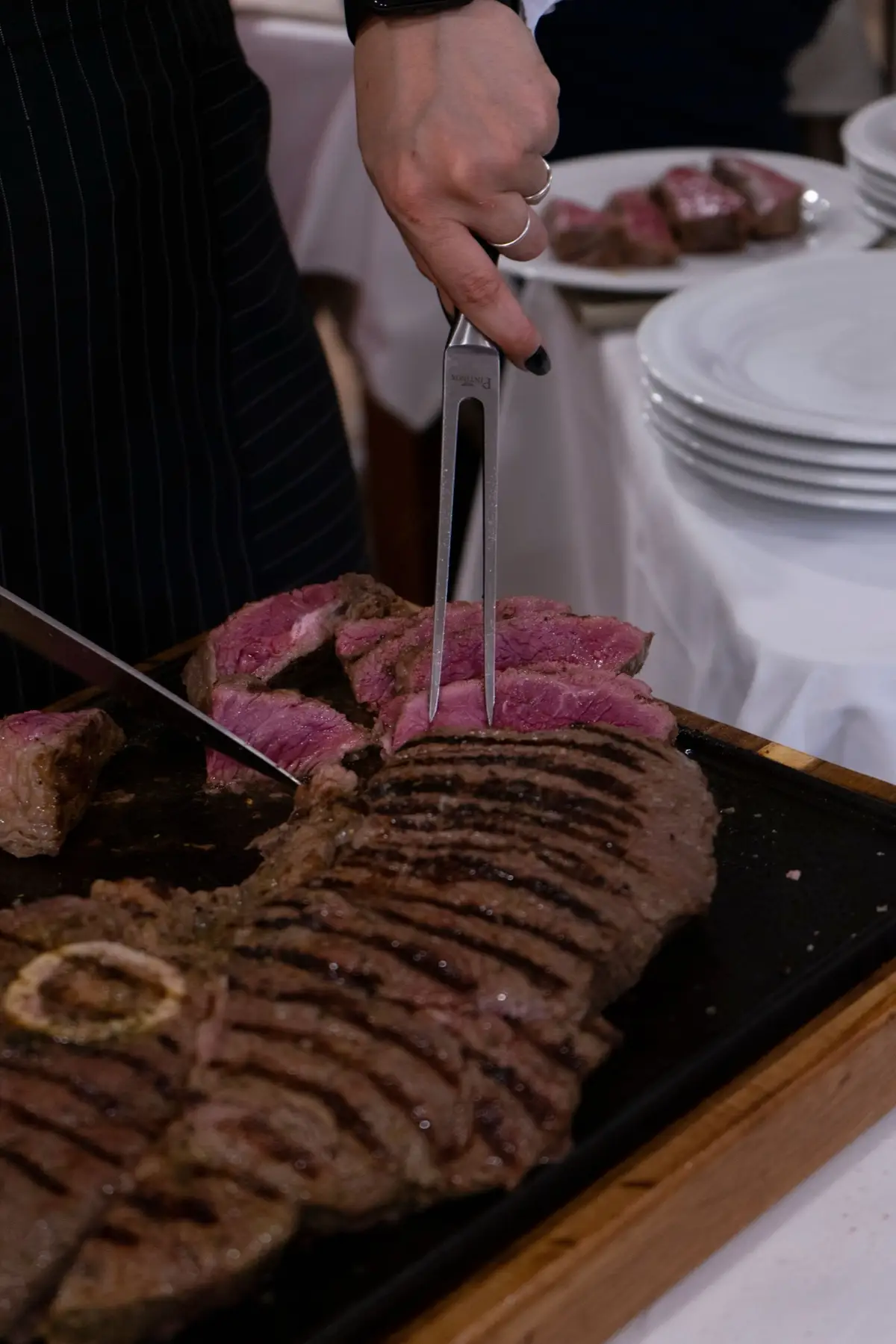
Food station menu
Attended stations where a chef carves, fries or finishes dishes in front of guests. Stations keep people moving around the room and make it easy to…
Explore