Compare
Food stations vs family-style service
Both formats make a dinner feel generous without the formality of a plated menu. Stations get guests up and moving; family-style keeps them seated and passing platters. The venue floor plan often decides between them.
How each format works
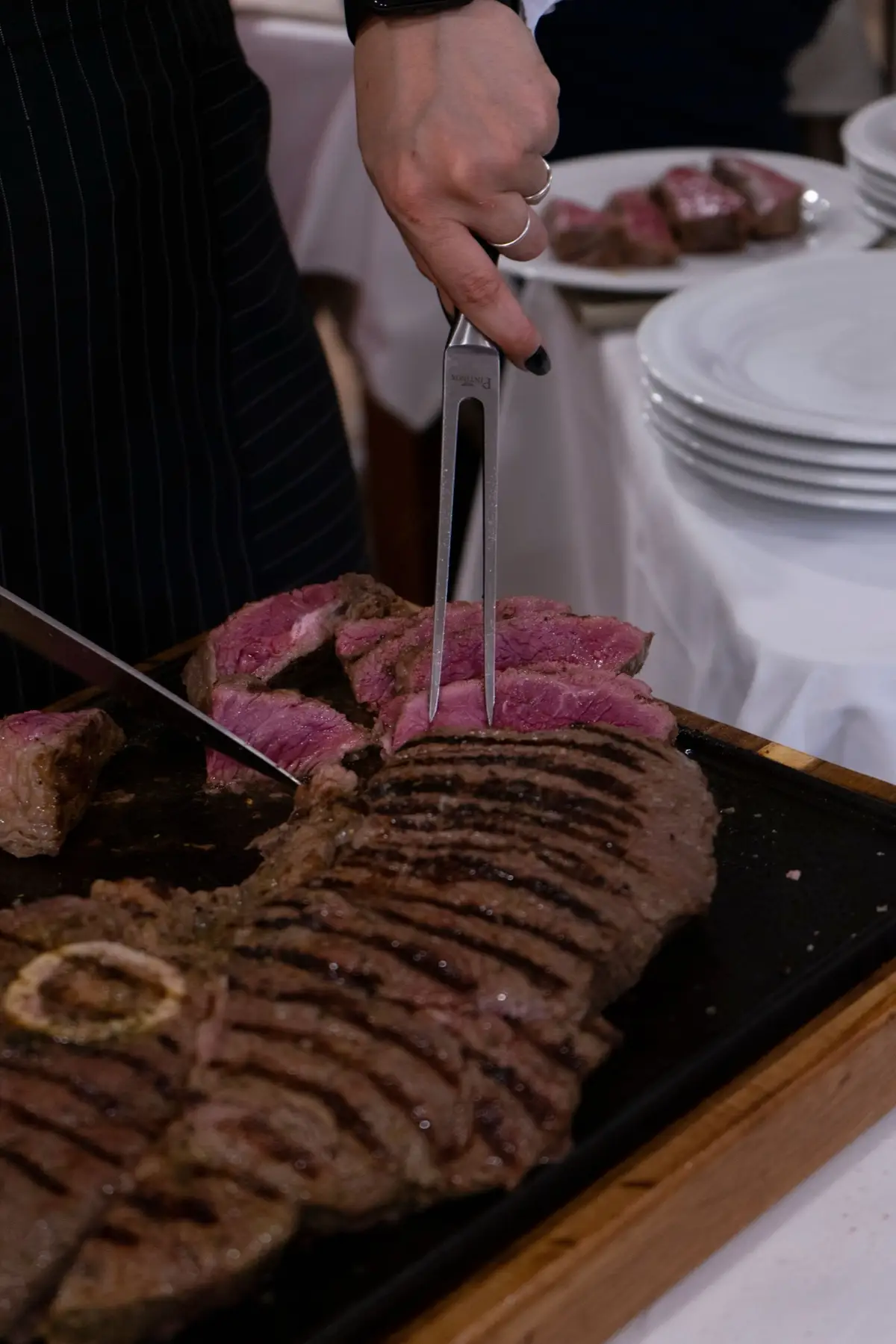
Food stations are separate serving points around the room, each built around one idea: a carving board, a pasta station, a mezze spread, a raw bar, a dessert table. Many stations have an attendant who cooks, carves or plates to order. Guests visit stations when they like, and the evening has a looser, reception-like rhythm. See our food stations menu.
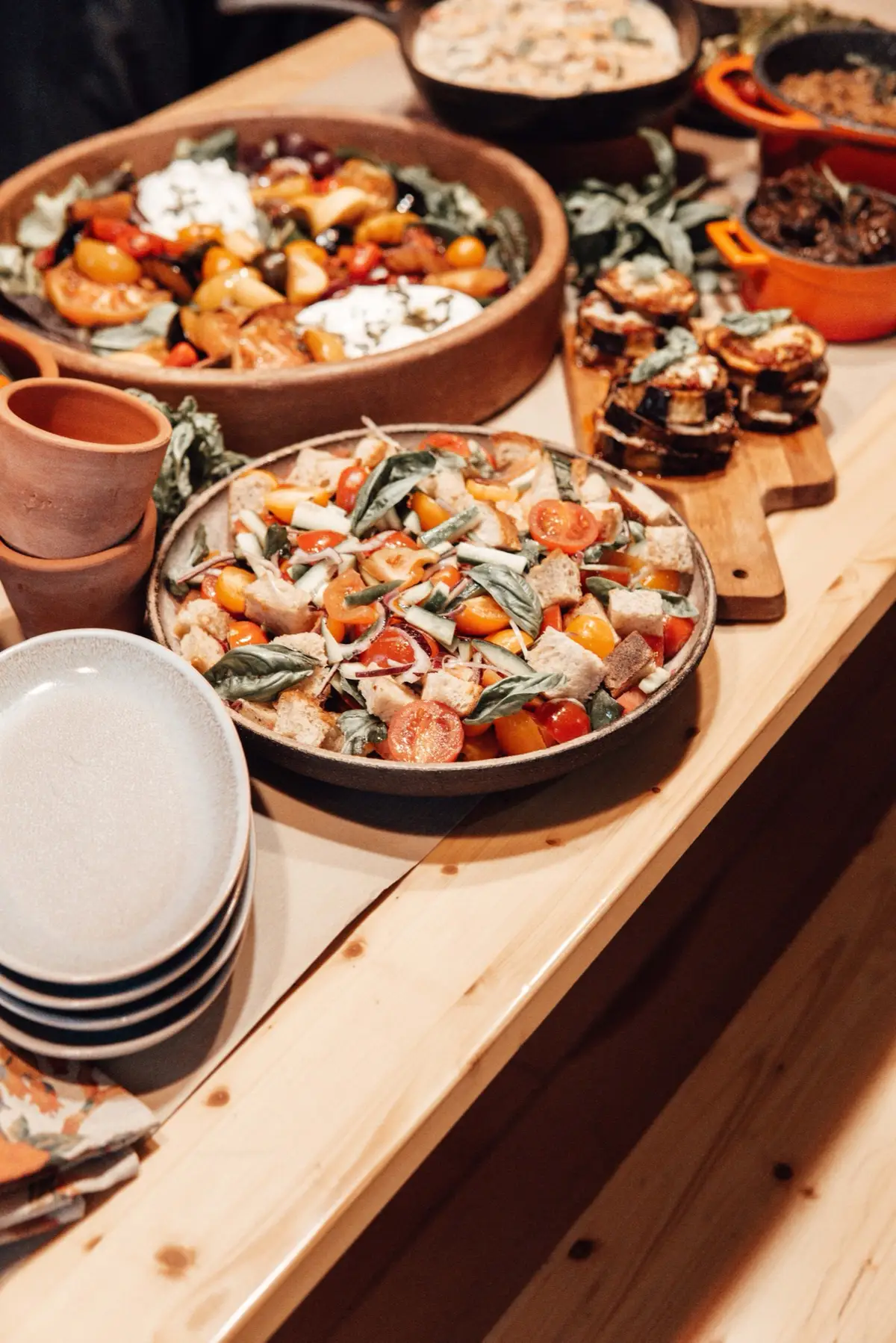
Family-style service brings shared platters and bowls to each table, the way a large family dinner works at home. Servers deliver and refill platters, guests pass dishes and serve themselves, and everyone eats together at the table. It is seated dining without individual plating.
Space: floor plan vs table size
Stations take floor space. Each station usually needs a 6 to 8-foot table plus working space behind for the attendant and a clear area in front for guests to queue. Four stations for 150 guests can take a noticeable share of a room, which may mean fewer seats or tighter tables.
Family-style takes table space. Shared platters, bowls, bread and wine all need room between place settings. Standard 30-inch banquet tables are often too narrow; wider tables or larger rounds give platters room. The floor stays clear, but you may need more or bigger tables for the same guest count, and more serveware rentals.
In a narrow loft or a tent with a fixed footprint, the floor plan often makes the decision. Our venue guides explain the constraints by type of space.
| Factor | Food stations | Family-style |
|---|---|---|
| Typical Toronto cost | About $60–$120 per guest (EventSource) | Varies widely by menu and table count |
| Our starting price | from $72 per person | from $78 per person |
| Space needed | Floor space for stations and queues | Wider tables for platters |
| Staff | Attendant per live station, plus servers | Servers carrying and refilling platters |
| Guest movement | High; guests circulate | Low; guests stay seated |
| Speeches during dinner | Harder to time | Easy between courses |
| Dietary separation | Easy with dedicated stations | Needs individual plates or separate platters |
| Rentals | Station displays, equipment per station | Extra platters, bowls and serving utensils |
| Best for | Receptions, cocktail weddings, corporate events | Seated weddings, rehearsal dinners, family celebrations |
Cost and staffing
EventSource's guide to Toronto wedding catering costs puts food stations at roughly $60 to $120 per guest. Our own prices start from $72 per person for stations and from $78 per person for family-style service, before HST and service charge.
Stations cost more when they are attended: a chef carving or cooking to order at each station adds staff hours, and every station needs its own equipment and display. Food volume is also higher, because each station must stay full for the whole service window even if guests visit unevenly.
Family-style usually needs more servers than a buffet but fewer than plated service, since servers carry platters rather than individual plates. It needs more serveware: several platters and bowls per table, plus serving utensils for each. Food quantities have to be generous, because each table must have enough of every dish to go around twice.
Guest experience and timing
Stations suit events where mixing matters: a cocktail-style wedding, a corporate reception, a milestone party where guests want to talk to many people. The trade-off is that guests are rarely all eating at once, which makes speeches and toasts harder to time, and some guests (older relatives, anyone who dislikes queues) may eat less than they would at a table.
Family-style suits events where the table is the point: a wedding dinner with long tables, a rehearsal dinner, a family celebration. Everyone eats together, conversation stays at the table, and speeches can run between courses. The trade-off is less movement, and guests are limited to the people at their table.
Menus that suit each format
Station menus work best when each station has a clear theme and food that is finished in front of guests or holds well on display: carved roasts with sauces, pasta tossed to order, a mezze table of dips, salads and warm flatbread, grilled skewers, or a raw bar kept on ice. Avoid stations whose food suffers when it waits, such as fried items that go soft.
Family-style menus work best with dishes that look good on a platter and serve easily with a spoon or tongs: sliced roast chicken or lamb, whole roasted fish portions, grain salads, roasted seasonal vegetables and a generous bread course. Dishes that need careful individual assembly, like layered terrines or sauced fish fillets, are better saved for plated service.
Dietary needs
Stations make separation easy: a fully vegetarian or vegan station, a gluten-free station with its own utensils, clear labels at each one. Guests with restrictions can see exactly what they are choosing. Cross-contact risk comes from shared utensils or guests carrying food between stations, which attendants can manage.
Family-style is harder for dietary control. Shared platters get passed hand to hand, and serving spoons move between dishes. The usual solution is individual plates for guests with specific needs, served alongside the family-style platters, or separate platters for a table where several guests share a requirement. Collect dietary information with RSVPs so the kitchen can plan those plates. See dietary catering.
Choose stations if / choose family-style if
Choose stations if:
- You want guests mingling and moving around the room.
- The room has floor space for several stations and queue areas.
- You want live cooking or carving as part of the experience.
- Dietary needs are varied and you want clear, separate options.
- The program is light, with few speeches during dinner.
Choose family-style if:
- You want everyone seated and eating together.
- Your tables can be wide enough for shared platters.
- The dinner includes speeches or toasts at fixed times.
- Your guests include older relatives or anyone who would rather not queue.
- The menu suits sharing: roasted meats, salads, grains and seasonal vegetables.
Some events combine the two: family-style mains at the table, then a dessert or late-night station that gets people back on their feet.
Questions
Frequently asked
Is family-style cheaper than food stations?
Often, but not always. Attended stations add chef hours and equipment; family-style adds serveware and needs generous quantities. Compare quotes for your guest count and menu.
How many food stations do I need for 150 guests?
Three to four stations is a common plan when stations are the main meal, each with enough capacity to avoid long queues. Fewer stations work when they supplement passed canapés.
What table size works for family-style service?
Wider than a standard 30-inch banquet table if possible, or larger rounds, so platters fit between place settings. Your rental company can suggest options for your guest count.
Can you do family-style for guests with allergies?
Yes. Guests with allergies or specific diets usually get an individual plate served alongside the shared platters, so their food never touches a shared spoon.
Do food stations need chefs?
Live stations such as carving, pasta or seared items need an attendant. Cold or room-temperature displays, like mezze or salads, can be self-serve with a server replenishing.
Keep planning
Related pages
Catering options, compared honestly
Most catering decisions come down to a handful of trade-offs between cost, staff, space, time and how guests eat. These comparisons put the…
Explore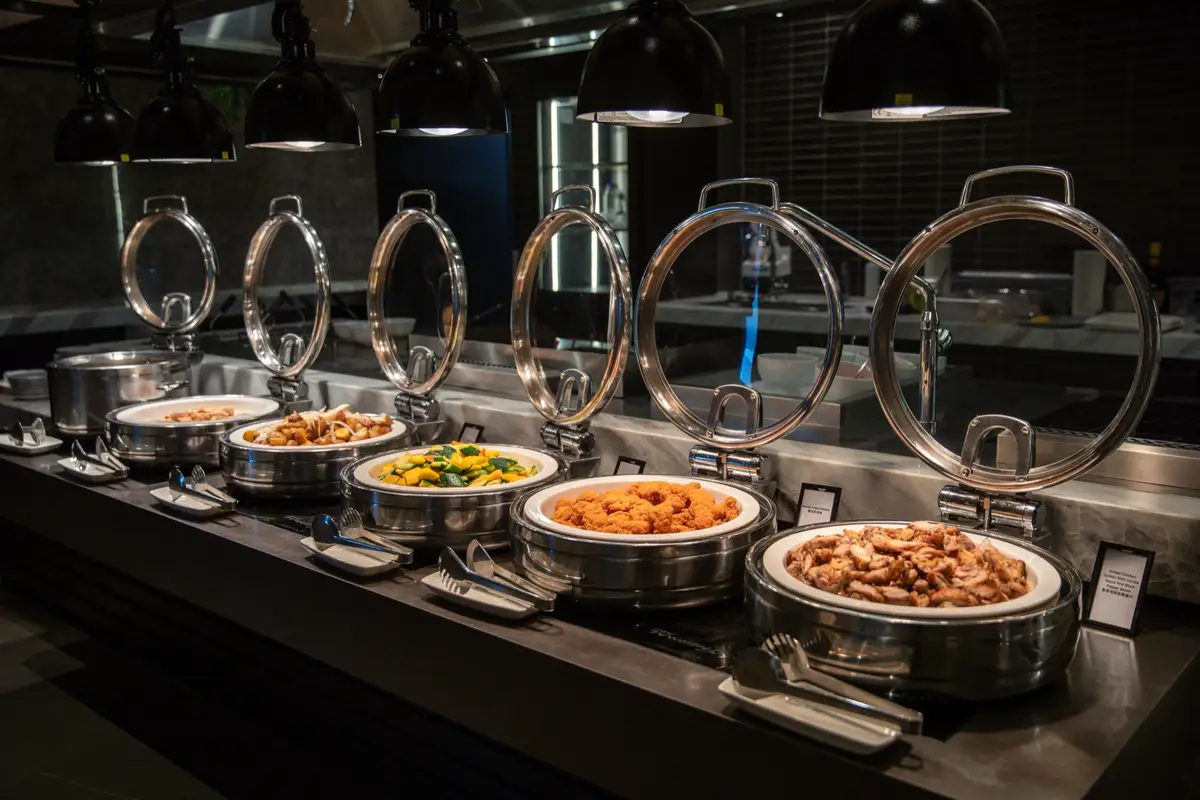
Buffet vs plated: which service suits your event?
A plated dinner costs more mainly because of staff and preparation, not ingredients. A buffet gives guests choice and quantity but asks for more…
ExploreFood station menu
Attended stations where a chef carves, fries or finishes dishes in front of guests. Stations keep people moving around the room and make it easy to…
Explore
Wedding catering in Toronto and the GTA
Full-service wedding catering from our kitchen: canapé receptions, long-table dinners for small weddings, and tented backyard celebrations. You get a…
Explore
Cocktail-style wedding receptions
A cocktail reception replaces the seated dinner with passed canapés, small bowls and a station or two, so guests move, talk and eat for the whole…
Explore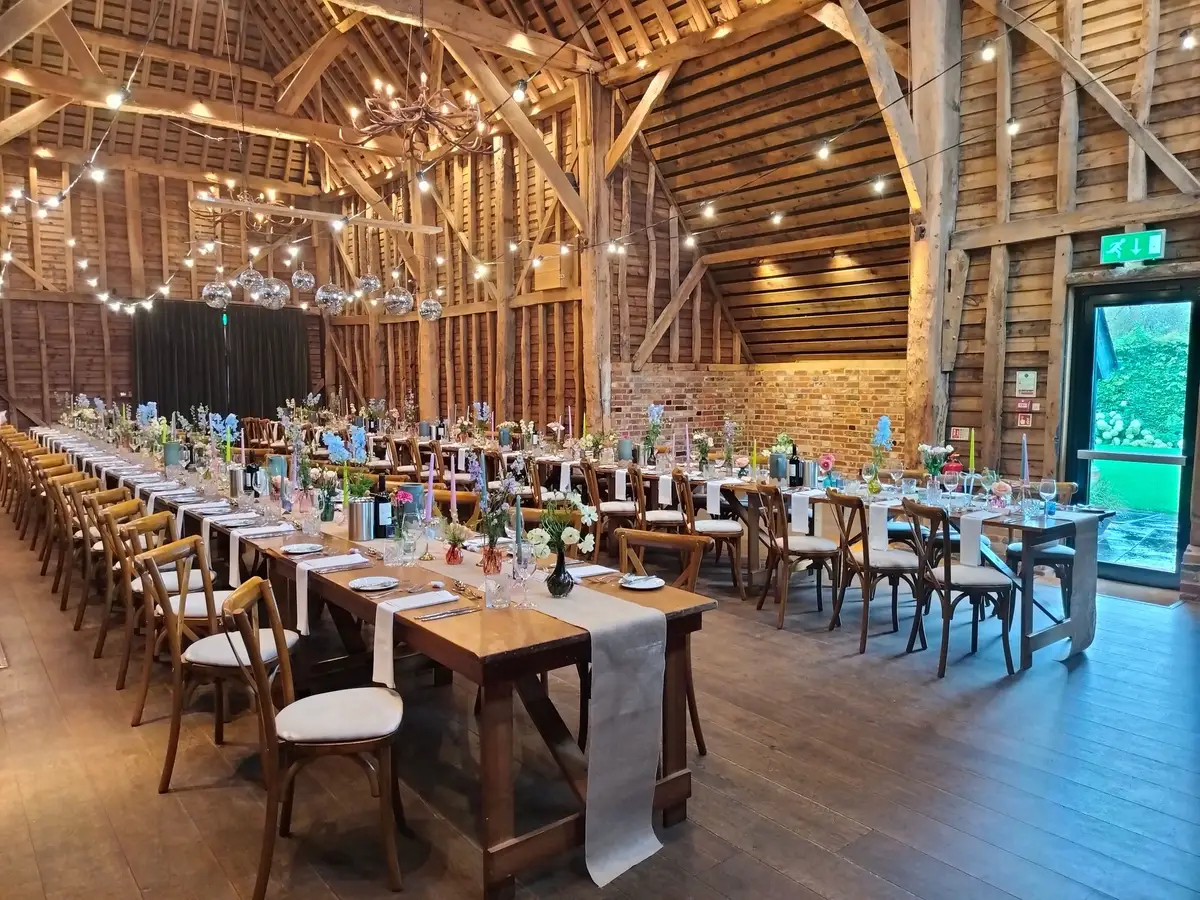
Catering barns, farms and wineries
Rural venues trade city constraints for different ones: distance, water, power, gravel and weather. The catering plan has to be self-sufficient from…
Explore