Corporate catering
Conference catering: a full-day food plan that keeps the agenda on time
Plan conference catering from the agenda outward: registration breakfast, a morning break, a lunch that finishes on time, an afternoon break that beats the 3 p.m. slump, and an optional reception. This guide gives a sample timeline and quantities for 150 attendees, menus that sustain energy, and a registration system for dietary needs.

Build the food plan from the agenda
Food at a conference has a job at each point in the day, and the job is set by the agenda, not the menu. Breakfast gets people through registration and into their seats. Breaks give attendees 15–20 minutes to refuel and talk. Lunch has to be fast. The afternoon break has to keep the room alert. A reception, if there is one, gives people a reason to stay.
Before asking for a quote, lock these facts: session start and end times, where each food moment happens (in the plenary room, a foyer, a separate lunch room), expected attendance per day, and whether sponsors or speakers need separate green-room food. A caterer who has these can quote each moment accurately and tell you where the plan will squeeze.
The timeline below shows a typical single-day conference for 150 people. Our meetings and conferences page explains the services behind each step.
Quantities for 150 attendees
These are planning figures for a full day, based on 150 confirmed attendees. Adjust them for your crowd: a technical audience at 8 a.m. eats more breakfast than a sales team arriving at 9:30, and warm rooms drive cold drinks up.
| Food moment | What to plan | Planning quantity |
|---|---|---|
| Registration breakfast | One protein item, fruit, yogurt, a smaller amount of pastry | 1 protein item (egg bite, breakfast wrap) per person; pastry for about 60% of attendees; fruit at roughly 100 g per person |
| Coffee at registration | Coffee, decaf, tea, water | About 1 hot drink per person; decaf and tea for 20–25% of that |
| Morning break | Coffee refresh, a light snack | Hot drinks for about 60–70% of attendees; one snack item per person |
| Lunch | Boxed lunches or a buffet with a vegetarian main | 1 full meal per registered attendee plus named special meals; staff and speakers counted separately |
| Afternoon break | Savoury snack, cold drinks, lighter coffee | Hot drinks for about half of attendees; cold drinks and water for most; one or two snack items per person |
| Closing reception (optional) | Canapés or a grazing table | 6–8 pieces per guest for 90 minutes; plan for 60–75% of attendees to stay |
A 250 ml cup is a reasonable planning unit. For 150 people at registration, that is about 37 litres of hot drinks in total, spread across coffee, decaf and hot water for tea. For the reasoning behind per-person food quantities, see how much food per person.
Conference catering checklist
- Agenda with every session and break time sent to the caterer
- Location of each food moment confirmed with the venue
- Dietary question on registration with diet, allergies and contact consent
- Dietary list exported with names one week out
- Final numbers deadline and day-two update process agreed
- Lunch format chosen for speed (boxed or enough buffet lines)
- Power, water and load-in access confirmed for coffee service
- Leftover and food-safety plan agreed before the day
Menus that sustain energy
Nobody remembers the lunch at a good conference. They remember whether the afternoon speaker had a room full of people who were awake. Heavy, fried and very sweet food makes that harder. The principles we plan with:
- Protein at breakfast. Eggs, yogurt, cheese or a breakfast wrap, with pastry as the side, not the meal.
- Fibre and slower carbohydrates at lunch. Whole grains, legumes and roasted vegetables instead of large portions of white pasta and bread.
- Moderate portions. A lunch that fills people without weighing them down: a main, a salad, a small dessert.
- Savoury afternoon breaks. Hummus and vegetables, cheese and crackers, roasted chickpeas or small sandwiches, with fruit. A tray of cookies alone produces a sugar spike and a slump.
- Water everywhere. Refill stations or pitchers in every room, not only at breaks.
A sample menu for a spring or fall day:
| Moment | Sample menu |
|---|---|
| Breakfast | Spinach and feta egg bites, Greek yogurt with berries and granola on the side, sliced melon, small croissants and banana bread |
| Morning break | Seasonal whole fruit, roasted chickpeas (nut-free), coffee and tea refresh |
| Lunch | Grilled chicken with herbs, a lentil and roasted vegetable main (vegan, gluten-free), freekeh salad, greens with lemon dressing, fruit and a small sweet |
| Afternoon break | Hummus, muhammara and crudités, cheese and crackers, sparkling water and iced tea |
See the breakfast menu and hot lunch buffet menu for more options.
A lunch that finishes on time
Lunch is where conference schedules slip. If lunch is scheduled for 60 minutes and it takes 30 minutes for the last person to get food, the afternoon starts late or half the room is still eating. The fix is planning for throughput.
- Boxed lunches are fastest. With boxes laid out on tables by dietary type, 150 people can collect lunch in under ten minutes. They also make special meals easy to label by name. Our boxed lunch menu shows what fits in a box.
- Buffets need more lines than you think. Plan one side of a buffet line for every 50–75 people, so 150 attendees need a double-sided line, or two lines. Put the vegetarian main and special meals at a separate point.
- Set lunch while the session runs. If lunch is served in the same room or the foyer outside it, staff should set up during the final session, quietly, so the food is ready the moment the doors open.
- Release by table or row if the room is large. It feels slower but is faster in total than one crowd at a single table.
- Keep plated lunches for small groups. A plated lunch for 150 needs 45–60 minutes for service alone, and the right staffing.
Dietary needs through registration and badges
At a conference, dietary information arrives through a form weeks before the event, not a conversation. That form decides whether the lunch works. A good dietary question has three parts:
- Diet checkboxes: vegetarian, vegan, halal, gluten-free, no pork, no beef, other.
- Allergy field: free text, with a prompt such as "list the allergen and whether trace amounts are a problem".
- A contact option: "We may contact you about your meal", so the organizer can clarify a vague answer.
Close dietary registration a week before the event, export the list with names, and send it to the caterer. Special meals should be prepared and labelled by name, set aside in a clearly signed spot, and never just added to the buffet.
Some organizers add a small symbol to name badges, such as a coloured dot, for attendees with special meals. It helps staff direct people quickly without asking about their diet in a crowd. Keep it to a symbol that means "has a special meal" and avoid printing medical details on a badge.
If the conference falls during Ramadan, some attendees will be fasting through the day. Offer to pack their lunch to take away, and if the day runs into the evening, consider timing food around sunset. Our guide to iftar catering for offices covers this, and office lunches with dietary restrictions covers labelling in more detail.
Headcounts, no-shows and leftovers
Registered is not the same as attending. Free events often see a noticeable share of registrants not turn up, and paid events usually fewer; your own past events are the best guide. On multi-day conferences, attendance drops after the first morning and again on the final afternoon.
Agree a final-numbers deadline with the caterer, usually a few business days before the event, and a process for day-two updates. Order to the number you realistically expect, not the registration total.
For leftovers, food safety comes first. Perishable food should not sit out of temperature control for more than two hours in total. Ask the caterer what can safely be packed at the end of the day. Ontario's Donation of Food Act protects people who donate food in good faith, and some organizations work with food rescue charities; plan this before the event, not at 5 p.m.
Venue logistics that affect the food
Conference venues vary more than they seem. Hotels and conference centres often require their in-house catering. Offices, coworking spaces, university rooms and loft spaces are more often open to outside caterers. Before booking, ask the venue:
- Which loading dock or entrance caterers use, and whether elevators must be booked
- Where breaks and lunch will be set, and how far that is from the kitchen or staging area
- Whether there is a sink, fridge and power for coffee urns (each urn draws significant power; two on one circuit can trip a breaker)
- What time caterers can arrive and must be out
- Whether food is permitted in the session rooms
Our offices and boardrooms guide covers building rules in more detail.
Budgeting the day
Conference catering is usually quoted per day, with each food moment itemised. As a reference, industry guides such as elle cuisine put Toronto breakfasts and coffee breaks at $5–$15 per person and corporate lunches at $20–$50, before HST and service.
Our prices start from $16 per person for breakfast, $24 for boxed lunches and $32 for a hot lunch buffet, before HST. Drop-off orders need 48 hours notice. Staffed days carry staff time at $38 per staff hour and a 18% service charge. For a closing reception, see corporate events and receptions. Send your agenda through the quote form and we will return a plan for each food moment.
Timeline
Sample food timeline: one-day conference for 150
 07:00
07:00Questions
Quick answers
How much coffee do I need for a conference of 150 people?
Plan about one 250 ml hot drink per person at registration, about two-thirds of that at the morning break and around half in the afternoon. Around 20–25% of hot drinks are decaf or tea.
What is the fastest way to serve conference lunch?
Boxed lunches laid out by dietary type. For a buffet, plan one side of a line for every 50–75 attendees and set up during the last morning session.
How do I manage dietary requirements for a conference?
Ask diet and allergy questions on the registration form, close them a week out, send a named list to the caterer, and have special meals labelled by name and set aside.
What should conference breaks include?
Coffee, tea and water at every break, a light snack in the morning, and savoury snacks with cold drinks in the afternoon rather than only sweets.
How many attendees should I order food for?
Order to realistic attendance, not total registrations. Use your past no-show rates, and expect attendance to drop on the afternoon of the last day.
How much does conference catering cost in Toronto?
Industry guides such as elle cuisine put breakfasts and breaks at $5–$15 per person and corporate lunches at $20–$50, before HST and service.
Keep planning
Related pages
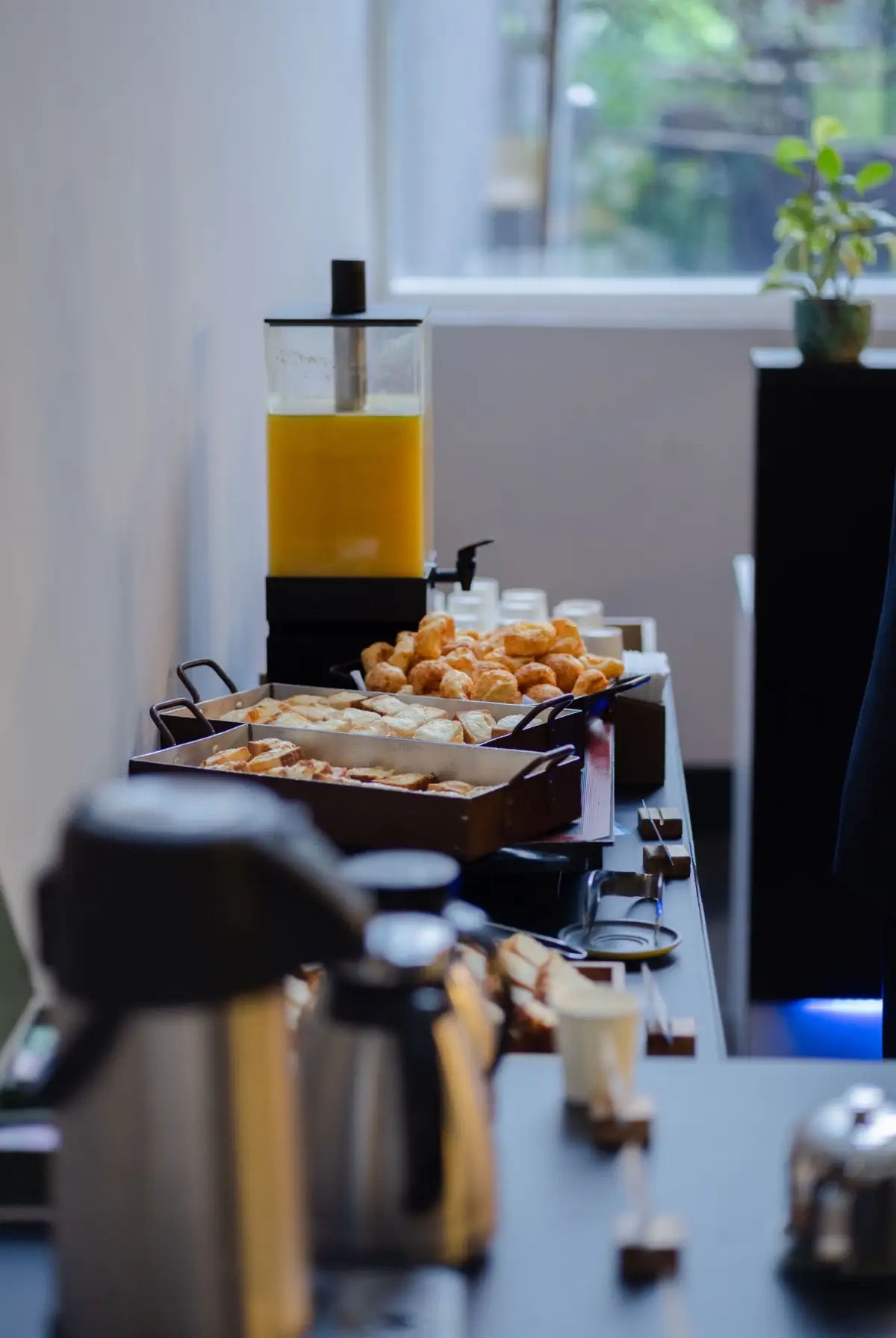
Meeting and conference catering
One food plan for the whole day: breakfast, coffee breaks, lunch and an optional closing reception, timed to your agenda and labelled for every…
ExploreBreakfast catering menu
Morning food that can be eaten at a boardroom table in ten minutes: bakery, hot breakfast, lighter bowls and a few dishes from the Levantine and…
Explore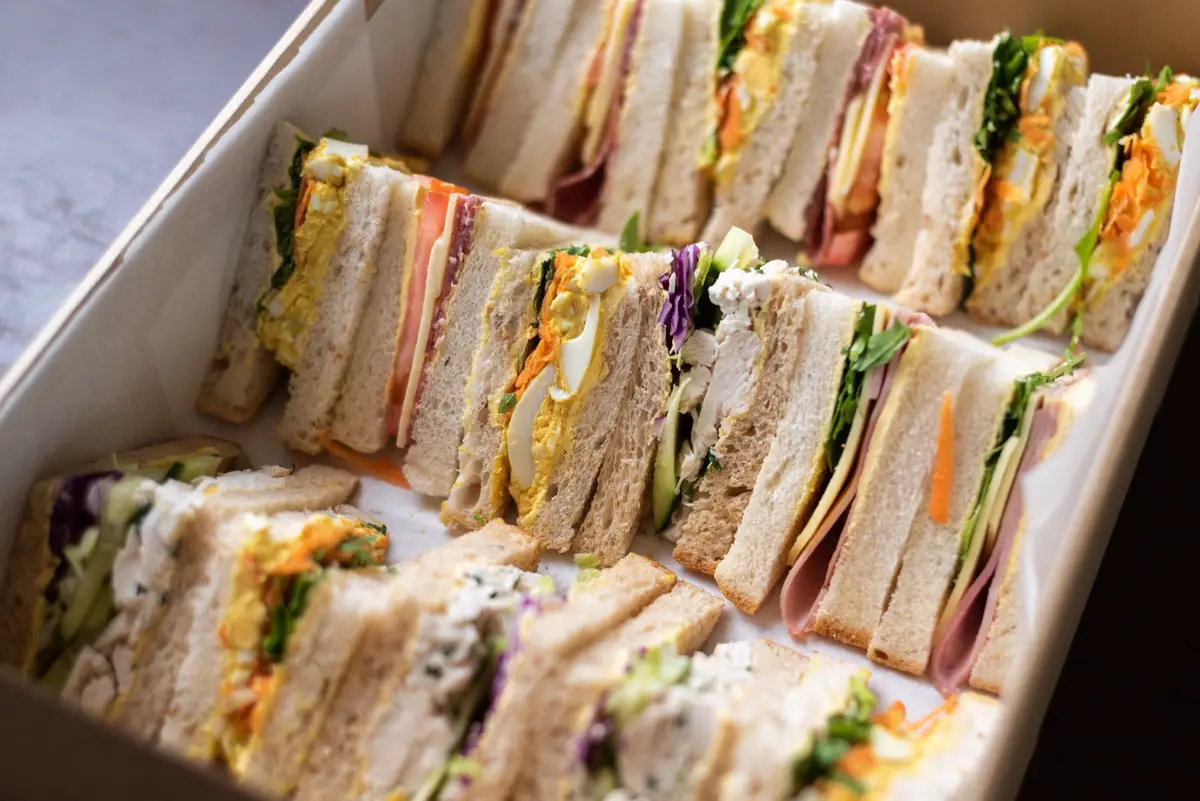
Boxed lunch menu
One sealed, labelled box per person: a main, a side and something sweet. Built for working lunches, site visits and teams where half the room has a…
Explore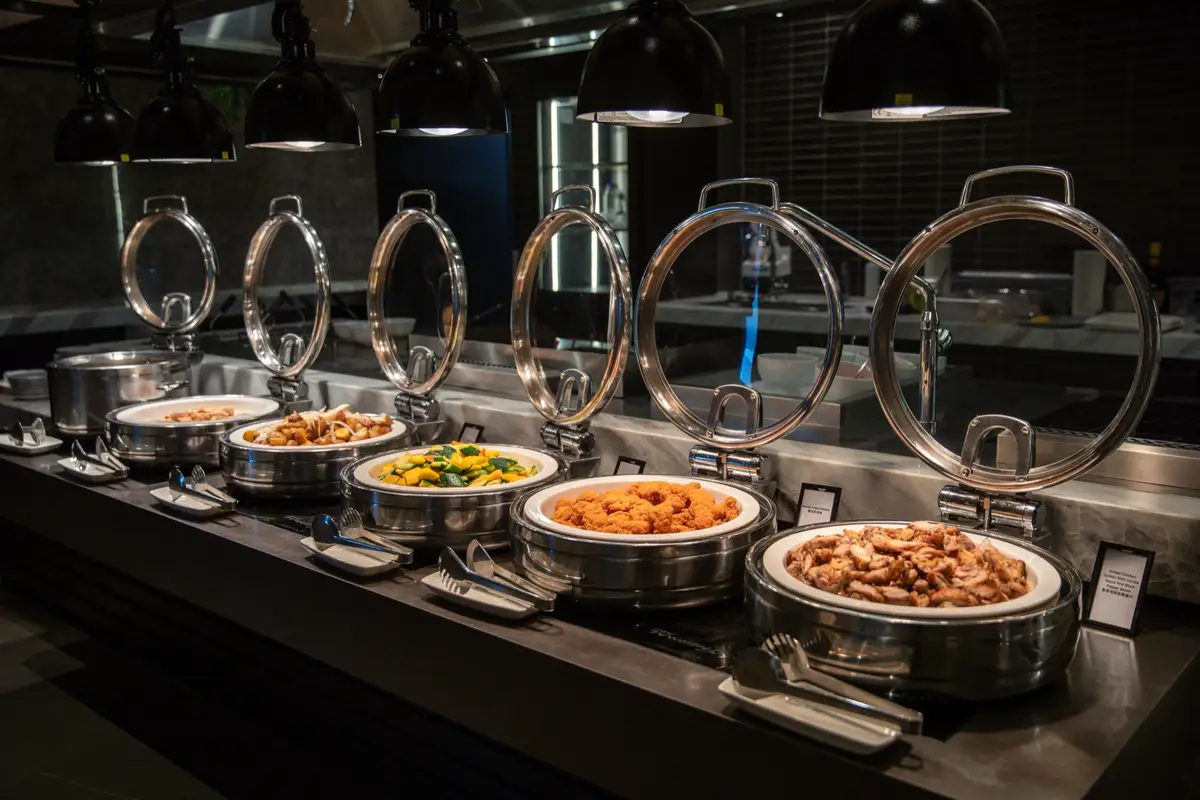
Hot lunch buffet menu
A shared hot meal for teams of 15 to a few hundred: two or three mains, a vegetarian main, sides, a salad and dessert, kept hot in chafing dishes on…
ExploreCatering an office lunch around dietary restrictions
The easiest way to feed a 40-person office with halal, vegan, gluten-free and allergy needs is not a dozen special orders. It is one base menu that…
Read the guideCatering offices and boardrooms
Office catering is judged in the ten minutes before a meeting starts. Getting food through security, up the right elevator and onto the table on time…
Explore