Wedding planning
Micro-wedding catering ideas for 20 to 50 guests
A small guest list changes what a caterer can do. For 20–50 guests the best formats are a family-style long table, a chef's tasting menu, a restaurant-style dinner at home, or a cocktail dinner. Here is how each one works, what it needs from your space, and what it realistically costs in Toronto.
Pick the format by guest count and space
The right format depends less on your taste than on two numbers: how many guests, and what your space can hold. This is a starting point we use in planning conversations.
| Guests | Formats that shine | Formats to avoid |
|---|---|---|
| 12–20 | Chef's table tasting menu; restaurant-style choice of main on the night; long lunch after City Hall | Buffet (looks sparse, wastes food); food stations |
| 20–35 | Family-style long table; four-course plated dinner; restaurant-style at home with a short menu | Multiple stations (each needs staff and a minimum volume) |
| 35–50 | Family-style; three-course plated; cocktail dinner with one seated course; grazing table plus passed canapés | Tasting menus with many courses (service gets slow) |
If the space is a home or a small rented room, check it before you fall in love with a format. A plated five-course menu needs a place to plate thirty dishes at once. Family-style needs table width for platters. A cocktail dinner needs standing room.
Five formats in detail
1. The family-style long table
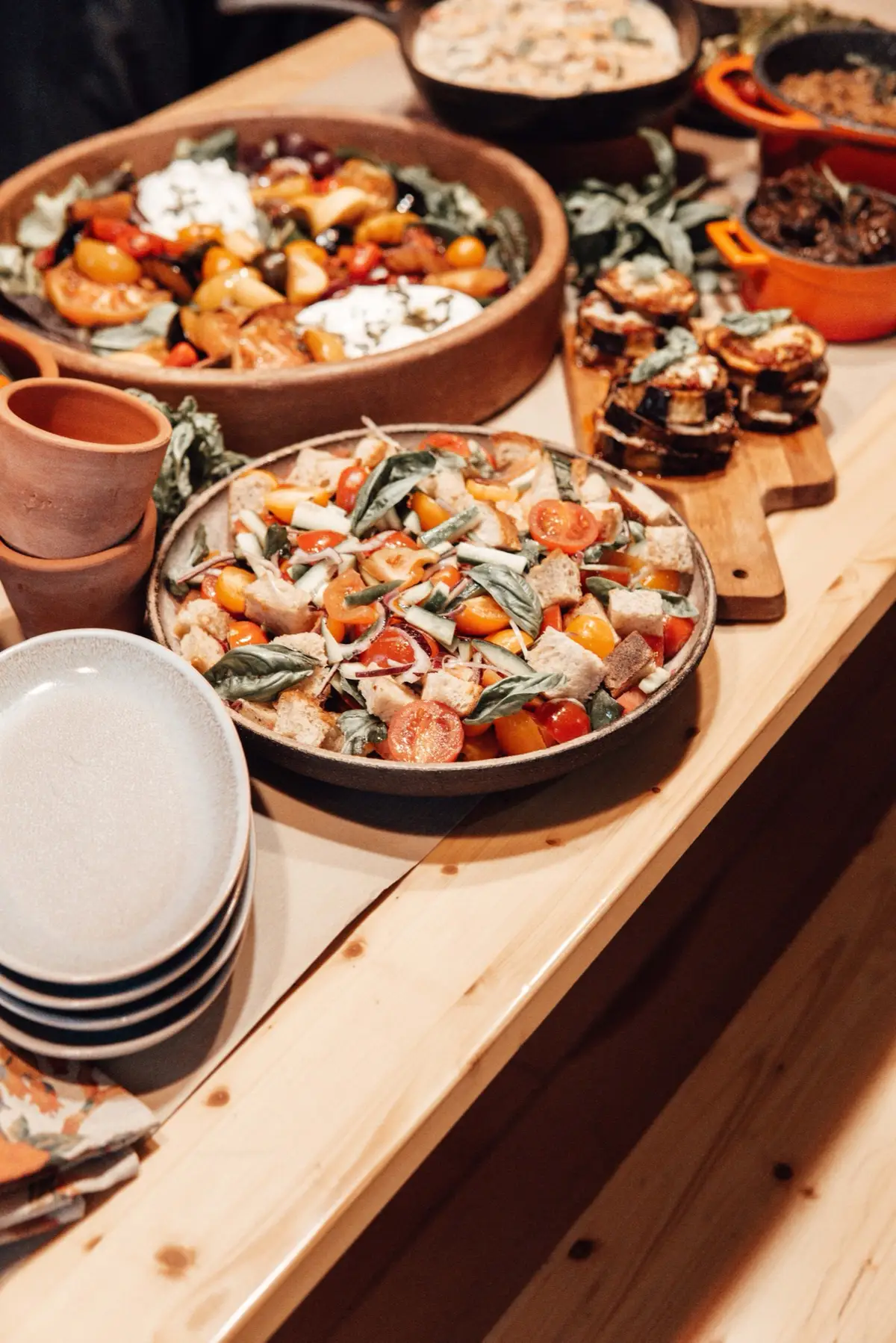
One or two long tables, shared platters passed hand to hand, and a meal that feels like a very good Sunday dinner. A typical menu: warm bread with cultured butter, a heritage tomato salad and a grain salad, a whole roasted side of salmon and a slow-roasted lamb shoulder or chicken thighs, roasted potatoes and seasonal greens, then dessert plated individually. It needs tables at least 36 inches wide so platters fit between place settings, and one server for roughly every 12–15 guests to replace platters and clear.
2. The chef's table
A chef cooks and plates a tasting menu of five or six smaller courses, often introducing each one. It suits 12–24 guests and couples who care about food above everything else. It needs a working kitchen or a well-equipped prep area within sight or reach of the table, and a longer dinner: allow two and a half to three hours.
3. Restaurant-style at home
Guests choose a starter and main from a short printed menu at the table, the way they would at a restaurant, instead of choosing on the RSVP. Keep it to two or three choices per course. It works up to about 30 guests with a strong team: at least one server per 10 guests and two cooks, because orders arrive unpredictably.
4. The cocktail dinner
Guests stand and mingle through passed canapés and a grazing table, then sit for one generous course such as a shared main, followed by dessert and dancing. It suits couples who want the energy of a party and a moment together at the table, and rooms too small to seat everyone comfortably for three hours.
5. The long lunch
A daytime wedding, often after a civil ceremony, with a relaxed three-course lunch and speeches. Lunch menus cost a little less, staff finish earlier, and many restaurants and rented spaces are easier to book in the afternoon. Light, seasonal food works best: think chilled soups in summer, roast chicken with herbs, and fruit desserts.
What a micro-wedding really costs
Food is usually the smaller part of a micro-wedding catering bill. The fixed costs, chef and service team hours, delivery and rentals, stay nearly the same whether you have 30 guests or 60, so the per-guest price rises as the list shrinks. Industry guides such as EventSource put overall Toronto wedding catering at $30–$150 per guest, with most weddings between $50 and $100; small dinners with a lot of service tend to sit at the upper end.
Here is how the lines add up for a 30-guest family-style dinner at a private home:
- Food: 30 guests multiplied by the family-style price per person (from $78).
- Staff: a chef, one cook and two servers, each for about seven hours including setup and clean-up, billed at the staff rate ($38 per staff hour). That is 4 × 7 = 28 staff hours.
- Delivery: the delivery fee ($45) for food and kitchen equipment.
- Service charge: 18%, applied as the quote states.
- Rentals: tables, chairs, linens, china, flatware and glassware (see the list below), plus delivery and pickup from the rental company.
- HST: 13% on the taxable subtotal.
Notice that 28 staff hours is a large line for 30 guests. Reducing it means simplifying: family-style needs fewer servers than restaurant-style, and a venue with a working kitchen needs less setup than a backyard. Our standard minimum for staffed events is 40 guests; if your guest list is smaller, ask anyway and ask to see the full cost in writing.
For the staffing logic behind these numbers, see how many catering staff per guest.
A rentals list for 30 seated guests
Couples hosting at home are often surprised by how much equipment a sit-down dinner needs. For 30 guests with a three-course family-style dinner, a typical order includes:
- Five 6-foot tables or three to four 8-foot tables, and 30 chairs plus two spares
- Tablecloths or runners, and 35 cloth napkins
- 35 dinner plates, 35 side plates and 35 dessert plates
- Around 120 pieces of flatware (dinner fork, knife, dessert fork or spoon, butter knife), plus serving utensils for each platter
- 35 water glasses and 35 wine glasses, plus champagne flutes if there is a toast
- Serving platters and bowls, unless the caterer supplies them
- A catering prep table and bus tubs for the back of house, if your kitchen is small
Rental companies in the GTA get busy on summer Saturdays and in December, so book early. Ask about the return rules for dirty dishes: many companies only ask that plates are scraped and racked, which saves a lot of work at the end of the night.
Hosting the dinner at home
A home wedding feels personal, but a house is not a venue. Before the menu is fixed, walk through these points with your caterer:
- Kitchen space: oven capacity, fridge space (you will need to empty it), and at least one clear counter for plating.
- Power: portable ovens, hot boxes and coffee urns draw a lot. Two on the same circuit as the kettle can trip a breaker mid-service. Know where your panel is.
- Dish and garbage path: where dirty plates go, where the caterer can scrape and stack, and how green bin, recycling and garbage will be separated and removed.
- Washrooms: one washroom serves a dinner of 30 with some patience; more guests or a long evening may justify a rented unit.
- Parking and load-in: a spot close to the door for the catering vehicle, and a route that does not cross the ceremony space.
- Weather: for a backyard, a tent or a full indoor plan B, decided a week out, not the morning of. Our backyard wedding catering checklist covers tents and power in detail.
- Neighbours: a friendly note about the date, guest parking and the time the music stops.
Condos and party rooms add their own rules: elevator bookings, room time limits and sensitive smoke detectors. Our homes and condos guide has the checklist for building management.
Rented spaces for small weddings
If home is not practical, small galleries, studios, rooftop terraces and lofts across Toronto can hold 20–50 people. Many have no kitchen at all, so the menu must be designed around what can be finished in portable ovens and on induction burners: braised and roasted dishes, sauces made ahead, and desserts that do not need last-minute baking.
Ask the space about load-in times, whether open flame is allowed, where staff can prep out of sight, and the hour everything must be out. Our guides to rooftops and terraces, galleries and museums and loft wedding catering go through the details. If you will serve alcohol at a rented venue, read our Special Occasion Permit guide early, since permit rules and deadlines apply.
Small details that matter more at a small wedding
At 150 guests, nobody notices one guest's meal. At 25, everyone does. A few things are worth the extra attention:
- Dietary needs by name. A vegan or celiac guest at a small table should get a plate that looks like everyone else's, served at the same moment.
- Printed menus. Menu cards at each setting make a family-style dinner feel like an occasion and answer ingredient questions quietly.
- Children. Two or three kids at a long table are easier with a simpler plate served first.
- A dessert course instead of a big cake. A small cutting cake plus a plated dessert often costs less than a tall cake sized for guests who are not there.
- A family recipe. With small numbers a caterer can test a grandmother's dish properly and serve it as a course.
For more on formats and our approach, see our micro-weddings page and the stations vs family-style comparison. Weddings need 6 months notice, and summer Saturdays go first.
Timeline
Run of show: 30-guest family-style dinner at home
 13:00
13:00Questions
Quick answers
What is the best catering format for a micro-wedding?
For 20–35 guests, a family-style long table or a plated dinner. For 12–20, a chef's tasting menu or restaurant-style menu choice. For 35–50, family-style, plated or a cocktail dinner with one seated course.
How much does micro-wedding catering cost in Toronto?
Industry guides such as EventSource put Toronto wedding catering at $30–$150 per guest. Small dinners with a lot of service tend to sit at the higher end because staff, delivery and rentals are spread over fewer guests.
Can a caterer cook a wedding dinner in our home kitchen?
Usually, with portable equipment to supplement it. Check oven and fridge space, counter space for plating and which circuits can take extra equipment before the menu is fixed.
How many staff does a 30-guest wedding dinner need?
A family-style dinner for 30 typically needs a chef, a cook and two servers. Restaurant-style service with menu choices on the night needs more.
Is a buffet a good idea for a small wedding?
Rarely. A buffet for 20 looks sparse and wastes food. Family-style platters give the same abundance with less waste.
What rentals do we need for a wedding dinner at home?
Tables, chairs, linens, three plates per guest, around four pieces of flatware per guest, water and wine glasses, and serving platters, plus spares of everything.
Keep planning
Related pages
Micro-wedding catering
A wedding for 10 to 50 people changes what catering can be: one long table, a menu built around the two of you, and a chef who can talk to guests…
ExploreCatering at private homes and condos
A home dinner for 14 and a condo party-room birthday for 60 are different jobs. Both depend on a kitchen, an elevator or a front door that was never…
Explore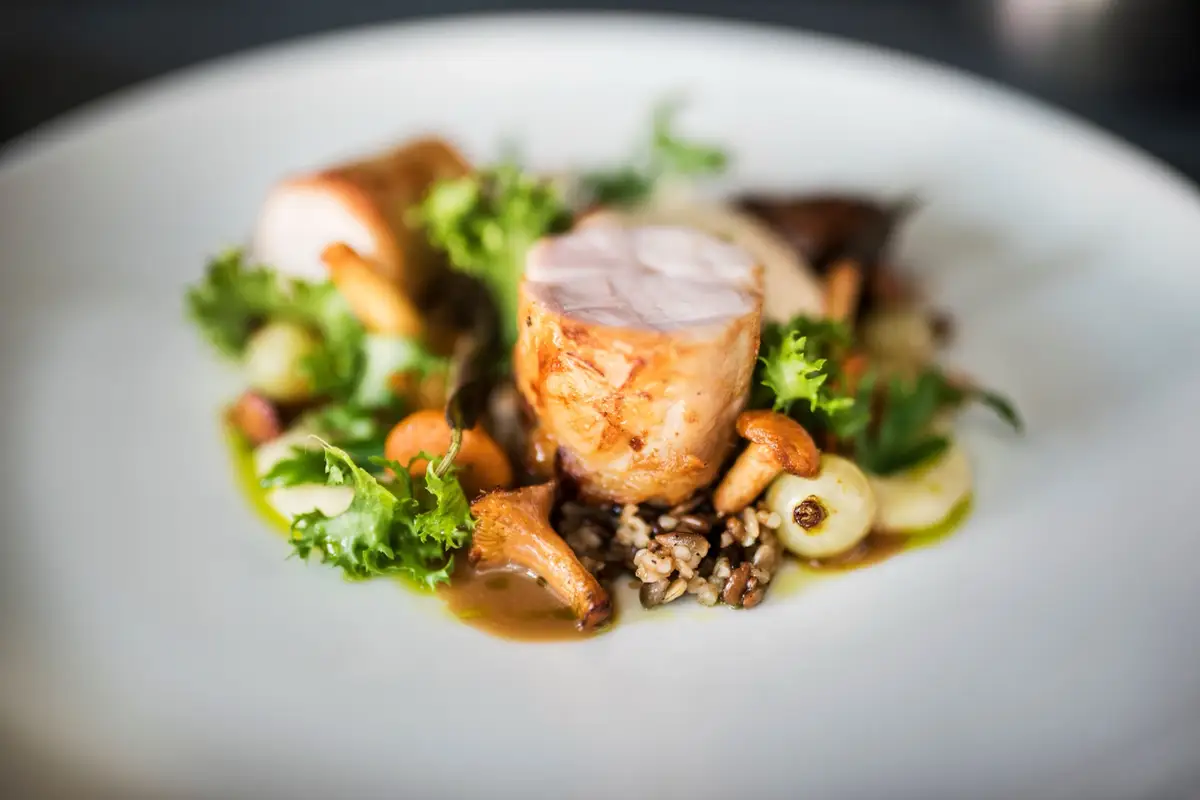
Plated dinner menu
A seated, served dinner of three or four courses. Choose one starter, one dessert and up to three mains (including a vegetarian or vegan main), and…
Explore
Food stations vs family-style service
Both formats make a dinner feel generous without the formality of a plated menu. Stations get guests up and moving; family-style keeps them seated…
Explore
How many catering staff per guest: ratios, roles and cost
A plated dinner needs about one server per 10–12 guests, family-style about one per 12–15, a staffed buffet about one per 20–25, and a bar about one…
Read the guide
Wedding catering cost in Toronto: what $60, $100 and $150 per guest buys
EventSource puts most Toronto and GTA weddings at $50–$100 per guest for catering, with a full range of $30–$150. What matters more is what sits…
Read the guide